We ask you, humbly: don't scroll away.
Hi readers, it seems you use Catholic Online a lot; that's great! It's a little awkward to ask, but we need your help. If you have already donated, we sincerely thank you. We're not salespeople, but we depend on donations averaging $14.76 and fewer than 1% of readers give. If you donate just $5.00, the price of your coffee, Catholic Online School could keep thriving. Thank you.Help Now >
Giuliano Cesarini
FREE Catholic Classes
(Also known as CARDINAL JULIAN)
Born at Rome, 1398; died at Varna, in Bulgaria 10 November, 1444. He was one of the group of brilliant cardinals created by Martin V on the conclusion of the Western Schism, and is described by Bossuet as the strongest bulwark that the Catholics could oppose to the Greeks in the council of Florence. He was of good family and was educated at Perugia, where he studied Roman law with such success as to be appointed lecturer there, Domenico Capranica and Nicholas of Cusa being among his pupils. When the schism was ended by the universal recognition of Martin V as pope, Giuliano returned to Rome, where he attached himself to Cardinal Branda. Suggestions of wide reform were rife, and the principles of the outward unity of the Church and its reformation from within became the ideals of his life. In 1419 he accompanied Branda on his difficult mission to Germany and Bohemia, where the Hussites were in open rebellion. The cardinal thought so highly of his services that he used to say that, if the whole Church were to fall into ruin, Giuliano would be equal to the task of rebuilding it. He had all the gifts of a great ruler, commanding intellectual powers, and great personal charm. He was a profound scholar and a devoted Humanist, while his private life was marked by sanctity and austerity. In 1426 Martin V created him cardinal and sent him to Germany to preach a crusade against the reformers who were committing grievous excesses there. After the failure of this appeal to arms Cesarini was made President of the Council of Basle in which capacity he successfully resisted the efforts of Eugene IV to dissolve the council, though later (1437) he withdrew from the opposition, when he perceived that they were more anxious to humiliate the pope than to accomplish reforms. When the reunited council assembled at Ferrara he was made head of the commission appointed to confer with the Hussites and succeeded at least in winning their confidence. In 1439, owing to a plague, the council was transferred from Ferrara to Florence, where Cesarini continued to play a prominent part in the negotiations with the Greeks. After the successful issue of the council, Cesarini was sent as papal legate to Hungary (1443) to promote a national crusade against the Turks. He was opposed to the peace with Ladislaus, King of Hungary and Poland, and signed at Szegedin with Sultan Amurath III, and persuaded the former to break it and renew the war. It was an unfortunate step and resulted in the disastrous defeat of the Christian army at Varna in 1444, when Cardinal Giuliano was slain in the flight. His two well-known letters to Aeneas Sylvius about the pope's relations to the Council of Basle are printed among the works of Pius II (Pii II Opera Omnia, Basle 1551, p. 64).
We ask you, humbly: don't scroll away.
Hi readers, it seems you use Catholic Online a lot; that's great! It's a little awkward to ask, but we need your help. If you have already donated, we sincerely thank you. We're not salespeople, but we depend on donations averaging $14.76 and fewer than 1% of readers give. If you donate just $5.00, the price of your coffee, Catholic Online School could keep thriving. Thank you.Help Now >
Join the Movement
When you sign up below, you don't just join an email list - you're joining an entire movement for Free world class Catholic education.


-

-
Mysteries of the Rosary
-
St. Faustina Kowalska
-
Litany of the Blessed Virgin Mary
-
Saint of the Day for Wednesday, Oct 4th, 2023
-
Popular Saints
-
St. Francis of Assisi
-
Bible
-
Female / Women Saints
-
7 Morning Prayers you need to get your day started with God
-
Litany of the Blessed Virgin Mary

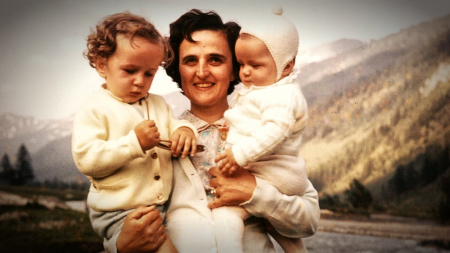
Sacrifices of Faith: The Pro-Life Legacies of St. Gianna and Jessica Hanna
-
How to love God by caring for our bodies
-
Pope Francis calls for negotiations to End Russia-Ukraine War
-
Pope Francis Contemplates Return to U.S. for United Nations Assembly Address
-
Pope Francis Calls on Faithful to Embrace Faith, Hope, and Charity in New Teaching Series


Daily Catholic
- Daily Readings for Sunday, April 28, 2024
- St. Peter Chanel: Saint of the Day for Sunday, April 28, 2024
- Prayer before a Crucifix: Prayer of the Day for Sunday, April 28, 2024
- Daily Readings for Saturday, April 27, 2024
- St. Zita: Saint of the Day for Saturday, April 27, 2024
- Prayer for the Dead # 2: Prayer of the Day for Saturday, April 27, 2024
 Daily Readings for Sunday, April 28, 2024
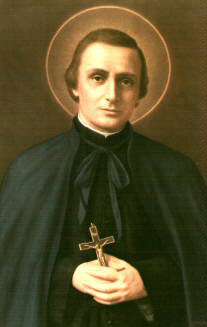 St. Peter Chanel: Saint of the Day for Sunday, April 28, 2024
 Prayer before a Crucifix: Prayer of the Day for Sunday, April 28, 2024



Copyright 2024 Catholic Online. All materials contained on this site, whether written, audible or visual are the exclusive property of Catholic Online and are protected under U.S. and International copyright laws, © Copyright 2024 Catholic Online. Any unauthorized use, without prior written consent of Catholic Online is strictly forbidden and prohibited.
Catholic Online is a Project of Your Catholic Voice Foundation, a Not-for-Profit Corporation. Your Catholic Voice Foundation has been granted a recognition of tax exemption under Section 501(c)(3) of the Internal Revenue Code. Federal Tax Identification Number: 81-0596847. Your gift is tax-deductible as allowed by law.
