We ask you, humbly: don't scroll away.
Hi readers, it seems you use Catholic Online a lot; that's great! It's a little awkward to ask, but we need your help. If you have already donated, we sincerely thank you. We're not salespeople, but we depend on donations averaging $14.76 and fewer than 1% of readers give. If you donate just $5.00, the price of your coffee, Catholic Online School could keep thriving. Thank you.Help Now >
Nunc Dimittis
FREE Catholic Classes
(The Canticle of Simeon).
Found in St. Luke's Gospel (2:29-32) , is the last in historical sequence of the three great Canticles of the New Testament, the other two being the Magnificat (Canticle of Mary) and the Benedictus (Canticle of Zachary) . All three are styled, by way of eminence, the "Evangelical Canticles" (see CANTICLE).
The title is formed from the opening words in the Latin Vulgate, "Nunc dimittis servum tuum, Domine" etc.). ("Now thou dost dismiss thy servant, O Lord" etc.). The circumstances under which Simeon uttered his song-petition, thanksgiving, and prophecy are narrated by St. Luke (2:21-35) (see CANDLEMAS ). The words following those quoted above, "according to thy word in peace", are explained by 5:26 : "And he had received an answer from the Holy Ghost , that he should not see death, before he had seen the Christ of the Lord." Brief though the Canticle is, it abounds in Old-Testament allusions. Thus, in the following verses, "Because my eyes have seen thy salvation " alludes to Isaiah 52:10 , rendered afterwards by St. Luke (3:6) , "And all flesh shall see the salvation of God ". Verse 31 , "Which thou hast prepared before the face of all peoples" accords with the Psalmist (97:2) ; and verse 32 , "A light to the revelation of the Gentiles, and the glory of thy people Israel ", recalls Isaiah 42:6 .
We ask you, humbly: don't scroll away.
Hi readers, it seems you use Catholic Online a lot; that's great! It's a little awkward to ask, but we need your help. If you have already donated, we sincerely thank you. We're not salespeople, but we depend on donations averaging $14.76 and fewer than 1% of readers give. If you donate just $5.00, the price of your coffee, Catholic Online School could keep thriving. Thank you.Help Now >
The text of the Nunc Dimittis is given in full in the brief evening prayer found in the Apostolic Constitutions (Book VII, xlviii) (P.G., 1, 1057). In the Roman Office, the canticle is assigned to Complin. If St. Benedict did not originate this canonical Hour, he gave to it its liturgical character; but he nevertheless did not include the Canticle, which was afterwards incorporated into the richer Complin Service of the Roman Rite, where it is preceded by the beautiful responsory, "In manus tuas, Domine, commendo spiritum meum" (Into thy hands, O Lord, I commend my spirit) etc., with the Antiphon following, "Salva nos, Domine, vigilantes, custodi nos dormientes" (O Lord, keep us waking, guard us sleeping) etc., all this harmonizing exquisitely with the spirit of the Nunc Dimittis and with the general character of the closing Hour of the Office.
In the blessing of the candles on the feast of the Purification of the Blessed Virgin , the Canticle, of course, receives great prominence both in its text and in the references to Simeon in the preceding prayers. Its last verse, "Lumen ad revelationem" etc., forms the Antiphon which not only precedes and follows the Canticle, but also precedes every verse of it and the Gloria Patri and Sicut erat of the concluding doxology. The symbolism of the Canticle and of its Antiphon is further emphasized by the lighted candles of Candlemas. The complete Canticle also forms the Tract in the Mass of the feast, when the 2 February follows Septuagesima.
We ask you, humbly: don't scroll away.
Hi readers, it seems you use Catholic Online a lot; that's great! It's a little awkward to ask, but we need your help. If you have already donated, we sincerely thank you. We're not salespeople, but we depend on donations averaging $14.76 and fewer than 1% of readers give. If you donate just $5.00, the price of your coffee, Catholic Online School could keep thriving. Thank you.Help Now >
 Hi readers, it seems you use Catholic Online a lot; that's great! It's a little awkward to ask, but we need your help. If you have already donated, we sincerely thank you. We're not salespeople, but we depend on donations averaging $14.76 and fewer than 1% of readers give. If you donate just $5.00, the price of your coffee, Catholic Online School could keep thriving. Thank you. Help Now >
Join the Movement
When you sign up below, you don't just join an email list - you're joining an entire movement for Free world class Catholic education.


-

-
Mysteries of the Rosary
-
St. Faustina Kowalska
-
Litany of the Blessed Virgin Mary
-
Saint of the Day for Wednesday, Oct 4th, 2023
-
Popular Saints
-
St. Francis of Assisi
-
Bible
-
Female / Women Saints
-
7 Morning Prayers you need to get your day started with God
-
Litany of the Blessed Virgin Mary


Sacrifices of Faith: The Pro-Life Legacies of St. Gianna and Jessica Hanna
-
How to love God by caring for our bodies
-
Pope Francis calls for negotiations to End Russia-Ukraine War
-
Pope Francis Contemplates Return to U.S. for United Nations Assembly Address
-
Pope Francis Calls on Faithful to Embrace Faith, Hope, and Charity in New Teaching Series


Daily Catholic
- Daily Readings for Sunday, April 28, 2024
- St. Peter Chanel: Saint of the Day for Sunday, April 28, 2024
- Prayer before a Crucifix: Prayer of the Day for Sunday, April 28, 2024
- Daily Readings for Saturday, April 27, 2024
- St. Zita: Saint of the Day for Saturday, April 27, 2024
- Prayer for the Dead # 2: Prayer of the Day for Saturday, April 27, 2024
 Daily Readings for Sunday, April 28, 2024
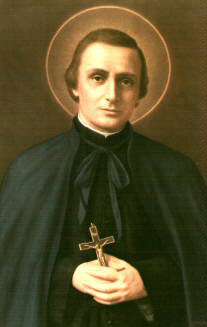 St. Peter Chanel: Saint of the Day for Sunday, April 28, 2024
 Prayer before a Crucifix: Prayer of the Day for Sunday, April 28, 2024



Copyright 2024 Catholic Online. All materials contained on this site, whether written, audible or visual are the exclusive property of Catholic Online and are protected under U.S. and International copyright laws, © Copyright 2024 Catholic Online. Any unauthorized use, without prior written consent of Catholic Online is strictly forbidden and prohibited.
Catholic Online is a Project of Your Catholic Voice Foundation, a Not-for-Profit Corporation. Your Catholic Voice Foundation has been granted a recognition of tax exemption under Section 501(c)(3) of the Internal Revenue Code. Federal Tax Identification Number: 81-0596847. Your gift is tax-deductible as allowed by law.