We ask you, humbly: don't scroll away.
Hi readers, it seems you use Catholic Online a lot; that's great! It's a little awkward to ask, but we need your help. If you have already donated, we sincerely thank you. We're not salespeople, but we depend on donations averaging $14.76 and fewer than 1% of readers give. If you donate just $5.00, the price of your coffee, Catholic Online School could keep thriving. Thank you.Help Now >
Sts. Nereus and Achilleus, Domitilla and Pancratius
FREE Catholic Classes
The commemoration of these four Roman saints is made by the Church on 12 May, in common, and all four are named in the Proper of the Mass as martyrs. The old Roman lists, of the fifth century, and which passed over into the Martyrologium Hiernoymianum, contain the names of the two martyrs Nereus and Achilleus, whose grave was in the Catacomb of Domitilla on the Via Ardeatina; in the same calendar was found the name of St. Pancratius, whose body rested in a catacomb on the Via Aurelia. The notice in the more complete version given by the Berne Codex, runs as follows: "IIII id. Maii, Romae in coemeterio Praetextati natale Nerei et Achillei fratrum, et natale sci. Pancrati via Aurelia miliario secundo" (On 12 May at Rome in the cemetery of Praetextatus [an evident error for Domitilla] the natal day of Nereus and Achilleus, and the natal day of St. Pancratius, on the Aurelian Way at the second milestone"; ed. de Rossi-Duchesne, Acta SS., Nov., II, [59]). In the invocation of the Mass for their feast, in the "Sacramentarium Gelasianum", the names of Nereus and Achilleus alone are mentioned, and this is because only their invocation in the Mass was entered in the collection, the feast of St. Pancratius being celebrated in the church built over his grave on the Via Aurelia. In the Mass of his festival, the formula of which is unknown to us, his name, without doubt, was alone mentioned. In the fourth and following centuries there was celebrated on 12 May in both places, at the grave of Saints Nereus and Achilleus on the Via Ardeatina, and at that of St. Pancratius on the Via Aurelia, a special votive Mass . The Itineraries of the graves of the Roman martyrs, written in the seventh century, are unanimous in their indication of the resting-place of these saints (de Rossi, "Roma sotterranea", I, 180-83). The church which was erected in the fourth century over the grave of St. Pancratius, stands today in somewhat altered style. The legend describing the martyrdom of the saint is of later origin, and not reliable historically; it is probable that he was put to death in the persecution of Valerian (257-58) or in that of Diocletian (304-06).

The church built over the grave of Sts. Nereus and Achilleus in the Via Ardeatina, is of the latter part of the fourth century; it is a three-naved basilica, and was discovered by de Rossi in the Catacomb of Domitilla. Amongst the numerous objects found in the ruins were two pillars which had supported the giborium ornamented with sculptures representing the death of the two saints by decapitation; one of these pillars is perfectly preserved, and the name of Achilleus is carved on it. There was also found a large fragment of a marble slab, with an inscription composed by Pope Damasus, the text of which is well-known from an ancient copy. This oldest historical mention of the two saints (Weyman, "Vier Epigramme des h. Papstes Damasus", Munich, 1905; de Rossi, "Inscriptiones christianae", II, 31; Ihm, "Damasi epigrammata", Leipzig, 1895, 12, no. 8) tells how Nereus and Achilleus as soldiers were obedient to the tyrant, but suddenly being converted to Christianity, joyfully resigned their commission, and did the martyr's death; as to the date of their glorious confession we can make no inference. The acts of these martyrs, legendary even to a romantic degree, have no historical value for their life and death; they bring no fewer than thirteen different Roman martyrs into relation, amongst them even Simon Magus, according to the apocryphal Petrine Acts, and place their death in the end of the first and beginning of the second centuries. These Acts were written in Greek and Latin; according to Achelis (see below) the Greek was the original text, and written in Rome in the sixth century; Schaefer (see below) on the other hand holds the Latin to have been the older version, and seeks to prove that it emanated from the first half of the fifth century; so remote a date is improbable, and the sixth century is to be preferred as the source of the Acts. According to these legends Nereus and Achilleus were eunuchs and chamberlains of Flavia Domitilla, a niece of the Emperor Domitian ; with the Christian virgin they had been banished to the island of Pontia, and later on beheaded in Terracina. The graves of these two martyrs were on an estate of the Lady Domitilla near the Via Ardeatina, close to that of St. Petronilla.
The author of this legend places the two saints quite differently from Pope Damasus, in his poem: as Nereus and Achilleus were buried in a very ancient part of the catacomb of Domitilla, built as far back as the beginning of the second century, we may conclude that they are among the most ancient martyrs of the Roman Church, and stand in very near relation to the Flavian family, of which Domitilla, the foundress of the catacomb, was a member. In the Epistle to the Romans, St. Paul mentions a Nereus with his sister, to whom he sends greetings ( Romans 16:15 ), perhaps even the martyr was a descendant of this disciple of the Apostle of the Gentiles. Owing to the purely legendary character of these Acts, we cannot use them as an argument to aid in the controversy as to whether there were two Christians of the name of Domitilla in the family of the Christian Flavian, or only one, the wife of the Consul Flavius Clemens (see FLAVIA DOMITILLA ). As to other martyrs of the name Nereus, who are especially noted in the old martyrologies as martyrs of the faith in Africa, or as being natives of that country (e.g., in the Martyrologium Hieronymianum, 11 May, 15 or 16 October, 16 Nov.) though there is one of the name in the present Roman Martyrology under date of 16 Oct., nothing more is known.
We ask you, humbly: don't scroll away.
Hi readers, it seems you use Catholic Online a lot; that's great! It's a little awkward to ask, but we need your help. If you have already donated, we sincerely thank you. We're not salespeople, but we depend on donations averaging $14.76 and fewer than 1% of readers give. If you donate just $5.00, the price of your coffee, Catholic Online School could keep thriving. Thank you.Help Now >

We ask you, humbly: don't scroll away.
Hi readers, it seems you use Catholic Online a lot; that's great! It's a little awkward to ask, but we need your help. If you have already donated, we sincerely thank you. We're not salespeople, but we depend on donations averaging $14.76 and fewer than 1% of readers give. If you donate just $5.00, the price of your coffee, Catholic Online School could keep thriving. Thank you.Help Now >
Join the Movement
When you sign up below, you don't just join an email list - you're joining an entire movement for Free world class Catholic education.


-

-
Mysteries of the Rosary
-
St. Faustina Kowalska
-
Litany of the Blessed Virgin Mary
-
Saint of the Day for Wednesday, Oct 4th, 2023
-
Popular Saints
-
St. Francis of Assisi
-
Bible
-
Female / Women Saints
-
7 Morning Prayers you need to get your day started with God
-
Litany of the Blessed Virgin Mary


Sacrifices of Faith: The Pro-Life Legacies of St. Gianna and Jessica Hanna
-
How to love God by caring for our bodies
-
Pope Francis calls for negotiations to End Russia-Ukraine War
-
Pope Francis Contemplates Return to U.S. for United Nations Assembly Address
-
Pope Francis Calls on Faithful to Embrace Faith, Hope, and Charity in New Teaching Series


Daily Catholic
- Daily Readings for Sunday, April 28, 2024
- St. Peter Chanel: Saint of the Day for Sunday, April 28, 2024
- Prayer before a Crucifix: Prayer of the Day for Sunday, April 28, 2024
- Daily Readings for Saturday, April 27, 2024
- St. Zita: Saint of the Day for Saturday, April 27, 2024
- Prayer for the Dead # 2: Prayer of the Day for Saturday, April 27, 2024
 Daily Readings for Sunday, April 28, 2024
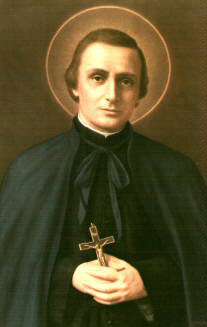 St. Peter Chanel: Saint of the Day for Sunday, April 28, 2024
 Prayer before a Crucifix: Prayer of the Day for Sunday, April 28, 2024
 Hi readers, it seems you use Catholic Online a lot; that's great! It's a little awkward to ask, but we need your help. If you have already donated, we sincerely thank you. We're not salespeople, but we depend on donations averaging $14.76 and fewer than 1% of readers give. If you donate just $5.00, the price of your coffee, Catholic Online School could keep thriving. Thank you. Help Now >



Copyright 2024 Catholic Online. All materials contained on this site, whether written, audible or visual are the exclusive property of Catholic Online and are protected under U.S. and International copyright laws, © Copyright 2024 Catholic Online. Any unauthorized use, without prior written consent of Catholic Online is strictly forbidden and prohibited.
Catholic Online is a Project of Your Catholic Voice Foundation, a Not-for-Profit Corporation. Your Catholic Voice Foundation has been granted a recognition of tax exemption under Section 501(c)(3) of the Internal Revenue Code. Federal Tax Identification Number: 81-0596847. Your gift is tax-deductible as allowed by law.