We ask you, humbly: don't scroll away.
Hi readers, it seems you use Catholic Online a lot; that's great! It's a little awkward to ask, but we need your help. If you have already donated, we sincerely thank you. We're not salespeople, but we depend on donations averaging $14.76 and fewer than 1% of readers give. If you donate just $5.00, the price of your coffee, Catholic Online School could keep thriving. Thank you.Help Now >
Trajan
FREE Catholic Classes
Emperor of Rome (A.D. 98-117), b. at Italica Spain, 18 September, 53; d. 7 August, 117.
He was descended from an old Roman family, and was adopted in 97 by the Emperor Nerva. Trajan was one of the ablest of the Roman emperors; he was stately and majestic in appearance, had a powerful will, and showed admirable consideration and a chivalrous kindliness. He gained a large amount of territory for the empire and laid the foundations of civilization all over the provinces by the founding of municipal communities. He established order on the borders of the Rhine, built the larger part of the boundary wall ( limes ) between Roman and Germanic territory from the Danube to the Rhine, and with great determination led two campaigns (101-2 and 105-7) against the Dacian king, Decebalus, whose country he converted into a new province of the empire. Two other provinces were conquered, although neither proved of importance subsequently. The Governor of Syria conquered Arabia Petraea and Trajan himself entered Armenia during the Parthian War (114-7).
In his internal administration Trajan was incessantly occupied in encouraging commerce and industries. The harbour of Ancona was enlarged and new harbours and roads were constructed. Numerous stately ruins in and around Rome give proof of this emperor's zeal in erecting buildings for public purposes. The chief of these is the immense Forum Trajanum, which in size and splendour casts the forums of the other emperors into the shade. In the middle of the great open space was the colossal equestrian statute of Trajan; the free area itself was surrounded by rows of columns and niches surmounted by high arches. At the end of the structure was the Bibliotheca Ulpia, in the court of which stood the celebrated Trajan's Column with its reliefs representing scenes in the Dacian wars. Later Hadrian built a temple to the deified Trajan at the end of the Forum towards the Campus Martius.
We ask you, humbly: don't scroll away.
Hi readers, it seems you use Catholic Online a lot; that's great! It's a little awkward to ask, but we need your help. If you have already donated, we sincerely thank you. We're not salespeople, but we depend on donations averaging $14.76 and fewer than 1% of readers give. If you donate just $5.00, the price of your coffee, Catholic Online School could keep thriving. Thank you.Help Now >
Art and learning flourished during Trajan's reign. Among his literary contemporaries were Tacitus, Juvenal, and the younger Pliny with whom the emperor carried on an animated correspondence. This correspondence belonging to the years 111-3 throws light on the persecution of Christians during this reign. Pliny was legate of the double Province of Bithynia and Pontus. In this territory he found many Christians and requested instructions from Trajan (Ep. 96). In his reply (Ep. 97) Trajan considers the confession of Christianity as a crime worthy of death, but forbades a search for Christians and the acceptance of anonymous denunciations. Whoever shows by sacrificing to the gods that he is not a Christian is to be released. Where the adherence to Christianity is proved the punishment of death is to follow. The action he prescribed rests on the coercive power of the police, the right of repression of the magistracy, which required no settled form of procedure. In pursuance of these orders measures were taken against Christians in other places also. The most distinguished martyrs under Trajan were Ignatius, Bishop of Antioch, and Simeon, Bishop of Jerusalem. Legend names many others, but there was no actual persecution on a large scale and the position of the Christians was in general satisfactory.
 Hi readers, it seems you use Catholic Online a lot; that's great! It's a little awkward to ask, but we need your help. If you have already donated, we sincerely thank you. We're not salespeople, but we depend on donations averaging $14.76 and fewer than 1% of readers give. If you donate just $5.00, the price of your coffee, Catholic Online School could keep thriving. Thank you. Help Now >
Join the Movement
When you sign up below, you don't just join an email list - you're joining an entire movement for Free world class Catholic education.


-

-
Mysteries of the Rosary
-
St. Faustina Kowalska
-
Litany of the Blessed Virgin Mary
-
Saint of the Day for Wednesday, Oct 4th, 2023
-
Popular Saints
-
St. Francis of Assisi
-
Bible
-
Female / Women Saints
-
7 Morning Prayers you need to get your day started with God
-
Litany of the Blessed Virgin Mary


Sacrifices of Faith: The Pro-Life Legacies of St. Gianna and Jessica Hanna
-
How to love God by caring for our bodies
-
Pope Francis calls for negotiations to End Russia-Ukraine War
-
Pope Francis Contemplates Return to U.S. for United Nations Assembly Address
-
Pope Francis Calls on Faithful to Embrace Faith, Hope, and Charity in New Teaching Series


Daily Catholic
- Daily Readings for Sunday, April 28, 2024
- St. Peter Chanel: Saint of the Day for Sunday, April 28, 2024
- Prayer before a Crucifix: Prayer of the Day for Sunday, April 28, 2024
- Daily Readings for Saturday, April 27, 2024
- St. Zita: Saint of the Day for Saturday, April 27, 2024
- Prayer for the Dead # 2: Prayer of the Day for Saturday, April 27, 2024
 Daily Readings for Sunday, April 28, 2024
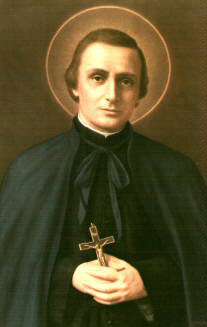 St. Peter Chanel: Saint of the Day for Sunday, April 28, 2024
 Prayer before a Crucifix: Prayer of the Day for Sunday, April 28, 2024
We ask you, humbly: don't scroll away.
Hi readers, it seems you use Catholic Online a lot; that's great! It's a little awkward to ask, but we need your help. If you have already donated, we sincerely thank you. We're not salespeople, but we depend on donations averaging $14.76 and fewer than 1% of readers give. If you donate just $5.00, the price of your coffee, Catholic Online School could keep thriving. Thank you.Help Now >


Copyright 2024 Catholic Online. All materials contained on this site, whether written, audible or visual are the exclusive property of Catholic Online and are protected under U.S. and International copyright laws, © Copyright 2024 Catholic Online. Any unauthorized use, without prior written consent of Catholic Online is strictly forbidden and prohibited.
Catholic Online is a Project of Your Catholic Voice Foundation, a Not-for-Profit Corporation. Your Catholic Voice Foundation has been granted a recognition of tax exemption under Section 501(c)(3) of the Internal Revenue Code. Federal Tax Identification Number: 81-0596847. Your gift is tax-deductible as allowed by law.