We ask you, humbly: don't scroll away.
Hi readers, it seems you use Catholic Online a lot; that's great! It's a little awkward to ask, but we need your help. If you have already donated, we sincerely thank you. We're not salespeople, but we depend on donations averaging $14.76 and fewer than 1% of readers give. If you donate just $5.00, the price of your coffee, Catholic Online School could keep thriving. Thank you.Help Now >
Thomas of Strasburg
FREE Catholic Classes
A fourteenth-century scholastic of the Augustinian Order, born, according to some writers, at Hagenau in Alsace, according to others, at Strasburg ; died 1357. It was probably at Strasburg that he entered the Augustinian Order, and there he began his career as a teacher. About the year 1341 he went to Paris and became famous as a teacher in the university. In 1345 he was elected general of his order, a position which he held until his death. As general, he undertook the revision of the constitution of his order, and published the revised statutes under the title "Constitutiones Ordinis Sui". He interested himself also in the promotion of study among the members of his order, and was instrumental in founding at Verona in 1351 a studium generale , or university, for the study of logic, philosophy, and theology. His best known work is a commentary on the Books of Sentences of Peter the Lombard, published at Strasburg in 1490 (other editions: Venice, 1564 and 1588; Genoa, 1585; Geneva, 1635). He was also the author of sermons, meditations, and letters, still unpublished.
As a teacher and commentator he adhered closely to the doctrines of Giles of Rome (Ægidius Romanus, or de Columna), who since 1287 had been recognized as the doctor ordinis of the Augustinians. He opposed the innovations of Henry of Ghent and the abstruse distinctions of the Scotists. For example, on the question of the distinction between the nature of God and the Divine attributes, he taught that there can be no formal distinction, nor any distinction of any kind except by comparison of the external effects of those attributes. Similarly there is, he maintained, no formal distinction between God and the Divine ideas ; whatever distinction exists among the ideas themselves or between the ideas and the Divine essence is the work of the Divine intellect. In regard to the origin of the universe, he maintained that the doctrine of creation can be proved by strict demonstrations, the starting-point of the proof being the fact that the power of God, being unlimited, could not postulate a material as a necessary condition of action: just as the existence of God does not postulate any other being, so the Divine action does not postulate a material on which to act. This refers, however, to creation in general. Whether the material universe was created in time or with time, or, on the contrary, was created ab aeterno , is a question which, he believed, the human mind cannot solve without the aid of revelation.
We ask you, humbly: don't scroll away.
Hi readers, it seems you use Catholic Online a lot; that's great! It's a little awkward to ask, but we need your help. If you have already donated, we sincerely thank you. We're not salespeople, but we depend on donations averaging $14.76 and fewer than 1% of readers give. If you donate just $5.00, the price of your coffee, Catholic Online School could keep thriving. Thank you.Help Now >

Join the Movement
When you sign up below, you don't just join an email list - you're joining an entire movement for Free world class Catholic education.


-

-
Mysteries of the Rosary
-
St. Faustina Kowalska
-
Litany of the Blessed Virgin Mary
-
Saint of the Day for Wednesday, Oct 4th, 2023
-
Popular Saints
-
St. Francis of Assisi
-
Bible
-
Female / Women Saints
-
7 Morning Prayers you need to get your day started with God
-
Litany of the Blessed Virgin Mary


Sacrifices of Faith: The Pro-Life Legacies of St. Gianna and Jessica Hanna
-
How to love God by caring for our bodies
-
Pope Francis calls for negotiations to End Russia-Ukraine War
-
Pope Francis Contemplates Return to U.S. for United Nations Assembly Address
-
Pope Francis Calls on Faithful to Embrace Faith, Hope, and Charity in New Teaching Series

Daily Catholic
- Daily Readings for Sunday, April 28, 2024
- St. Peter Chanel: Saint of the Day for Sunday, April 28, 2024
- Prayer before a Crucifix: Prayer of the Day for Sunday, April 28, 2024
- Daily Readings for Saturday, April 27, 2024
- St. Zita: Saint of the Day for Saturday, April 27, 2024
- Prayer for the Dead # 2: Prayer of the Day for Saturday, April 27, 2024
 Daily Readings for Sunday, April 28, 2024
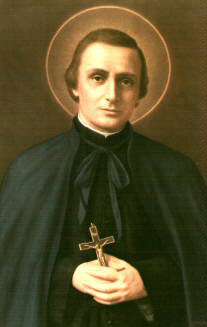 St. Peter Chanel: Saint of the Day for Sunday, April 28, 2024
 Prayer before a Crucifix: Prayer of the Day for Sunday, April 28, 2024


Copyright 2024 Catholic Online. All materials contained on this site, whether written, audible or visual are the exclusive property of Catholic Online and are protected under U.S. and International copyright laws, © Copyright 2024 Catholic Online. Any unauthorized use, without prior written consent of Catholic Online is strictly forbidden and prohibited.
Catholic Online is a Project of Your Catholic Voice Foundation, a Not-for-Profit Corporation. Your Catholic Voice Foundation has been granted a recognition of tax exemption under Section 501(c)(3) of the Internal Revenue Code. Federal Tax Identification Number: 81-0596847. Your gift is tax-deductible as allowed by law.