Syntagma Canonum
FREE Catholic Classes
A canonical collection made in 1335 by Blastares, a Greek monk about whose life nothing certain is known. The collector aimed at reducing canon law to a handier and more accessible form than it appeared in the Nomocanon of Photius, and to give a more comprehensive presentation than the epitomes and synopses of earlier writers such as Stephen (fifth century), Aristenus (1160), Arsenius (1255), etc. The author arranged his matter in alphabetical order. He made 24 general divisions, each marked off by a letter of the Greek alphabet. These sections he subdivided into 303 titles, themselves distinguished by letters; for example, the third section contains such topics as: peri gamou (about marriage), peri gynaikon (about women ), etc. The titles ordinarily treat of the civil law ( nomoi politikoi ), as well as ecclesiastical law. Some titles however are purely ecclesiastical, others purely civil. The church ordinances are quoted from previous collections, especially from the Nomocanon (883), while the extracts from the civil law are for the most part transcribed without any reference to their origin. The compilation soon came into general use among the clergy, and preserved its authority even under Turkish rule. A translation into Servian followed close upon its first publication. It even worked its way into the political life of the Servian people through an abridgment which King Douchan appended to his code of laws (1349). From this the purely ecclesiastical enactments were excluded, but the civil law contained in the Syntagma was reproduced whenever adaptable to the social condition of the people. In the sixteenth century the Syntagma Canonum was translated into Bulgarian ; in the seventeenth century into Russian.
We ask you, humbly: don't scroll away.
Hi readers, it seems you use Catholic Online a lot; that's great! It's a little awkward to ask, but we need your help. If you have already donated, we sincerely thank you. We're not salespeople, but we depend on donations averaging $14.76 and fewer than 1% of readers give. If you donate just $5.00, the price of your coffee, Catholic Online School could keep thriving. Thank you.Help Now >

Join the Movement
When you sign up below, you don't just join an email list - you're joining an entire movement for Free world class Catholic education.


-

-
Mysteries of the Rosary
-
St. Faustina Kowalska
-
Litany of the Blessed Virgin Mary
-
Saint of the Day for Wednesday, Oct 4th, 2023
-
Popular Saints
-
St. Francis of Assisi
-
Bible
-
Female / Women Saints
-
7 Morning Prayers you need to get your day started with God
-
Litany of the Blessed Virgin Mary


Sacrifices of Faith: The Pro-Life Legacies of St. Gianna and Jessica Hanna
-
How to love God by caring for our bodies
-
Pope Francis calls for negotiations to End Russia-Ukraine War
-
Pope Francis Contemplates Return to U.S. for United Nations Assembly Address
-
Pope Francis Calls on Faithful to Embrace Faith, Hope, and Charity in New Teaching Series


Daily Catholic
- Daily Readings for Sunday, April 28, 2024
- St. Peter Chanel: Saint of the Day for Sunday, April 28, 2024
- Prayer before a Crucifix: Prayer of the Day for Sunday, April 28, 2024
- Daily Readings for Saturday, April 27, 2024
- St. Zita: Saint of the Day for Saturday, April 27, 2024
- Prayer for the Dead # 2: Prayer of the Day for Saturday, April 27, 2024
 Daily Readings for Sunday, April 28, 2024
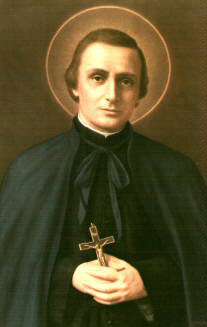 St. Peter Chanel: Saint of the Day for Sunday, April 28, 2024
 Prayer before a Crucifix: Prayer of the Day for Sunday, April 28, 2024
We ask you, humbly: don't scroll away.
Hi readers, it seems you use Catholic Online a lot; that's great! It's a little awkward to ask, but we need your help. If you have already donated, we sincerely thank you. We're not salespeople, but we depend on donations averaging $14.76 and fewer than 1% of readers give. If you donate just $5.00, the price of your coffee, Catholic Online School could keep thriving. Thank you.Help Now >

Copyright 2024 Catholic Online. All materials contained on this site, whether written, audible or visual are the exclusive property of Catholic Online and are protected under U.S. and International copyright laws, © Copyright 2024 Catholic Online. Any unauthorized use, without prior written consent of Catholic Online is strictly forbidden and prohibited.
Catholic Online is a Project of Your Catholic Voice Foundation, a Not-for-Profit Corporation. Your Catholic Voice Foundation has been granted a recognition of tax exemption under Section 501(c)(3) of the Internal Revenue Code. Federal Tax Identification Number: 81-0596847. Your gift is tax-deductible as allowed by law.