We ask you, humbly: don't scroll away.
Hi readers, it seems you use Catholic Online a lot; that's great! It's a little awkward to ask, but we need your help. If you have already donated, we sincerely thank you. We're not salespeople, but we depend on donations averaging $14.76 and fewer than 1% of readers give. If you donate just $5.00, the price of your coffee, Catholic Online School could keep thriving. Thank you.Help Now >
Apostolic Syndic
FREE Catholic Classes
A layman, who in the name, and by the authority, of the Holy See assumes the care and civil administration of the temporalities and in particular the pecuniary alms destined for the support and benefit of Franciscan convents, and thence provides for the requirements of the brethren. To the Friars Minor corporate as well as individual ownership was forbidden by the constitution or the rule. During the first years of the order's existence, the literal observance of this precept, being feasible as well as possible, presented no difficulty; but as time went on, and the order developed as a vast organization, and spread over the whole world, countless difficulties had to be faced and fierce controversy arose, the quaestio de paupertate lasting for centuries. To preserve and safeguard as far as possible the letter as well as the spirit of the complete "expropriation" advocated by St. Francis, the popes adopted the fictio juris of assuming to themselves the ownership of all goods bestowed upon the friars. Thus the friars were legally regarded as mere users, the right of property being vested in the Roman pontiff, except in cases where the donors made explicit reservation in their own behalf. But as the civil administration of property in one's own interest is an act of ownership, and this was prohibited by the rule, such administration had to be exercised by a steward appointed, or at least authorized, by the Holy See.
 Hi readers, it seems you use Catholic Online a lot; that's great! It's a little awkward to ask, but we need your help. If you have already donated, we sincerely thank you. We're not salespeople, but we depend on donations averaging $14.76 and fewer than 1% of readers give. If you donate just $5.00, the price of your coffee, Catholic Online School could keep thriving. Thank you. Help Now >
According to the Decretal of Nicolas III, "Exiit qui seminat" (art. 12, n. 2), 14 August, 1279, the appointment of the syndic Apostolic rested with the sovereign pontiff or the cardinal protector ,—sometimes bishops acted as their delegates in this matter; but Martin IV ("Exultantes", 18 January, 1283) empowered the superiors of the order—the general, the provincials, and the custodes—within their respective spheres of jurisdiction, to appoint and remove syndics as circumstances might require. The larger powers with which the syndic was invested by Martin IV and by his successors, Martin V ("Constitutiones Martinianae" in Wadding, "Annales", X, 301) and Paul IV ("Ex Clementi", 1 July, 1555), gave rise to the appellation syndicus Martinianus in contradistinction to syndicus communis . This latter, as constituted by Nicholas III (Exiit) and Clement V ("Exivi de Paradiso", 6 May, 1312), could deal only with movable property (valuables excepted) and with purchase moneys. The Martinian syndic on the other hand, as trustee and agent of the Holy See on behalf of the friars, might receive and dispose of all goods movable and immovable (money offerings, legacies, and remunerations) and, in pursuance of his trust, institute proceedings in the courts and take such other steps as might be deemed necessary to protect the interest of the community in whose favour he acted. The Apostolic syndic and his wife and children were accorded the enjoyment of all and sundry indulgences, pardons, and privileges which the friars themselves have obtained, or shall obtain, from the Holy See ( Clement VII, "Dum Consideramus", 16 April, 1526).
We ask you, humbly: don't scroll away.
Hi readers, it seems you use Catholic Online a lot; that's great! It's a little awkward to ask, but we need your help. If you have already donated, we sincerely thank you. We're not salespeople, but we depend on donations averaging $14.76 and fewer than 1% of readers give. If you donate just $5.00, the price of your coffee, Catholic Online School could keep thriving. Thank you.Help Now >

Join the Movement
When you sign up below, you don't just join an email list - you're joining an entire movement for Free world class Catholic education.


-

-
Mysteries of the Rosary
-
St. Faustina Kowalska
-
Litany of the Blessed Virgin Mary
-
Saint of the Day for Wednesday, Oct 4th, 2023
-
Popular Saints
-
St. Francis of Assisi
-
Bible
-
Female / Women Saints
-
7 Morning Prayers you need to get your day started with God
-
Litany of the Blessed Virgin Mary


Sacrifices of Faith: The Pro-Life Legacies of St. Gianna and Jessica Hanna
-
How to love God by caring for our bodies
-
Pope Francis calls for negotiations to End Russia-Ukraine War
-
Pope Francis Contemplates Return to U.S. for United Nations Assembly Address
-
Pope Francis Calls on Faithful to Embrace Faith, Hope, and Charity in New Teaching Series


Daily Catholic
- Daily Readings for Sunday, April 28, 2024
- St. Peter Chanel: Saint of the Day for Sunday, April 28, 2024
- Prayer before a Crucifix: Prayer of the Day for Sunday, April 28, 2024
- Daily Readings for Saturday, April 27, 2024
- St. Zita: Saint of the Day for Saturday, April 27, 2024
- Prayer for the Dead # 2: Prayer of the Day for Saturday, April 27, 2024
 Daily Readings for Sunday, April 28, 2024
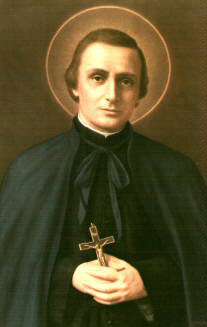 St. Peter Chanel: Saint of the Day for Sunday, April 28, 2024
 Prayer before a Crucifix: Prayer of the Day for Sunday, April 28, 2024

Copyright 2024 Catholic Online. All materials contained on this site, whether written, audible or visual are the exclusive property of Catholic Online and are protected under U.S. and International copyright laws, © Copyright 2024 Catholic Online. Any unauthorized use, without prior written consent of Catholic Online is strictly forbidden and prohibited.
Catholic Online is a Project of Your Catholic Voice Foundation, a Not-for-Profit Corporation. Your Catholic Voice Foundation has been granted a recognition of tax exemption under Section 501(c)(3) of the Internal Revenue Code. Federal Tax Identification Number: 81-0596847. Your gift is tax-deductible as allowed by law.