We ask you, humbly: don't scroll away.
Hi readers, it seems you use Catholic Online a lot; that's great! It's a little awkward to ask, but we need your help. If you have already donated, we sincerely thank you. We're not salespeople, but we depend on donations averaging $14.76 and fewer than 1% of readers give. If you donate just $5.00, the price of your coffee, Catholic Online School could keep thriving. Thank you.Help Now >
Sparta
FREE Catholic Classes
A celebrated town of the Peloponnesus, mentioned several times under this name or under that of Lacedæmon in the Bible ( 1 Maccabees 12:2-23 ; 14:16-23 ; 15:23 ; 2 Maccabees 5:9 ). Letters were exchanged between Onias I, high priest of the Jews, and Arius I, King of Sparta, about the years 309 or 300 B. C. (I Mach., xii, 7-8, 19-23; Josephus, "Ant. Jud.", XII, iv, 10). Arius, who sought to maintain the independence of his country against the Syrian successors of Alexander by creating a diversion against them in Palestine, pretended to have found a writing relative to the Spartans, showing that they themselves and the Jews were two peoples — brothers both descending from Abraham. This assertion has little foundation, although perhaps there had been such a tradition. Later Jonathan wished to renew this friendship with the Spartans and sent them a letter by the delegates Numenius, son of Antiochus, and Antipater, son of Jason, recalling to them that "we therefore at all times without ceasing, both in our festivals, and other days, wherein it is convenient, remember you in the sacrifices that we offer" (I Mach., xii, 2, 5-18; Josephus, "Ant. Jud.", XIII, v, 8). After Jonathan's death the Spartans renewed with his brother Simon the friendship and alliance which they had concluded previously and sent him a letter on this subject by the same Numenius and Antipater who had undertaken the first embassy ( 1 Maccabees 14:16-23 ).
Although the relationship of the two peoples may well be called in question, there is no proof that the documents are not authentic — everything indicates the contrary, as the coexistence of the King Arius and the high-priest Onias, and the fact that under Jonathan the Bible does not speak of kings of Sparta, as in fact the last tyrant Nabis died in 192 B. C. We see again towards the year 170 B. C. the high priest Jason took advantage of the bonds of relationship of the Jews with Sparta to take refuge there — where he died ( 2 Maccabees 5:9 ). In 139 B. C. the Romans addressed to Sparta, and likewise to other kingdoms and cities a circular in favour of the Jews ( 1 Maccabees 15:23 ); this would seem to prove that there was already a Jewish community established in this city. The belief in the consanguinity of the two peoples existed even in the time of Josephus (Bel. Jud., I, xxvi, 1), and Sparta participated in the generosities of Herod the Great (Bel. Jud., I, xxi, 11), perhaps because he had there a Jewish community.
Christianity was introduced into Sparta at an early date. Eusebius (Hist. eccl., IV, xxiii) reports that under Marcus Aurelius, the Bishop of Corinth, Denis, wrote to the Lacedemonians a letter which is "a catechism of orthodoxy and which has peace and unity for its object". Le Quien (Oriens christ., II, 189-92) mentions fifteen bishops, among them Hosius in 458, Theodosius in 681, Theocletus in 898, finally the metropolitan Chrysanthus, who must have become a Catholic in the seventeenth century. In the beginning suffragan of Corinth, then of Patras, the see was made a metropolis in 1082 and numbered several suffragan bishoprics, of which there were three in the fifteenth century (Gelzer, "Ungedruckte . . . Texte der. Notitiæ episcopatunm", 635). In 1833; after the Peloponnesus had been included in the Kingdom of Greece, Sparta was reduced to the rank of a simple bishopric ; it remains the same today, but the see is called Monembasia and Sparta. The bishop resides at Sparta and exercises his jurisdiction over all the district of this name. When the region fell into the power of the Franks, Honorius III established there in 1217 a Latin see which by degrees became a titular and finally disappeared (Eubel, "Hier. cath. med. ævi", I, 302; II, 188; III, 234). The city numbers today 5000 inhabitants.
We ask you, humbly: don't scroll away.
Hi readers, it seems you use Catholic Online a lot; that's great! It's a little awkward to ask, but we need your help. If you have already donated, we sincerely thank you. We're not salespeople, but we depend on donations averaging $14.76 and fewer than 1% of readers give. If you donate just $5.00, the price of your coffee, Catholic Online School could keep thriving. Thank you.Help Now >

Join the Movement
When you sign up below, you don't just join an email list - you're joining an entire movement for Free world class Catholic education.


-

-
Mysteries of the Rosary
-
St. Faustina Kowalska
-
Litany of the Blessed Virgin Mary
-
Saint of the Day for Wednesday, Oct 4th, 2023
-
Popular Saints
-
St. Francis of Assisi
-
Bible
-
Female / Women Saints
-
7 Morning Prayers you need to get your day started with God
-
Litany of the Blessed Virgin Mary


Sacrifices of Faith: The Pro-Life Legacies of St. Gianna and Jessica Hanna
-
How to love God by caring for our bodies
-
Pope Francis calls for negotiations to End Russia-Ukraine War
-
Pope Francis Contemplates Return to U.S. for United Nations Assembly Address
-
Pope Francis Calls on Faithful to Embrace Faith, Hope, and Charity in New Teaching Series


Daily Catholic
- Daily Readings for Sunday, April 28, 2024
- St. Peter Chanel: Saint of the Day for Sunday, April 28, 2024
- Prayer before a Crucifix: Prayer of the Day for Sunday, April 28, 2024
- Daily Readings for Saturday, April 27, 2024
- St. Zita: Saint of the Day for Saturday, April 27, 2024
- Prayer for the Dead # 2: Prayer of the Day for Saturday, April 27, 2024
 Daily Readings for Sunday, April 28, 2024
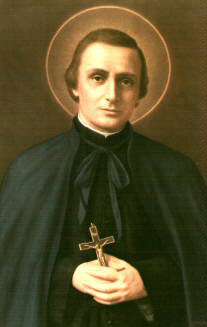 St. Peter Chanel: Saint of the Day for Sunday, April 28, 2024
 Prayer before a Crucifix: Prayer of the Day for Sunday, April 28, 2024


Copyright 2024 Catholic Online. All materials contained on this site, whether written, audible or visual are the exclusive property of Catholic Online and are protected under U.S. and International copyright laws, © Copyright 2024 Catholic Online. Any unauthorized use, without prior written consent of Catholic Online is strictly forbidden and prohibited.
Catholic Online is a Project of Your Catholic Voice Foundation, a Not-for-Profit Corporation. Your Catholic Voice Foundation has been granted a recognition of tax exemption under Section 501(c)(3) of the Internal Revenue Code. Federal Tax Identification Number: 81-0596847. Your gift is tax-deductible as allowed by law.
