We ask you, humbly: don't scroll away.
Hi readers, it seems you use Catholic Online a lot; that's great! It's a little awkward to ask, but we need your help. If you have already donated, we sincerely thank you. We're not salespeople, but we depend on donations averaging $14.76 and fewer than 1% of readers give. If you donate just $5.00, the price of your coffee, Catholic Online School could keep thriving. Thank you.Help Now >
Seven Deacons
FREE Catholic Classes
The seven men elected by the whole company of the original Christian community at Jerusalem and ordained by the Apostles, their office being chiefly to look after the poor and the common agape . The number of believers at Jerusalem had grown very rapidly, and complaints had been made that poor widows of Hellenistic Jews were neglected. The Apostles, not desiring to be drawn away from preaching and the higher spiritual ministry to care for material things, proposed to the believers to transfer such duties to suitable men, and following this suggestion the "Seven" were appointed ( Acts 6:1-6 ). This was the first separation of an ecclesiastical, hierarchical office from the Apostolate in which up to then the ecclesiastico-religious power had been concentrated. The "seven men" were "full of the Holy Ghost " and therefore able partially to represent the Apostles in more important matters referring to the spiritual life, as is seen in the case of St. Stephen at Jerusalem, of St. Philip in Samaria, and elswhere. Nothing further is known of several of the seven deacons, namely Nicanor, Timon, and Parmenas. Philip, who is called the "Evangelist", preached with much success in Samaria ( Acts 8:5 sq. ), so that the two Apostles Peter and John went there later to bestow the Holy Ghost on those whom he had baptized. He also baptized the eunuch of the Queen of the Ethiopians ( Acts 8:26 sqq. ). According to the further testimony of the Book of the Acts (xxi, 8 sqq.) he lived later with his prophetically gifted daughters at Caesarea. His feast is observed on 6 June, by the Greek Church on 11 October. In later narratives Prochorus is said to be one of the seventy disciples chosen by Christ; it is related that he went to Asia Minor as a missionary and became Bishop of Nicomedia. The apocryphal Acts of John were wrongly ascribed to him [cf. Lipsius, "Apokryphe Apostelgeschichten und Apostellegenden", I (Brunswick, 1883), 355 sqq.]
We ask you, humbly: don't scroll away.
Hi readers, it seems you use Catholic Online a lot; that's great! It's a little awkward to ask, but we need your help. If you have already donated, we sincerely thank you. We're not salespeople, but we depend on donations averaging $14.76 and fewer than 1% of readers give. If you donate just $5.00, the price of your coffee, Catholic Online School could keep thriving. Thank you.Help Now >
In the second half of the second century a curious tradition appeared respecting Nicholas. Irenaeus and the anti-heretical writers of the early Church who follow him refer the name of the Nicolaitans -- a dissolute, immoral sect that are opposed, as early as the Apocalypse of John -- to that of Nicholas and trace the sect back to him (Irenaeus, "Adv. haer.", I, xxvi, 3; III, xi, 1). Clement relates as a popular report (Stromat., II, xx) that Nicholas was reproved by the Apostles on account of his jealousy of his beautiful wife. On this he set her free and left it open for any one to marry her, saying that the flesh should be maltreated. His followers took this to mean that it was necessary to yield to the lusts of the flesh (cf. the Philosophumena, VII, 36). This narrative points to a similar tradition, such as is found in Irenaeus respecting the Nicolaitans. How far the tradition is historical cannot now be determined, perhaps the Nicolaitans themselves falsely ascribed their origin to the Deacon Nicholas [cf. Wohlenberg, "Nikolas von Antiochen und die Nikolaiten" in the "Neue kirchl. Zeitschrift" (1895), 923 sqq.].

 Hi readers, it seems you use Catholic Online a lot; that's great! It's a little awkward to ask, but we need your help. If you have already donated, we sincerely thank you. We're not salespeople, but we depend on donations averaging $14.76 and fewer than 1% of readers give. If you donate just $5.00, the price of your coffee, Catholic Online School could keep thriving. Thank you. Help Now >
Join the Movement
When you sign up below, you don't just join an email list - you're joining an entire movement for Free world class Catholic education.


-

-
Mysteries of the Rosary
-
St. Faustina Kowalska
-
Litany of the Blessed Virgin Mary
-
Saint of the Day for Wednesday, Oct 4th, 2023
-
Popular Saints
-
St. Francis of Assisi
-
Bible
-
Female / Women Saints
-
7 Morning Prayers you need to get your day started with God
-
Litany of the Blessed Virgin Mary


Sacrifices of Faith: The Pro-Life Legacies of St. Gianna and Jessica Hanna
-
How to love God by caring for our bodies
-
Pope Francis calls for negotiations to End Russia-Ukraine War
-
Pope Francis Contemplates Return to U.S. for United Nations Assembly Address
-
Pope Francis Calls on Faithful to Embrace Faith, Hope, and Charity in New Teaching Series


Daily Catholic
- Daily Readings for Sunday, April 28, 2024
- St. Peter Chanel: Saint of the Day for Sunday, April 28, 2024
- Prayer before a Crucifix: Prayer of the Day for Sunday, April 28, 2024
- Daily Readings for Saturday, April 27, 2024
- St. Zita: Saint of the Day for Saturday, April 27, 2024
- Prayer for the Dead # 2: Prayer of the Day for Saturday, April 27, 2024
 Daily Readings for Sunday, April 28, 2024
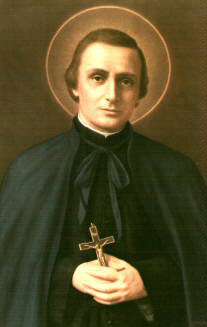 St. Peter Chanel: Saint of the Day for Sunday, April 28, 2024
 Prayer before a Crucifix: Prayer of the Day for Sunday, April 28, 2024

Copyright 2024 Catholic Online. All materials contained on this site, whether written, audible or visual are the exclusive property of Catholic Online and are protected under U.S. and International copyright laws, © Copyright 2024 Catholic Online. Any unauthorized use, without prior written consent of Catholic Online is strictly forbidden and prohibited.
Catholic Online is a Project of Your Catholic Voice Foundation, a Not-for-Profit Corporation. Your Catholic Voice Foundation has been granted a recognition of tax exemption under Section 501(c)(3) of the Internal Revenue Code. Federal Tax Identification Number: 81-0596847. Your gift is tax-deductible as allowed by law.