Because of You, 2.2 Million Students Are Being Formed in the Faith
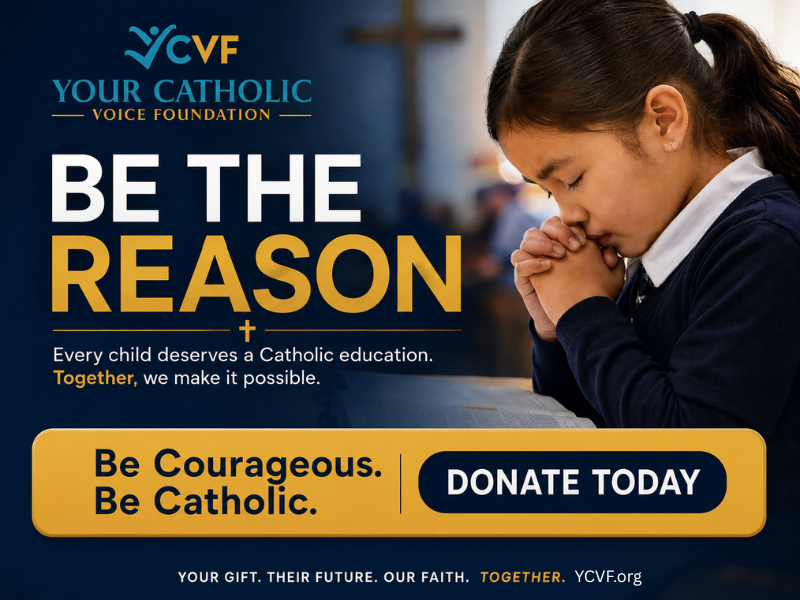
Because of generous supporters like you, Catholic Online School has already delivered free, faithful Catholic education to over 2.2 million students across 193 countries. In an age of noise and algorithms, you are helping form souls with truth, prayer, Scripture, and Christ.
If everyone who reads this gave just $5 — the cost of a coffee — we could reach even more families and keep this life-changing formation free for all. Be Courageous. Be Catholic. Stand with us today.
DONATE TODAY >The Scots College
FREE Catholic Classes
Clement VIII gave Scotland its college at Rome. The Bull of foundation, dated 5 December, 1600, conferred on the college all the privileges already enjoyed by the Greek, German, and English colleges. The pope also bestowed on the infant college various endowments, including the revenue of an abbey in the Neapolitan kingdom and a monthly pension from the revenues of the Dataria. Later, when the old Scotch Hospice, which had stood for centuries where now stands the Church of S. Andrea delle Fratte, was closed, its revenues were transferred to the Scots College.
The first students arrived in 1602, and for two years lived in the Via Tritone, but the site and buildings were unsuitable, and in 1604 they moved to the present admirable position in Via Quattro Fontane, close to the Quirinal Palace. The original buildings architecturally had little to commend them, but the handsome and commodious college which Poletti, the architect of St. Paul-without-the-Walls , erected on an extended site nearly a half a century ago, is much admired for its graceful architecture. Attached to the college is an elegant little church built in 1645, and dedicated to St. Andrew, Patron of Scotland. The first superior of the new institution was Mgr. Paolini, but in 1614 the Jesuits took charge, and the first of this line of rectors was Father Anderson, nephew of Mary Stuart's faithful friend, Leslie, Bishop of Ross. To him the college owes its rules and constitutions. During the Jesuit regime there was considerable trouble in the Scots as well as in the other pontifical colleges ; many students were entering the Society, and the authorities at home accused the Jesuits of tampering with the young men's vocations. Even the stringent application of the Mission Oath prescribed by Alexander VII did not end the friction. When the Society was suppressed (1773) the bishops in Scotland were asked to send a secular priest to be the new superior; but in an evil hour they urged that they had no one to spare. They lived to rue their refusal, for under the rule of Italian secular priests, finances, discipline, studies, piety, vocations, all suffered, and it was not altogether an unqualified misfortune when in 1798, owing to the occupation of Rome by the soldiers of the French Revolution, the college was forcibly closed, and the few remaining students returned to Scotland. In 1820 it was reopened through the indefatigable exertions of the Scots agent, Paul MacPherson, who succeeded in recovering the dilapidated college buildings along with the depleted revenues, and who became the first rector from the Scots secular clergy.
Gradually the college has bettered its status, and now (1911) with thirty-eight students to represent the half million of Scots Catholics it is proportionately the best attended of the colleges of Rome. The students have always frequented the Gregorian University. Among the benefactors of the college are Father William Thompson, the first Marchioness of Huntly, Cardinals Spinelli and Sacripanti, Henry Cardinal Duke of York, Mgr. Lennon, and Mgr. Taggart. A large proportion of the bishops who have ruled the Church in Scotland &151; today five out of six—have been Roman students, and all along a succession of pious, learned, and devoted missionaries from Rome has done much to keep alive and extend the Faith. Bishop Hay, whose centenary has been kept this year (1911) with special celebrations at Fort Augustus and Edinburgh, by his doctrinal and devotional works has laid the English-speaking Catholic world under a deep debt. Archbishop William Smith's work on the Pentateuch attracted much attention more than forty years ago among Biblical scholars as an answer to Colenso, and was pronounced by so great an authority as Cornely as the best work on the subject from any Catholic writer. The college has had its country house, where the students spend the summer recess, for nearly three centuries near Grottaferrata on the Alban Hills, in the midst of vineyards where the country is as health-giving and picturesque as it is full of legendary, historical, and antiquarian interest. The Scots College, like other pontifical colleges, is immediately subject to the Holy See, which now exercises its jurisdiction partly by a cardinal protector, and partly by the Sacred Consistorial Congregation. Previous to 1908 the papal authority was exercised through the Sacred Congregation of Propaganda , and the students were ordained with dimissorial letters issued by the cardinal protector. By a recent disposition the student's ordinary must declare in scriptis that he has no objection to offer against his subject's promotion to Orders.
Come Grow With Us
Sign up and walk the Catholic journey with millions around the world.
Receive inspiring emails on saints, daily readings, and free faith-building resources—no cost, ever.
This 15-Second Video Will Change How You See Catholic Education.
Watch Now
- 7 Morning Prayers
- Mysteries of the Rosary
- Litany of the Bl. Virgin Mary
- Popular Saints
- Popular Prayers
- Female Saints
- Saint Feast Days by Month
- Stations of the Cross
- St. Francis of Assisi
- St. Michael the Archangel
- The Apostles' Creed
- Unfailing Prayer to St. Anthony
- Pray the Rosary





Copyright 2026 Catholic Online. All materials contained on this site, whether written, audible or visual are the exclusive property of Catholic Online and are protected under U.S. and International copyright laws, © Copyright 2026 Catholic Online. Any unauthorized use, without prior written consent of Catholic Online is strictly forbidden and prohibited.
Catholic Online is a Project of Your Catholic Voice Foundation, a Not-for-Profit Corporation. Your Catholic Voice Foundation has been granted a recognition of tax exemption under Section 501(c)(3) of the Internal Revenue Code. Federal Tax Identification Number: 81-0596847. Your gift is tax-deductible as allowed by law.