We ask you, humbly: don't scroll away.
Hi readers, it seems you use Catholic Online a lot; that's great! It's a little awkward to ask, but we need your help. If you have already donated, we sincerely thank you. We're not salespeople, but we depend on donations averaging $14.76 and fewer than 1% of readers give. If you donate just $5.00, the price of your coffee, Catholic Online School could keep thriving. Thank you.Help Now >
Abbey of Sainte-Geneviève
FREE Catholic Classes
The Abbey of Sainte-Geneviève, in Paris, was founded by King Clovis who established there a college of clerics, later called canons regular. How long these clerics observed the regular life is unknown, but in 1147 secular canons officiated in the church. King Louis VII and Pope III, having witnessed some disorders, determined to restore the regular discipline and at first thought to call monks, but as the canons preferred some of their own order, the pope consented. At the request of Sugerus and St. Bernard, Gildwin, the first Abbot of St-Victor's, St. Bernard, Gildwin, the first Abbot of St-Victor's where the canonical rule had been recently established, consented to send Odo, the Prior of his abbey. There were difficulties, but order finally prevailed and some of the canons joined the reform. Among these was the young Canon William, already known for his virtues and learning. At the request of Absalon, Bishop of Roskild, in Denmark, who when a student at Ste-Geneviève's had known him, William was sent to that country to reform a monastery of canons in the Isle of Eskil. In spite of untold trials, obstacles, and persecutions he succeeded in his enterprise and even founded another monastery, which he dedicated to the Holy Paraclete. He died in 1206, and was canonized by Honorius III. It was natural that close relations should exist between Ste-Geneviève's and its foundations in Denmark. Peter, a young man who made his profession at the abbey, became Bishop of Roskild; Valdemar, brother of King Knut, died at Ste-Geneviève's; and Abbot Stephen of Tournai wrote to William and his friends to obtain lead for the roof of his abbey.
We ask you, humbly: don't scroll away.
Hi readers, it seems you use Catholic Online a lot; that's great! It's a little awkward to ask, but we need your help. If you have already donated, we sincerely thank you. We're not salespeople, but we depend on donations averaging $14.76 and fewer than 1% of readers give. If you donate just $5.00, the price of your coffee, Catholic Online School could keep thriving. Thank you.Help Now >
Like the Abbey of St-Victor, Ste-Geneviève's became a celebrated seat of learning. St-Victor's, Ste-Geneviève's, and Notre-Dame were the cradle of the University of Paris . Abelard at different epochs lectured in this abbey-school. By right and custom the two sister-abbeys frequently exchanged subjects. Peter de Ferrière, Abbot of St-Victor's was at one time prior of Epinay, a priory of Ste-Geneviève's; William of Auxerre, a professed canon of St-Victor's in 1254, held the office of cellarer, and became Abbot of Ste-Geneviève's; and Marcel, successively canon at St-Victor's and Ste-Geneviève's, was in 1198 made Abbot of Cisoing. Like most religious houses, this abbey, falling into the hands of abbots in commendam , relaxation and disorders were the consequence. In the beginning of the seventeenth century Cardinal de La Rochefoucauld undertook its reform. He brought from Senlis a holy man, Charles Faure, who had already restored the canonical rule in the ancient Abbey of Silvanect. Once more the Rule of St. Augustine was faithfully observed at Ste-Geneviève's which became the mother-house of the Gallican congregaton. Charled Faure, died in 1644. The second spring of the abbey was perhaps even more glorious than the first. By the middle of the seventeenth century the abbot-general of the congregation had under his jurisdiction more than one hundred abbeys and priories. Men like Fronteau, chancellor of the university and author of many works, Laleman, Chapponel, Reginier, Chengot, Beurier, du Moulinet, founder of the national library, and Augustine Hay, a Scotchman who wrote the "Scotia sacra" and officated at Holyrood, Scotland, in 1687, were sons of the French congregation. When in 1790 the revolutionary assembly declared all religious vows void, and opened the doors to all the inmates of the monasteries, there were thirty-nine canons at Ste-Geneviève's. This was the end of that illustrious abbey and school.

Join the Movement
When you sign up below, you don't just join an email list - you're joining an entire movement for Free world class Catholic education.


-

-
Mysteries of the Rosary
-
St. Faustina Kowalska
-
Litany of the Blessed Virgin Mary
-
Saint of the Day for Wednesday, Oct 4th, 2023
-
Popular Saints
-
St. Francis of Assisi
-
Bible
-
Female / Women Saints
-
7 Morning Prayers you need to get your day started with God
-
Litany of the Blessed Virgin Mary


Sacrifices of Faith: The Pro-Life Legacies of St. Gianna and Jessica Hanna
-
How to love God by caring for our bodies
-
Pope Francis calls for negotiations to End Russia-Ukraine War
-
Pope Francis Contemplates Return to U.S. for United Nations Assembly Address
-
Pope Francis Calls on Faithful to Embrace Faith, Hope, and Charity in New Teaching Series


Daily Catholic
- Daily Readings for Sunday, April 28, 2024
- St. Peter Chanel: Saint of the Day for Sunday, April 28, 2024
- Prayer before a Crucifix: Prayer of the Day for Sunday, April 28, 2024
- Daily Readings for Saturday, April 27, 2024
- St. Zita: Saint of the Day for Saturday, April 27, 2024
- Prayer for the Dead # 2: Prayer of the Day for Saturday, April 27, 2024
 Daily Readings for Sunday, April 28, 2024
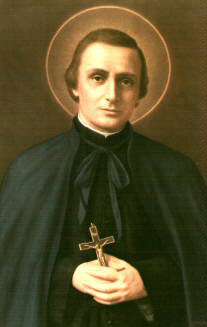 St. Peter Chanel: Saint of the Day for Sunday, April 28, 2024
 Prayer before a Crucifix: Prayer of the Day for Sunday, April 28, 2024
 Hi readers, it seems you use Catholic Online a lot; that's great! It's a little awkward to ask, but we need your help. If you have already donated, we sincerely thank you. We're not salespeople, but we depend on donations averaging $14.76 and fewer than 1% of readers give. If you donate just $5.00, the price of your coffee, Catholic Online School could keep thriving. Thank you. Help Now >

Copyright 2024 Catholic Online. All materials contained on this site, whether written, audible or visual are the exclusive property of Catholic Online and are protected under U.S. and International copyright laws, © Copyright 2024 Catholic Online. Any unauthorized use, without prior written consent of Catholic Online is strictly forbidden and prohibited.
Catholic Online is a Project of Your Catholic Voice Foundation, a Not-for-Profit Corporation. Your Catholic Voice Foundation has been granted a recognition of tax exemption under Section 501(c)(3) of the Internal Revenue Code. Federal Tax Identification Number: 81-0596847. Your gift is tax-deductible as allowed by law.