Peter Roh
FREE Catholic Classes
Born at Conthey (Gunthis) in the canton of Valais ( French Switzerland ), 14 August, 1811; d. at Bonn, 17 May, 1872. Up to his thirteenth year he spoke only French, so that he had to learn German from a German priest in the vicinity before he was able to begin his gymnasial studies in the boarding-school kept by the Jesuits at Brig in Switzerland. Later he became a day-pupil at the gymnasium kept by the Jesuits at Sittin. While here he resolved to enter the Society of Jesus (1829); strange to say the external means of bringing him to this decision was the reading of Pascal's pamphlet "Monita Secreta". He taught the lower gymnasial classes at the lyceum at Fribourg. During these years of study Roh showed two characteristic qualities: the talent of imparting knowledge in a clear and convincing manner, and an unusual gift for oratory. These abilities determined his future work to be that of a teacher and a preacher. He was first (1842-5) professor of dogmatics at Fribourg, then at the academy at Lucerne which had just been given to the Jesuits. At the same time he preached and aided as opportunity occurred in missions. These labors were interrupted by the breaking out of the war of the Swiss Sonderbund, during which he was military chaplain ; but after its unfortunate end he was obliged to flee into Piedmont, from there to Linz and Gries, finally finding a safe refuge at Rappoltsweiler in Alsace as tutor in the family of his countryman and friend Siegwart-Müller, also expatriated. Here he stayed until 1849. A professorship of dogmatics at Louvain only lasted a year. When the missions for the common people were opened in Germany in 1850 his real labors began; as he said himself, "Praise God, I now come into my element." Both friend and foe acknowledge that the success of these missions was largely due to Roh, and his powerful and homely eloquence received the highest praise. He was an extemporaneous speaker; the writing of sermons and addresses was, as he himself confessed, "simply impossible" to him; yet, thoroughly trained in philosophy and theology, he could also write when necessary, as several articles from him in the "Stimmen aus Maria-Laach" prove. His pamphlet "Das alte Lied: der Zweck heiligt die Mittel, im Texte verbessert und auf neue Melodie gesetzt" has preserved a certain reputation until the present day, as Father Roh declared he would give a thousand gulden to the person who could show to the faculty of law of Bonn or Heidelberg a book written by a Jesuit which taught the principle that the end justifies the means. The prize is still unclaimed. Some of his sermons have also been preserved; they were printed against his will from stenographic notes. Father Roh's greatest strength lay in his power of speech and "he was the most powerful and effective preacher of the German tongue that the Jesuits have had in this century".

We ask you, humbly: don't scroll away.
Hi readers, it seems you use Catholic Online a lot; that's great! It's a little awkward to ask, but we need your help. If you have already donated, we sincerely thank you. We're not salespeople, but we depend on donations averaging $14.76 and fewer than 1% of readers give. If you donate just $5.00, the price of your coffee, Catholic Online School could keep thriving. Thank you.Help Now >
Join the Movement
When you sign up below, you don't just join an email list - you're joining an entire movement for Free world class Catholic education.


-

-
Mysteries of the Rosary
-
St. Faustina Kowalska
-
Litany of the Blessed Virgin Mary
-
Saint of the Day for Wednesday, Oct 4th, 2023
-
Popular Saints
-
St. Francis of Assisi
-
Bible
-
Female / Women Saints
-
7 Morning Prayers you need to get your day started with God
-
Litany of the Blessed Virgin Mary


Sacrifices of Faith: The Pro-Life Legacies of St. Gianna and Jessica Hanna
-
How to love God by caring for our bodies
-
Pope Francis calls for negotiations to End Russia-Ukraine War
-
Pope Francis Contemplates Return to U.S. for United Nations Assembly Address
-
Pope Francis Calls on Faithful to Embrace Faith, Hope, and Charity in New Teaching Series


Daily Catholic
- Daily Readings for Sunday, April 28, 2024
- St. Peter Chanel: Saint of the Day for Sunday, April 28, 2024
- Prayer before a Crucifix: Prayer of the Day for Sunday, April 28, 2024
- Daily Readings for Saturday, April 27, 2024
- St. Zita: Saint of the Day for Saturday, April 27, 2024
- Prayer for the Dead # 2: Prayer of the Day for Saturday, April 27, 2024
 Daily Readings for Sunday, April 28, 2024
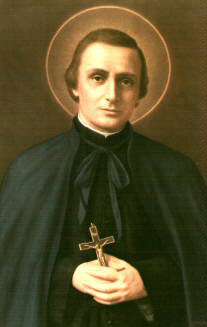 St. Peter Chanel: Saint of the Day for Sunday, April 28, 2024
 Prayer before a Crucifix: Prayer of the Day for Sunday, April 28, 2024

We ask you, humbly: don't scroll away.
Hi readers, it seems you use Catholic Online a lot; that's great! It's a little awkward to ask, but we need your help. If you have already donated, we sincerely thank you. We're not salespeople, but we depend on donations averaging $14.76 and fewer than 1% of readers give. If you donate just $5.00, the price of your coffee, Catholic Online School could keep thriving. Thank you.Help Now >

Copyright 2024 Catholic Online. All materials contained on this site, whether written, audible or visual are the exclusive property of Catholic Online and are protected under U.S. and International copyright laws, © Copyright 2024 Catholic Online. Any unauthorized use, without prior written consent of Catholic Online is strictly forbidden and prohibited.
Catholic Online is a Project of Your Catholic Voice Foundation, a Not-for-Profit Corporation. Your Catholic Voice Foundation has been granted a recognition of tax exemption under Section 501(c)(3) of the Internal Revenue Code. Federal Tax Identification Number: 81-0596847. Your gift is tax-deductible as allowed by law.