 Hi readers, it seems you use Catholic Online a lot; that's great! It's a little awkward to ask, but we need your help. If you have already donated, we sincerely thank you. We're not salespeople, but we depend on donations averaging $14.76 and fewer than 1% of readers give. If you donate just $5.00, the price of your coffee, Catholic Online School could keep thriving. Thank you. Help Now >
St. John Roberts
FREE Catholic Classes
First Prior of St. Gregory's, Douai (now Downside Abbey ), b. 1575-6; martyred 10 December, 1610. He was the son of John and Anna Roberts of Trawsfynydd, Merionethshire, N. Wales. He matriculated at St. John's College, Oxford, in February, 1595-6, but left after two years without taking a degree and entered as a law student at one of the Inns of Court. In 1598 he travelled on the continent and in Paris, through the influence of a Catholic fellow- countryman, was converted. By the advice of John Cecil, an English priest who afterwards became a Government spy, he decided to enter the English College at Valladolid, where he was admitted 18 October, 1598. The following year, however, he left the college for the Abbey of St. Benedict, Valladolid; whence, after some months, he was sent to make his novitiate in the great Abbey of St. Martin at Compostella where he made his profession towards the end of 1600. His studies completed he was ordained, and set out for England 26 December, 1602. Although observed by a Government spy, Roberts and his companions succeeded in entering the country in April, 1603; but, his arrival being known, he was arrested and banished on 13 May following. He reached Douai on 24 May and soon managed to return to England where he laboured zealously among the plague-stricken people in London. In 1604, while embarking for Spain with four postulants, he was again arrested, but not being recognized as a priest was soon released and banished, but returned again at once. On 5 November, 1605, while Justice Grange was searching the house of Mrs. Percy, first wife of Thomas Percy, who was involved in the Gunpowder Plot, he found Roberts there and arrested him. Though acquitted of any complicity in the plot itself, Roberts was imprisoned in the Gatehouse at Westminster for seven months and then exiled anew in July, 1606.
Hi readers, it seems you use Catholic Online a lot; that's great! It's a little awkward to ask, but we need your help. If you have already donated, we sincerely thank you. We're not salespeople, but we depend on donations averaging $14.76 and fewer than 1% of readers give. If you donate just $5.00, the price of your coffee, Catholic Online School could keep thriving. Thank you. Help Now >
This time he was absent for some fourteen months, nearly all of which he spent at Douai where he founded a house for the English Benedictine monks who had entered various Spanish monasteries. This was the beginning of the monastery of St. Gregory at Douai which still exists as Downside Abbey, near Bath, England. In October, 1607, Roberts returned to England, was again arrested in December and placed in the Gatehouse, from which he contrived to escape after some months. He now lived for about a year in London and was again taken some time before May, 1609, in which month he was taken to Newgate and would have been executed but for the intercession of de la Broderie, the French ambassador, whose petition reduced the sentence to banishment. Roberts again visited Spain and Douai, but returned to England within a year, knowing that his death was certain if he were again captured. This event took place on 2 December, 1610; the pursuivants arriving just as he was concluding Mass, took him to Newgate in his vestments. On 5 December he was tried and found guilty under the Act forbidding priests to minister in England, and on 10 December was hanged, drawn, and quartered at Tyburn. The body of Roberts was recovered and taken to St. Gregory's, Douai, but disappeared during the French Revolution . Two fingers are still preserved at Downside and Erdington Abbeys respectively and a few minor relics exist. At Erdington also is a unique contemporary engraving of the martyrdom which has been reproduced in the "Downside Review" (XXIV, 286). The introduction of the cause of beatification was approved by Leo XIII in his Decree of 4 December, 1886.
[ Note: In 1970, John Roberts was canonized by Pope Paul VI as one of the Forty Martyrs of England and Wales, whose joint feastday is kept on 25 October.]

We ask you, humbly: don't scroll away.
Hi readers, it seems you use Catholic Online a lot; that's great! It's a little awkward to ask, but we need your help. If you have already donated, we sincerely thank you. We're not salespeople, but we depend on donations averaging $14.76 and fewer than 1% of readers give. If you donate just $5.00, the price of your coffee, Catholic Online School could keep thriving. Thank you.Help Now >
Join the Movement
When you sign up below, you don't just join an email list - you're joining an entire movement for Free world class Catholic education.


-

-
Mysteries of the Rosary
-
St. Faustina Kowalska
-
Litany of the Blessed Virgin Mary
-
Saint of the Day for Wednesday, Oct 4th, 2023
-
Popular Saints
-
St. Francis of Assisi
-
Bible
-
Female / Women Saints
-
7 Morning Prayers you need to get your day started with God
-
Litany of the Blessed Virgin Mary


Sacrifices of Faith: The Pro-Life Legacies of St. Gianna and Jessica Hanna
-
How to love God by caring for our bodies
-
Pope Francis calls for negotiations to End Russia-Ukraine War
-
Pope Francis Contemplates Return to U.S. for United Nations Assembly Address
-
Pope Francis Calls on Faithful to Embrace Faith, Hope, and Charity in New Teaching Series


Daily Catholic
- Daily Readings for Sunday, April 28, 2024
- St. Peter Chanel: Saint of the Day for Sunday, April 28, 2024
- Prayer before a Crucifix: Prayer of the Day for Sunday, April 28, 2024
- Daily Readings for Saturday, April 27, 2024
- St. Zita: Saint of the Day for Saturday, April 27, 2024
- Prayer for the Dead # 2: Prayer of the Day for Saturday, April 27, 2024
 Daily Readings for Sunday, April 28, 2024
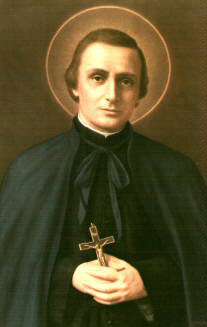 St. Peter Chanel: Saint of the Day for Sunday, April 28, 2024
 Prayer before a Crucifix: Prayer of the Day for Sunday, April 28, 2024


Copyright 2024 Catholic Online. All materials contained on this site, whether written, audible or visual are the exclusive property of Catholic Online and are protected under U.S. and International copyright laws, © Copyright 2024 Catholic Online. Any unauthorized use, without prior written consent of Catholic Online is strictly forbidden and prohibited.
Catholic Online is a Project of Your Catholic Voice Foundation, a Not-for-Profit Corporation. Your Catholic Voice Foundation has been granted a recognition of tax exemption under Section 501(c)(3) of the Internal Revenue Code. Federal Tax Identification Number: 81-0596847. Your gift is tax-deductible as allowed by law.