We ask you, urgently: don't scroll past this
Dear readers, Catholic Online was de-platformed by Shopify for our pro-life beliefs. They shut down our Catholic Online, Catholic Online School, Prayer Candles, and Catholic Online Learning Resources essential faith tools serving over 1.4 million students and millions of families worldwide. Our founders, now in their 70's, just gave their entire life savings to protect this mission. But fewer than 2% of readers donate. If everyone gave just $5, the cost of a coffee, we could rebuild stronger and keep Catholic education free for all. Stand with us in faith. Thank you.Help Now >
St. Felix of Nola
Facts
Patron: of Nola, Italy
Author and Publisher - Catholic Online
Printable Catholic Saints PDFs
Shop St. Felix of Nola
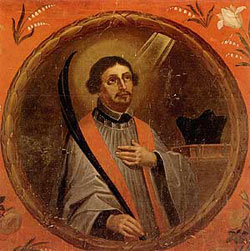
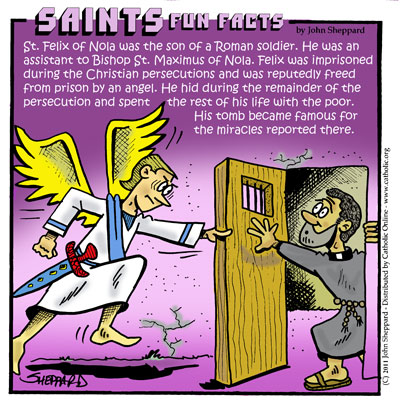
Felix was the son of Hermias, a Syrian who had been a Roman soldier. He was born on his father's estate at Nola near Naples, Italy. On the death of his father, Felix distributed his inheritance to the poor, was ordained by Bishop St. Maximus of Nola, and became his assistant. When Maximus fled to the desert at the beginning of Decius' persecution of the Christians in 250, Felix was seized in his stead and imprisoned. He was reputedly released from prison by an angel, who directed him to the ailing Maximus, whom he brought back to Nola. Even after Decius' death in 251, Felix was a hunted man but kept well hidden until the persecution ended. When Maximus died, the people unanimously selected Felix as their Bishop, but he declined the honor in favor of Quintus, a senior priest. Felix spent the rest of his life on a small piece of land sharing what he had with the poor, and died there on January 14. His tomb soon became famous for the miracles reported there, and when St. Paulinus became bishop of Nola almost a century later (410), he wrote about his predecessor, the source of our information about him, adding legendary material that had grown up about Felix in the intervening century. His feast day is January 14th.

Join the Movement
When you sign up below, you don't just join an email list - you're joining an entire movement for Free world class Catholic education.
-

- Easter / Lent
- Ascension Day
- 7 Morning Prayers
- Mysteries of the Rosary
- Litany of the Bl. Virgin Mary
- Popular Saints
- Popular Prayers
- Female Saints
- Saint Feast Days by Month
- Stations of the Cross
- St. Francis of Assisi
- St. Michael the Archangel
- The Apostles' Creed
- Unfailing Prayer to St. Anthony
- Pray the Rosary


Catholic Online News Declares War on Lies – A 2,000-Year-Old Force for Truth Enters the Global News Arena

How to Build a Nuclear Bomb: Start to Strike

Saint Anthony of Padua: The Miracle-Worker Who Brings Us Back to Christ
Daily Catholic
- Daily Readings for Sunday, June 15, 2025
- St. Germaine Cousin: Saint of the Day for Sunday, June 15, 2025
- Prayer for God's Blessing of One's Daily Work: Prayer of the Day for Sunday, June 15, 2025
- Daily Readings for Saturday, June 14, 2025
- St. Methodius I: Saint of the Day for Saturday, June 14, 2025
- Prayer for America: Prayer of the Day for Saturday, June 14, 2025
 Daily Readings for Sunday, June 15, 2025
 St. Germaine Cousin: Saint of the Day for Sunday, June 15, 2025
 Prayer for God's Blessing of One's Daily Work: Prayer of the Day for Sunday, June 15, 2025
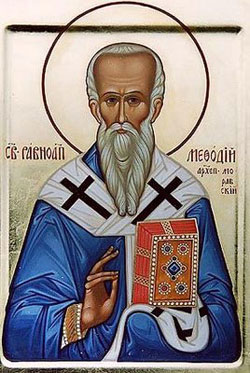 St. Methodius I: Saint of the Day for Saturday, June 14, 2025


Copyright 2025 Catholic Online. All materials contained on this site, whether written, audible or visual are the exclusive property of Catholic Online and are protected under U.S. and International copyright laws, © Copyright 2025 Catholic Online. Any unauthorized use, without prior written consent of Catholic Online is strictly forbidden and prohibited.
Catholic Online is a Project of Your Catholic Voice Foundation, a Not-for-Profit Corporation. Your Catholic Voice Foundation has been granted a recognition of tax exemption under Section 501(c)(3) of the Internal Revenue Code. Federal Tax Identification Number: 81-0596847. Your gift is tax-deductible as allowed by law.