St. Zita
Facts
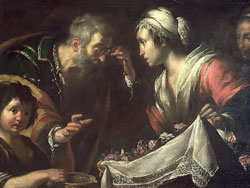
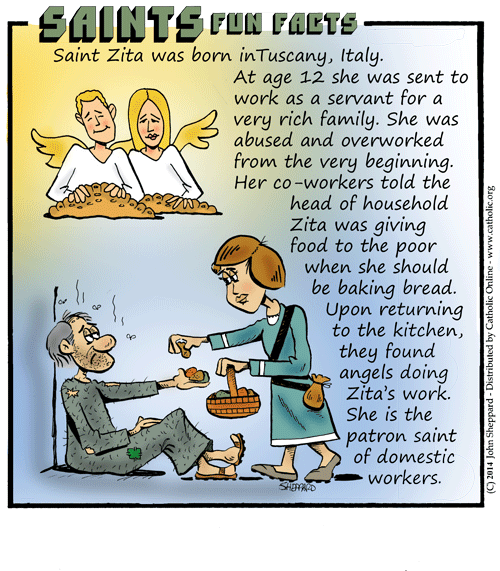
St. Zita was born into a poor but holy Christian family. Her older sister became a Cistercian nun and her uncle Graziano was a hermit whom the local people regarded as a saint. Zita herself always tried to do God's will obediently whenever it was pointed out to her by her mother. At the age of twelve Zita became a housekeeper in the house of a rich weaver in Lucca, Italy, eight miles from her home at Monte Sagrati. As things turned out, she stayed with that family for the last forty-eight years of her life. She found time every day to attend Mass and to recite many prayers, as well as to carry out her household duties so perfectly that the other servants were jealous of her. Indeed, her work was part of her religion! She use to say: "a servant is not holy if she is not busy; lazy people of our position is fake holiness." At first, her employers were upset by her generous gifts of food to the poor, but in time, they were completely won over by her patience and goodness and she became a very close friend. St. Zita was given a free reign over her working schedule and busied herself with visits to the sick and those in prison. Word spread rapidly in Lucca of her good deeds and the heavenly visions that appeared to her. She was sought out by the important people, and at her death in 1278 the people acclaimed her as a saint. She is the patroness of domestic workers. Her feast day is April 27.

Join the Movement
When you sign up below, you don't just join an email list - you're joining an entire movement for Free world class Catholic education.
-

- Easter / Lent
- Ascension Day
- 7 Morning Prayers
- Mysteries of the Rosary
- Litany of the Bl. Virgin Mary
- Popular Saints
- Popular Prayers
- Female Saints
- Saint Feast Days by Month
- Stations of the Cross
- St. Francis of Assisi
- St. Michael the Archangel
- The Apostles' Creed
- Unfailing Prayer to St. Anthony
- Pray the Rosary


The Coup Against Trump: A Treasonous Conspiracy to Overthrow the United States

Back to School: Reclaiming the Catholic Family

The Law of Forgiveness: Hope for Every Heart
Daily Catholic
- Daily Readings for Monday, August 18, 2025
- St. Helena: Saint of the Day for Monday, August 18, 2025
- St. Christopher's Prayer for Strength: Prayer of the Day for Monday, August 18, 2025
- Daily Readings for Sunday, August 17, 2025
- St. Clare of Montefalco: Saint of the Day for Sunday, August 17, 2025
- Act of Faith: Prayer of the Day for Sunday, August 17, 2025
 Daily Readings for Monday, August 18, 2025
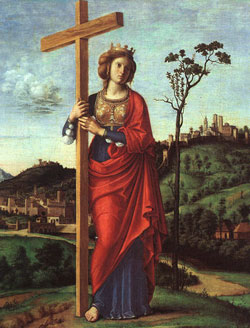 St. Helena: Saint of the Day for Monday, August 18, 2025
 St. Christopher's Prayer for Strength: Prayer of the Day for Monday, August 18, 2025
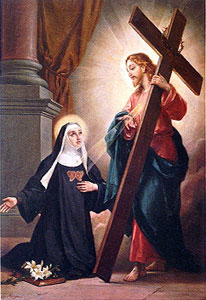 St. Clare of Montefalco: Saint of the Day for Sunday, August 17, 2025


Copyright 2025 Catholic Online. All materials contained on this site, whether written, audible or visual are the exclusive property of Catholic Online and are protected under U.S. and International copyright laws, © Copyright 2025 Catholic Online. Any unauthorized use, without prior written consent of Catholic Online is strictly forbidden and prohibited.
Catholic Online is a Project of Your Catholic Voice Foundation, a Not-for-Profit Corporation. Your Catholic Voice Foundation has been granted a recognition of tax exemption under Section 501(c)(3) of the Internal Revenue Code. Federal Tax Identification Number: 81-0596847. Your gift is tax-deductible as allowed by law.