St. Jovita
Facts
Patron: of Brescia
Death: 120
Author and Publisher - Catholic Online
Printable Catholic Saints PDFs
Shop St. Jovita

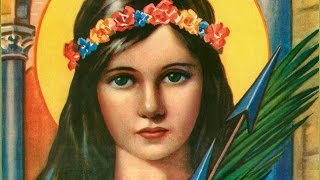
Faustinus and Jovita were brothers, nobly born and natives of Brescia. All the incidents in their reputed "Acts" are of doubtful authority, and we can only be sure of their names and martyrdom. According to the tradition of Brescia, they preached Christianity fearlessly while their bishop lay in hiding. Their zeal excited the fury of the heathens against them, then they were arrested by a heathen lord called Julian. They were tortured and dragged to Milan, Rome and Naples, and then brought back to Brescia. As neither threats nor torments could shake their constancy, the Emperor Hadrian, who happened to be passing through Brescia, commended them to be beheaded. The city of Brescia honors them as its chief patrons and claims to possess their relics. On April 18 the Roman Martyrology names the martyr St. Calocerus, who figures largely in the legendary history of St. Faustinus and Jovita, whose heroic confession he is said to have witnessed when, as a court official, he accompanied Hadrian to his native city Brescia and was present in the amphitheatre. The constancy of the two confessors and the refusal of the wild beasts to touch them brought about his conversion, and he was baptized by Bishop Apollonius with twelve thousand other citizens. He was tortured and imprisoned in several Italian towns notably in Asti, where he instructed St. Secundus who visited him in gaol. Eventually, we are told, he was taken to Albanga in Liguria and beheaded on the seashore. Their feast day is February 15.

Come Grow With Us
Sign up and walk the Catholic journey with millions around the world.
Receive inspiring emails on saints, daily readings, and free faith-building resources—no cost, ever.
This 15-Second Video Will Change How You See Catholic Education.
Watch Now

- 7 Morning Prayers
- Mysteries of the Rosary
- Litany of the Bl. Virgin Mary
- Popular Saints
- Popular Prayers
- Female Saints
- Saint Feast Days by Month
- Stations of the Cross
- St. Francis of Assisi
- St. Michael the Archangel
- The Apostles' Creed
- Unfailing Prayer to St. Anthony
- Pray the Rosary









Copyright 2026 Catholic Online. All materials contained on this site, whether written, audible or visual are the exclusive property of Catholic Online and are protected under U.S. and International copyright laws, © Copyright 2026 Catholic Online. Any unauthorized use, without prior written consent of Catholic Online is strictly forbidden and prohibited.
Catholic Online is a Project of Your Catholic Voice Foundation, a Not-for-Profit Corporation. Your Catholic Voice Foundation has been granted a recognition of tax exemption under Section 501(c)(3) of the Internal Revenue Code. Federal Tax Identification Number: 81-0596847. Your gift is tax-deductible as allowed by law.