Indulgences
As to Indulgences. The power to forgive sins necessarily included the power to remit the eternal punishment due to them. But there remains temporal punishment. But besides the power to forgive sins and their eternal punishment Christ also gave his Church the power to remit temporal punishment for sins.
In the remission of temporal punishment, that is, in indulgences, it is not a matter of regaining the state of grace, or of the essential goods of the supernatural order which we receive in the sacraments and through the objective effects of the sacraments ex opere operato (i.e. independently of one's own or the Church's merits but solely by the power of Christ working in the sacramental signs), but of a lessening of the punishments still due for sin. This remission comes about on the basis of the value as satisfaction of the works and sufferings of Christ and of all who can accomplish such works in the grace of Christ, i.e. of all persons in a state of grace. The application of this satisfying value, however, is not attached to any sacramental sign in itself but to certain actions which can be prescribed by the Church. Thus, the twofold basis of the doctrine of indulgences is: first, the satisfying and supernaturally meritorious value of all works done in a state of grace, and second, the community of saints, of all, that is, who have been redeemed by Christ and live and work in his grace, in communion with Christ and with one another.
Since the gaining of indulgences is related to certain actions, great abuses and scandals have been possible. The in part very abusive practice in matter of indulgences at the end of the Middle Ages served the Reformers as a symbol of a mechanistic organization of supernatural life, of the worldly character and avarice of the Church who touted holy things in the market-place. Against the, the Church declared her power to grant indulgences, and their value for the faithful, but at the same time she pull all her force into the campaign against abuses.
THE CHURCH THUS TEACHES
The Church, then, teaches she has received from Christ, on the basis of the treasury of his merits, the power to grant to the faithful on certain conditions indulgences i.e. the remission of temporal punishment due to sin. Indulgences may be applied to the dead. Abuses are to be avoided. The use of indulgences is salutary for the people of Christ.
More Prayers
A Guide for Confession



Advent Prayers
Angel Prayers
Ash Wednesday Prayers
Babies Prayers
Baptism Prayers
Basic Prayers
Biblical Prayers
Birthday Prayers
Career Prayers
Children Prayers
Christ Prayers
Christmas Prayers
Communion Prayers
Confession Prayers
Congregation of the Blessed Sacrament Prayers
Consolation Prayers
Crucifix Prayers
Danger Prayers
Devotion Prayers
Disasters Prayers
Divinity Prayers
Dying Prayers
Easter Prayers
en Espańol Prayers
Evening Prayers
Faith Prayers
Family Prayers
Forgiveness Prayers
God Prayers
Grace Prayers
Guardian Angel Prayers
Guidance Prayers
Haiku Prayers
Healing Prayers
Holiday Prayers
Holiness Prayers
Holy Spirit Prayers
Home Prayers
Hope Prayers
Inspiration Prayers
Intercession Prayers
Invocation Prayers
Jesus Christ Prayers
Lent Prayers
Life Prayers
Litanies Prayers
Love Prayers
Marian (Mary) Prayers
Marriage Prayers
Martyrs Prayers
Mass Prayers
Meals Prayers
Morning Prayers
Motherhood Prayers
Other Prayers
Peace Prayers
Perseverance Prayers
Pope Prayers
Pope Francis I Prayers
Pope Leo XIII Prayers
Pope Pius XII Prayers
Praise Prayers
Prayers as Blessings
Prayers by Pope John Paul II
Prayers by St. Francis de Sales
Prayers for the Pope
Prayers in French
Prayers in German
Prayers in Latin
Prayers in Spanish
Prayers of the Church
Prayers of the Cross
Priests Prayers
Pro Life Prayers
Prosperity Prayers
Protection Prayers
Purgatory Prayers
Repentance Prayers
Requests Prayers
Saint Prayers
Salvation Prayers
Sick Prayers
Special Intentions Prayers
St. Anthony of Padua Prayers
St. Gregory the Great Prayers
St. Joseph Prayers
St. Patrick Prayers
St. Valentine Prayers
Stewardship Prayers
Strength Prayers
Study Prayers
Thanks Prayers
The Rosary in Croation
The Rosary in Dutch
The Rosary in English
The Rosary in French
The Rosary in German
The Rosary in Irish-Gaelic
The Rosary in Italian
The Rosary in Latin
The Rosary in Polish
Travel Prayers
Trust Prayers
Virtue Prayers
Vocation Prayers
Wedding Prayers
Wisdom Prayers
We ask you, humbly: don't scroll away.
Hi readers, it seems you use Catholic Online a lot; that's great! It's a little awkward to ask, but we need your help. If you have already donated, we sincerely thank you. We're not salespeople, but we depend on donations averaging $14.76 and fewer than 1% of readers give. If you donate just $5.00, the price of your coffee, Catholic Online School could keep thriving. Thank you.Help Now >
Join the Movement
When you sign up below, you don't just join an email list - you're joining an entire movement for Free world class Catholic education.


-

-
Mysteries of the Rosary
-
St. Faustina Kowalska
-
Litany of the Blessed Virgin Mary
-
Saint of the Day for Wednesday, Oct 4th, 2023
-
Popular Saints
-
St. Francis of Assisi
-
Bible
-
Female / Women Saints
-
7 Morning Prayers you need to get your day started with God
-
Litany of the Blessed Virgin Mary


Sacrifices of Faith: The Pro-Life Legacies of St. Gianna and Jessica Hanna
-
How to love God by caring for our bodies
-
Pope Francis calls for negotiations to End Russia-Ukraine War
-
Pope Francis Contemplates Return to U.S. for United Nations Assembly Address
-
Pope Francis Calls on Faithful to Embrace Faith, Hope, and Charity in New Teaching Series

Daily Catholic
- Daily Readings for Saturday, April 27, 2024
- St. Zita: Saint of the Day for Saturday, April 27, 2024
- Prayer for the Dead # 2: Prayer of the Day for Saturday, April 27, 2024
- Daily Readings for Friday, April 26, 2024
- St. Cletus: Saint of the Day for Friday, April 26, 2024
- Prayer before the Closing of the Day: Prayer of the Day for Friday, April 26, 2024
 Daily Readings for Saturday, April 27, 2024
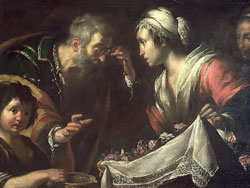 St. Zita: Saint of the Day for Saturday, April 27, 2024
 Prayer for the Dead # 2: Prayer of the Day for Saturday, April 27, 2024
We ask you, humbly: don't scroll away.
Hi readers, it seems you use Catholic Online a lot; that's great! It's a little awkward to ask, but we need your help. If you have already donated, we sincerely thank you. We're not salespeople, but we depend on donations averaging $14.76 and fewer than 1% of readers give. If you donate just $5.00, the price of your coffee, Catholic Online School could keep thriving. Thank you.Help Now >


Copyright 2024 Catholic Online. All materials contained on this site, whether written, audible or visual are the exclusive property of Catholic Online and are protected under U.S. and International copyright laws, © Copyright 2024 Catholic Online. Any unauthorized use, without prior written consent of Catholic Online is strictly forbidden and prohibited.
Catholic Online is a Project of Your Catholic Voice Foundation, a Not-for-Profit Corporation. Your Catholic Voice Foundation has been granted a recognition of tax exemption under Section 501(c)(3) of the Internal Revenue Code. Federal Tax Identification Number: 81-0596847. Your gift is tax-deductible as allowed by law.
