We ask you, urgently: don't scroll past this
Dear readers, Catholic Online was de-platformed by Shopify for our pro-life beliefs. They shut down our Catholic Online, Catholic Online School, Prayer Candles, and Catholic Online Learning Resources essential faith tools serving over 1.4 million students and millions of families worldwide. Our founders, now in their 70's, just gave their entire life savings to protect this mission. But fewer than 2% of readers donate. If everyone gave just $5, the cost of a coffee, we could rebuild stronger and keep Catholic education free for all. Stand with us in faith. Thank you.Help Now >
The Ecumenical Councils and their Chief Doctrines
The twenty one General Councils are presented here in their chronological order. Several General Councils were held in the same places at different times and so are named first, second, etc., after the particular place where they were held. Of necessity only a very general statement can here be made of the various actions of the Councils and we limit this to the more important doctrinal questions.
- The First Council of Nicaea (A.D. 325) This Council, the first Ecumenical Council of the Catholic Church, was held in order to bring out the true teaching of the Church as opposed by the heresy of Arius. It formally presented the teaching of the Church declaring the divinity of God the Son to be one substance and one nature with that of God the Father. There were twenty canons drawn up, in which the time of celebrating Easter was clarified and a denunciation of the Meletian heresy made, also various matters of discipline or law were dealt with and several decisions advanced. From this Council we have the Nicene Creed.
- The First Council of Constantinople (A.D. 381) Again the true faith was maintained against the Arians. Answer was also given against the Apollinarian and Macedonian heresies. In answering the latter which denied the Godhead of the Holy Spirit, the dogma of the Church was again stated and the words inserted into the Nicene Creed declaring the truth that the Holy Spirit proceeded from both the Father and the Son.
- The Council of Ephesus (A.D. 431) The third General Council of the Church defined the Catholic dogma that the Blessed Virgin is the Mother of God and presented the teaching of the truth of one divine person in Christ. The Council was convened against the heresy of Nestorius.
- The Council of Chalcedon (A.D. 451) Held twenty years after the third General Council, this was to answer the Eutychian or Monophysite heresy and affirm the doctrine of two natures in Christ. This followed as a result of the growing controversy among the early theologians who were being led into error by a confused idea of the one divine person being both God and man or that there are two natures, human and divine, in the one person of the Word.
- The Second Council of Constantinople (A.D. 553) This Council is sometimes referred to as the Council of the Three Chapters because its chief work was to condemn the writings and teaching of Theodore of Mopsuestia, the erroneous portions in the writings of Theodoret, and the letters of Ibas. It reaffirmed the dogmas stated by the third and forth General Councils.
- The Third Council of Constantinople (A.D. 680) This Council gave the definition of two wills in Christ as the true teaching against the Monothelite heresy which claimed only one will.
- The Second Council of Nicaea (A.D. 757) Here was defined the veneration due to holy images, that we give honor only to those they represent and not to the image itself as such; it presented the answer to the image breakers or iconoclasts. It also gave twenty-two canons regarding the clergy.
- The Forth Council of Constantinople (A.D. 869) This was a disciplinary Council to heal the threat of schism which was separating the East and Rome. This was done by deposing the usurper, Photius, and restoring the patriarch, Ignatius. The Greeks finally refused acknowledgment of the Council.
- The First Council of the Lateran (A.D. 1123) The Lateran is the Cathedral Basilica of Rome. This was the first General Council held in the West. It was convened to confirm the peace between the Church and State and to give final settlement to the problem of Investiture between Emperor Henry V and the Holy See. It was agreed that the Church has all rights to choose and consecrate prelates and invest them, and Church goods were restored to the Church.
- The Second Council of the Lateran (A.D. 1139) This Council took disciplinary action and excommunicated Roger of Sicily who championed the anti-pope. Anacletus II, and imposed silence on Arnold of Brescia. Canons against simony, incontinence, breaking the "Truce of God," dueling or group feuding were advanced, and regulations concerning clerical dress were given.
- The Third Council of the Lateran (A.D. 1179) After forty years again the General Council took actions against simony and abuses of the clergy. Also defense of the true teaching was made in answer to the Albigenses and Waldenses.
- The Forth Council of the Lateran (A.D. 1215) Besides disciplinary action the seventy decrees of this Council answered prevailing heresies, gave pronouncements in favor of the Crusades, prescribed the duty of annual confession and Easter Communion, offered additional definitions on the absolute unity of God, and presented definition of the doctrine of the Church regarding sacraments, and in particular that the bread and wine, by transubstantiation, become the Body and Blood of Christ.
- The First Council of Lyons (A.D. 1245) This Council was called to bring disciplinary action against Emperor Frederick II and at the same time sentence of the solemn renewal of excommunication was passed on the emperor.
- The Second Council of Lyons (A.D. 1274) Effort was made at this Council under Pope Gregory X to bring about union between the East and West. It also defined that the Holy Spirit proceeds eternally from the Father and the Son. The discipline governing the election of the pope was formulated.
- The Council of Vienne (A.D. 1311 and 1312) The purpose of this Council was to settle the affair of the Templars, to advance the rescue of the Holy Land, and to reform abuses in the Church. The doctrinal decrees of the Council were: condemnation that the soul is not "in itself the essentially the form of the human body",; that sanctifying grace is infused into the soul at baptism; and denial that a perfect man is not subject to ecclesiastical and civil law.
- The Council of Constance (A.D. 1414 - 1418) This Council can be regarded as ecumenical only in so far as it was in union with the pope. The heretical teaching of John Huss and Wyclif were answered. It was here that communion to the laity under one species was prescribed as a cure to the make it understood that the entirety of Jesus Christ is present under both or either species. In transubstantiation all of the bread is changed into the body, blood, soul and Divinity of Christ and all of the wine is changed into the body, blood, soul and Divinity of Christ and reception of either species was reception of the total; body, blood, soul and Divinity of Jesus Christ.
- The Council of Ferrara-Florence (A.D. 1438 - 1439) This was convened to unite the Greeks and other oriental sects with the Latin Rite. It was defined that "the Holy Apostolic See and Roman Pontiff hold the primacy over all the world; that the Roman Pontiff is the successor of Peter, prince of the Apostles; that he is the true vicar of Christ, the head of the whole Church, the Father and teacher of all Christians."
- The Fifth Council of the Lateran (A.D. 1512 - 1517) It defined the Pope's authority over all Councils and condemned errors regarding the human soul, namely, that the soul with its intellectual power is mortal.
- The Council of Trent (opened under Pope Paul III in 1545, continued under Pope Julius III, and concluded under Pope Pius IV (A.D. 1563) The doctrine of original sin was defined; the decree on Justification was declared against the Lutheran errors that faith alone justifies and that the merits of Christ; the doctrine of the sacraments of Penance and Extreme Unction was defined; decrees relating to the censorship of books were adopted; the doctrine of Christian marriage was defined and decrees on Purgatory and indulgences adopted. Besides many refutations against the so called reformers were given and measures of true reform advanced.
- The First Vatican Council (opened under Pope Pius IX in 1869 and adjourned on October 20, 1870) This General Council was never closed officially, but was suspended. Technically, it continued until it was closed by Pope John XXIII. Of this council the most important decree was that of the primacy of the pope and of papal infallibility.
- The Second Vatican Council (opened under Pope John XXIII in 1962, it continued under Pope Paul VI until the end in 1965) Several important constitutions and decrees were promulgated, the most far reaching being the Constitution on Sacred Liturgy.
More Prayers


Advent Prayers
Angel Prayers
Ash Wednesday Prayers
Babies Prayers
Baptism Prayers
Basic Prayers
Biblical Prayers
Birthday Prayers
Career Prayers
Children Prayers
Christ Prayers
Christmas Prayers
Communion Prayers
Confession Prayers
Congregation of the Blessed Sacrament Prayers
Consolation Prayers
Crucifix Prayers
Danger Prayers
Devotion Prayers
Disasters Prayers
Divinity Prayers
Dying Prayers
Easter Prayers
en Español Prayers
Evening Prayers
Faith Prayers
Family Prayers
Forgiveness Prayers
God Prayers
Grace Prayers
Guardian Angel Prayers
Guidance Prayers
Haiku Prayers
Healing Prayers
Holiday Prayers
Holiness Prayers
Holy Spirit Prayers
Home Prayers
Hope Prayers
Inspiration Prayers
Intercession Prayers
Invocation Prayers
Jesus Christ Prayers
Lent Prayers
Life Prayers
Litanies Prayers
Love Prayers
Marian (Mary) Prayers
Marriage Prayers
Martyrs Prayers
Mass Prayers
Meals Prayers
Morning Prayers
Motherhood Prayers
Other Prayers
Peace Prayers
Perseverance Prayers
Pope Prayers
Pope Francis I Prayers
Pope Leo XIII Prayers
Pope Pius XII Prayers
Praise Prayers
Prayers as Blessings
Prayers by Pope John Paul II
Prayers by St. Francis de Sales
Prayers for the Pope
Prayers in French
Prayers in German
Prayers in Latin
Prayers in Spanish
Prayers of the Church
Prayers of the Cross
Priests Prayers
Pro Life Prayers
Prosperity Prayers
Protection Prayers
Purgatory Prayers
Repentance Prayers
Requests Prayers
Saint Prayers
Salvation Prayers
Sick Prayers
Special Intentions Prayers
St. Anthony of Padua Prayers
St. Gregory the Great Prayers
St. Joseph Prayers
St. Patrick Prayers
St. Valentine Prayers
Stewardship Prayers
Strength Prayers
Study Prayers
Thanks Prayers
The Rosary in Croation
The Rosary in Dutch
The Rosary in English
The Rosary in French
The Rosary in German
The Rosary in Irish-Gaelic
The Rosary in Italian
The Rosary in Latin
The Rosary in Polish
Travel Prayers
Trust Prayers
Virtue Prayers
Vocation Prayers
Wedding Prayers
Wisdom Prayers

Join the Movement
When you sign up below, you don't just join an email list - you're joining an entire movement for Free world class Catholic education.
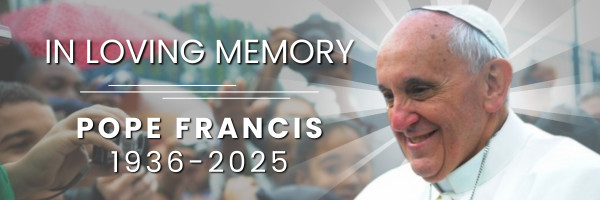
Novena for Pope Francis | FREE PDF Download
-

- Easter / Lent
- Ascension Day
- 7 Morning Prayers
- Mysteries of the Rosary
- Litany of the Bl. Virgin Mary
- Popular Saints
- Popular Prayers
- Female Saints
- Saint Feast Days by Month
- Stations of the Cross
- St. Francis of Assisi
- St. Michael the Archangel
- The Apostles' Creed
- Unfailing Prayer to St. Anthony
- Pray the Rosary


Cardinals Request Prayers from Faithful Ahead of Historic May 7 Conclave

How a New Pope Is Elected

Toy Shortages Threaten Christmas Traditions as Trade War Impacts Retailers
Daily Catholic
- Daily Readings for Thursday, May 01, 2025
- St. Marculf: Saint of the Day for Thursday, May 01, 2025
- To Saint Peregrine: Prayer of the Day for Thursday, May 01, 2025
- Daily Readings for Wednesday, April 30, 2025
- St. Pius V, Pope: Saint of the Day for Wednesday, April 30, 2025
- Prayer to Saint Joseph for Success in Work: Prayer of the Day for Wednesday, April 30, 2025
 Daily Readings for Thursday, May 01, 2025
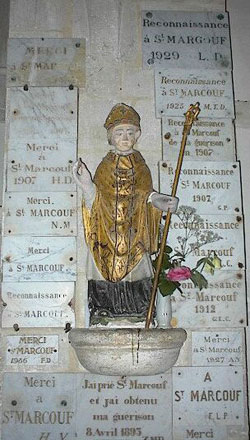 St. Marculf: Saint of the Day for Thursday, May 01, 2025
 To Saint Peregrine: Prayer of the Day for Thursday, May 01, 2025
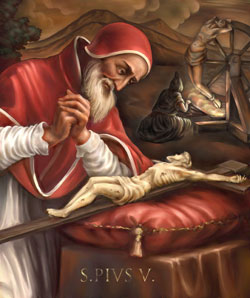 St. Pius V, Pope: Saint of the Day for Wednesday, April 30, 2025

Copyright 2025 Catholic Online. All materials contained on this site, whether written, audible or visual are the exclusive property of Catholic Online and are protected under U.S. and International copyright laws, © Copyright 2025 Catholic Online. Any unauthorized use, without prior written consent of Catholic Online is strictly forbidden and prohibited.
Catholic Online is a Project of Your Catholic Voice Foundation, a Not-for-Profit Corporation. Your Catholic Voice Foundation has been granted a recognition of tax exemption under Section 501(c)(3) of the Internal Revenue Code. Federal Tax Identification Number: 81-0596847. Your gift is tax-deductible as allowed by law.