Philip Aranda
FREE Catholic Classes
Jesuit theologian, born at Moneva, Aragon, 3 February 1642; died at Saragossa, 3 June, 1695. He is described by Father Michel de St. Joseph, in his "Biographica Critica", as "a most acute theologian, eloquent in speech, and a most practical and expert athlete in the scholastic arena". He entered the Society of Jesus in 1658. He taught theology and philosophy at Saragossa. He published a treatise in 1693, "De Deo sciente, praedestinante et auxiliante", which examines ably the entire subject of scientia media , and solidly and subtlety expounds and illustrates the questions of predestination and grace. He explains the mind of St. Augustine, and "without difficulty", it was said, gave the meaning of his difficult expressions, maintaining that they had no reference whatever to predestination "; a word which he contends was never, even equivalently, used by the Great Doctor. He adds an appendix on why the procession of the Second Person is called generation. He wrote on the Incarnation and Redemption ; on the natural and supernatural operation of man ; on human acts ; on good and evil ; and the supernatural. He wrote also a "Life of the Servant of God, Isabel Pobar". He was connected with the Inquisition of Aragon and was synodal examiner of the Archdiocese of Saragossa. He was fiercely attacked in a satirical work by Martin Serra, a Dominican, who declaimed against "the indifferent, headless, inefficacious writings of certain theologians, especially the olla podrida of Father Philip Aranda", an assault which almost evoked an interdict against the church of the friar.
 Hi readers, it seems you use Catholic Online a lot; that's great! It's a little awkward to ask, but we need your help. If you have already donated, we sincerely thank you. We're not salespeople, but we depend on donations averaging $14.76 and fewer than 1% of readers give. If you donate just $5.00, the price of your coffee, Catholic Online School could keep thriving. Thank you. Help Now >
We ask you, humbly: don't scroll away.
Hi readers, it seems you use Catholic Online a lot; that's great! It's a little awkward to ask, but we need your help. If you have already donated, we sincerely thank you. We're not salespeople, but we depend on donations averaging $14.76 and fewer than 1% of readers give. If you donate just $5.00, the price of your coffee, Catholic Online School could keep thriving. Thank you.Help Now >

Join the Movement
When you sign up below, you don't just join an email list - you're joining an entire movement for Free world class Catholic education.


-

-
Mysteries of the Rosary
-
St. Faustina Kowalska
-
Litany of the Blessed Virgin Mary
-
Saint of the Day for Wednesday, Oct 4th, 2023
-
Popular Saints
-
St. Francis of Assisi
-
Bible
-
Female / Women Saints
-
7 Morning Prayers you need to get your day started with God
-
Litany of the Blessed Virgin Mary


Sacrifices of Faith: The Pro-Life Legacies of St. Gianna and Jessica Hanna
-
How to love God by caring for our bodies
-
Pope Francis calls for negotiations to End Russia-Ukraine War
-
Pope Francis Contemplates Return to U.S. for United Nations Assembly Address
-
Pope Francis Calls on Faithful to Embrace Faith, Hope, and Charity in New Teaching Series


Daily Catholic
- Daily Readings for Sunday, April 28, 2024
- St. Peter Chanel: Saint of the Day for Sunday, April 28, 2024
- Prayer before a Crucifix: Prayer of the Day for Sunday, April 28, 2024
- Daily Readings for Saturday, April 27, 2024
- St. Zita: Saint of the Day for Saturday, April 27, 2024
- Prayer for the Dead # 2: Prayer of the Day for Saturday, April 27, 2024
 Daily Readings for Sunday, April 28, 2024
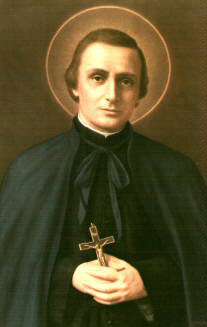 St. Peter Chanel: Saint of the Day for Sunday, April 28, 2024
 Prayer before a Crucifix: Prayer of the Day for Sunday, April 28, 2024
We ask you, humbly: don't scroll away.
Hi readers, it seems you use Catholic Online a lot; that's great! It's a little awkward to ask, but we need your help. If you have already donated, we sincerely thank you. We're not salespeople, but we depend on donations averaging $14.76 and fewer than 1% of readers give. If you donate just $5.00, the price of your coffee, Catholic Online School could keep thriving. Thank you.Help Now >

Copyright 2024 Catholic Online. All materials contained on this site, whether written, audible or visual are the exclusive property of Catholic Online and are protected under U.S. and International copyright laws, © Copyright 2024 Catholic Online. Any unauthorized use, without prior written consent of Catholic Online is strictly forbidden and prohibited.
Catholic Online is a Project of Your Catholic Voice Foundation, a Not-for-Profit Corporation. Your Catholic Voice Foundation has been granted a recognition of tax exemption under Section 501(c)(3) of the Internal Revenue Code. Federal Tax Identification Number: 81-0596847. Your gift is tax-deductible as allowed by law.