We ask you, humbly: don't scroll away.
Hi readers, it seems you use Catholic Online a lot; that's great! It's a little awkward to ask, but we need your help. If you have already donated, we sincerely thank you. We're not salespeople, but we depend on donations averaging $14.76 and fewer than 1% of readers give. If you donate just $5.00, the price of your coffee, Catholic Online School could keep thriving. Thank you.Help Now >
Father Prout
FREE Catholic Classes
The name by which the Rev. Francis Sylvester Mahony (O'Mahony), author of "The Bells of Shandon", is generally known; b. at Cork, 31 Dec., 1804; d. in Paris, 18 May, 1866. Educated at Clongowes Wood College, and St.-Achuel, France (1815-21), he entered the Jesuit novitiate in Paris in 1821, and in 1823 was sent to Rome for his course in philosophy. In 1825 he returned to Clongowes as disciplinarian, and after a brief stay there, going subsequently to Freiburg and Florence, he left the Society of Jesus and entered the Irish College at Rome as a student for the priesthood. He did not complete his course there, but in 1832 was ordained at Lucca — a step against which practically all his religious supervisors had advised him. He returned to his native diocese and for a time served there as a priest, being conspicuous for his heroism and devotion as chaplain to the Cork Cholera Hospital during the terrible epidemic that visited the city at that time. Developing some differences with his superiors, he went to London in 1834, and almost immediately commenced his literary career, joining "Fraser's Magazine", then under the editorship of his fellow-townsman, Maginn. For three years, he wrote in "Fraser's" (1834-7), then in "Bentley's Magazine", edited by Charles Dickens, and in 1846 was sent by Dickens to Rome as correspondent for the "Daily News". For twelve years he filled that post, then went to Paris (1858) as correspondent of the "Globe" and spent the rest of his life there. After his death his remains were brought to Cork and, after a public funeral, were interred in the family vault in Shandon churchyard. Although for thirty years Mahony did not exercise his priestly duties, he never wavered in his deep loyalty to the church, recited his Office daily, and received the last sacraments at the hands of his old friend, Abbé Rogerson, who left abundant testimony of his excellent dispositions. Popularly best known as the author of the famous lyric, "The Bells of Shandon", Mahony's claim to literary fame rests more securely on the collection known as "The Reliques of Fr. Prout". Dowered with a retentive memory, irrepressible humor, large powers of expression, and a strongly satiric turn of mind, an omnivorous reader, well-trained in the Latin classics, thoroughly at home in the French and Italian languages, and a ready writer of rhythmic verse in English, Latin, and French, he produced such articles as "An Apology for Lent", "Literature and the Jesuits", and "The Rogueries of Tom Moore", an extraordinary mixture of erudition, fancy, and wit, such as is practically without precise parallel in contemporary literature. The best of his work appeared in "Fraser's Magazine" during the first three years of his literary life. He translated largely from Horace, and the poets of France and Italy, including a complete and free metrical rendering of Gresset's famous mocking poem "Vert-Vert" and Jerome Vida's "Silkworm". But his newspaper correspondence from Rome and Paris is notable chiefly for the vigours of his criticisms upon men and measures, expressed, as these were, in most caustic language. Seven years before his death he edited the first authorized edition of "Reliques", and in 1860 wrote the inaugural ode for "Cornhill Magazine", then starting under Thackeray's editorship. No complete biography of "Father Prout" has yet been written but fragmentary materials are now available.



Join the Movement
When you sign up below, you don't just join an email list - you're joining an entire movement for Free world class Catholic education.


-

-
Mysteries of the Rosary
-
St. Faustina Kowalska
-
Litany of the Blessed Virgin Mary
-
Saint of the Day for Wednesday, Oct 4th, 2023
-
Popular Saints
-
St. Francis of Assisi
-
Bible
-
Female / Women Saints
-
7 Morning Prayers you need to get your day started with God
-
Litany of the Blessed Virgin Mary


Sacrifices of Faith: The Pro-Life Legacies of St. Gianna and Jessica Hanna
-
How to love God by caring for our bodies
-
Pope Francis calls for negotiations to End Russia-Ukraine War
-
Pope Francis Contemplates Return to U.S. for United Nations Assembly Address
-
Pope Francis Calls on Faithful to Embrace Faith, Hope, and Charity in New Teaching Series


Daily Catholic
- Daily Readings for Sunday, April 28, 2024
- St. Peter Chanel: Saint of the Day for Sunday, April 28, 2024
- Prayer before a Crucifix: Prayer of the Day for Sunday, April 28, 2024
- Daily Readings for Saturday, April 27, 2024
- St. Zita: Saint of the Day for Saturday, April 27, 2024
- Prayer for the Dead # 2: Prayer of the Day for Saturday, April 27, 2024
 Daily Readings for Sunday, April 28, 2024
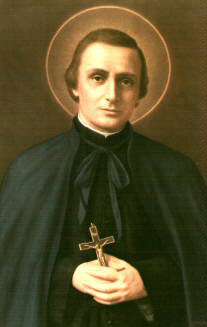 St. Peter Chanel: Saint of the Day for Sunday, April 28, 2024
 Prayer before a Crucifix: Prayer of the Day for Sunday, April 28, 2024


Copyright 2024 Catholic Online. All materials contained on this site, whether written, audible or visual are the exclusive property of Catholic Online and are protected under U.S. and International copyright laws, © Copyright 2024 Catholic Online. Any unauthorized use, without prior written consent of Catholic Online is strictly forbidden and prohibited.
Catholic Online is a Project of Your Catholic Voice Foundation, a Not-for-Profit Corporation. Your Catholic Voice Foundation has been granted a recognition of tax exemption under Section 501(c)(3) of the Internal Revenue Code. Federal Tax Identification Number: 81-0596847. Your gift is tax-deductible as allowed by law.
