We ask you, humbly: don't scroll away.
Hi readers, it seems you use Catholic Online a lot; that's great! It's a little awkward to ask, but we need your help. If you have already donated, we sincerely thank you. We're not salespeople, but we depend on donations averaging $14.76 and fewer than 1% of readers give. If you donate just $5.00, the price of your coffee, Catholic Online School could keep thriving. Thank you.Help Now >
Promulgation
FREE Catholic Classes
( Latin promulgare, to make known, to post in public).
I. PROMULGATION IN GENERAL
This is the act by which the legislative power makes legislative enactments known to the authorities entrusted with their execution and to the subjects bound to observe them. Philosophically it is a matter of dispute whether promulgation is of the essence of a law. It seems indisputable that the essential element of a law is the will of the legislator, but it is clear that the legislator should make known his will and intention in one way or another. This manifestation is the promulgation of the law, which is not necessarily distinct from the very elaboration of the law, provided that this takes place by external acts–such as the vote of a legislative assembly or by royal sanction. Such is the practice observed in England and in most of the states of the American Union, but, as it was thought too severe, the legislation of various countries requires the promulgation of laws by a special formal act, through which the text of the law is made known to the community, e.g. by publication of this text in an official journal or bulletin of the Government. Previous to this publication the law does not take effect. The promulgation of a law must not be confounded with its publication, the object of the first being to make known the will of the legislator, of the second to spread the knowledge of legislative enactments among sujects bound to observe them.

II. PROMULGATION IN CANON LAW
The Church has long exacted the promulgation of a law by a special act of the authorities: "Leges instituuntur quum promulgantur", a law is not really a law until it has been made known, says Gratian (Decretum Gratiani, pt. I, c. 3, dist. VII). However, no special form is prescribed for acts of ecclesiastical authorities inferior to the pope, even synodal decrees being considered sufficiently promulgated by being read in the synod. The Constitution "Promulgandi" of Pius X (29 September, 1908) determined the ordinary method of promulgating pontifical laws namely by the insertion of the text of the law in the "Acta Apostolica Sedis" (the official publication of the Holy See ), after the insertion has been ordered by the secretary or the supreme authority of the congregation or the office through the medium of which the pope has passed the law. A regulation of 5 January, 1910, divides the official bulletin of the Holy See into two parts: in the first or official part should be inserted all documents requiring promulgation to have the force of law ; the second merely serves to illustrate and supplement the first (Acta Apost. Sedis, 1910, p. 36). However, the pope explicitly reserves the right to determine in exceptional cases another method of promulgation. Prior to this law two systems had been chiefly in use in the Church –provincial promulgation, until the end of the thirteenth century, and Roman promulgation. During the first period promulgation often took place in the different ecclesiastical provinces either through special envoys or through the bishops. Nevertheless it is also a fact that laws binding in one province were also binding in others. During the second period the custom, which became exclusive during the fifteenth century, developed of having the new laws read and posted up by cursores at Rome only, at the doors of the great basilicas, the Palazzo Cancellaria, the Campo de’ fiori, and sometimes at the Capitol. The value of this means of promulgation was disputed in modern times: some claimed that the Church had admitted the arrangements of Novels lxvi and cxvi of Justinian, which required provincial promulgation for some laws ; others maintained that in theory publication at Rome was sufficient, but that the popes did not wish to bind the faithful before the laws were made known to them by the bishops ; while others appealed to ancient customs, to which the pope should conform. This last theory, made use of by the Gallicans and Febronianists, furnished the State with a pretext for preventing the promulgation of laws which it did not like. A special method of promulgation was also introduced wtih the express or tacit consent of the Holy See for the decrees of congregations; they were published at the secretariate of the dicasteries from which they emanated.

We ask you, humbly: don't scroll away.
Hi readers, it seems you use Catholic Online a lot; that's great! It's a little awkward to ask, but we need your help. If you have already donated, we sincerely thank you. We're not salespeople, but we depend on donations averaging $14.76 and fewer than 1% of readers give. If you donate just $5.00, the price of your coffee, Catholic Online School could keep thriving. Thank you.Help Now >

Join the Movement
When you sign up below, you don't just join an email list - you're joining an entire movement for Free world class Catholic education.


-

-
Mysteries of the Rosary
-
St. Faustina Kowalska
-
Litany of the Blessed Virgin Mary
-
Saint of the Day for Wednesday, Oct 4th, 2023
-
Popular Saints
-
St. Francis of Assisi
-
Bible
-
Female / Women Saints
-
7 Morning Prayers you need to get your day started with God
-
Litany of the Blessed Virgin Mary


Sacrifices of Faith: The Pro-Life Legacies of St. Gianna and Jessica Hanna
-
How to love God by caring for our bodies
-
Pope Francis calls for negotiations to End Russia-Ukraine War
-
Pope Francis Contemplates Return to U.S. for United Nations Assembly Address
-
Pope Francis Calls on Faithful to Embrace Faith, Hope, and Charity in New Teaching Series


Daily Catholic
- Daily Readings for Sunday, April 28, 2024
- St. Peter Chanel: Saint of the Day for Sunday, April 28, 2024
- Prayer before a Crucifix: Prayer of the Day for Sunday, April 28, 2024
- Daily Readings for Saturday, April 27, 2024
- St. Zita: Saint of the Day for Saturday, April 27, 2024
- Prayer for the Dead # 2: Prayer of the Day for Saturday, April 27, 2024
 Daily Readings for Sunday, April 28, 2024
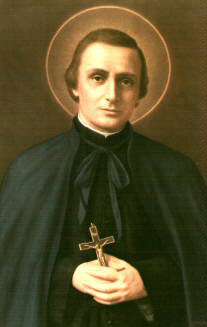 St. Peter Chanel: Saint of the Day for Sunday, April 28, 2024
 Prayer before a Crucifix: Prayer of the Day for Sunday, April 28, 2024


Copyright 2024 Catholic Online. All materials contained on this site, whether written, audible or visual are the exclusive property of Catholic Online and are protected under U.S. and International copyright laws, © Copyright 2024 Catholic Online. Any unauthorized use, without prior written consent of Catholic Online is strictly forbidden and prohibited.
Catholic Online is a Project of Your Catholic Voice Foundation, a Not-for-Profit Corporation. Your Catholic Voice Foundation has been granted a recognition of tax exemption under Section 501(c)(3) of the Internal Revenue Code. Federal Tax Identification Number: 81-0596847. Your gift is tax-deductible as allowed by law.