We ask you, humbly: don't scroll away.
Hi readers, it seems you use Catholic Online a lot; that's great! It's a little awkward to ask, but we need your help. If you have already donated, we sincerely thank you. We're not salespeople, but we depend on donations averaging $14.76 and fewer than 1% of readers give. If you donate just $5.00, the price of your coffee, Catholic Online School could keep thriving. Thank you.Help Now >
Praxeas
FREE Catholic Classes
An early anti- Montanist, is known to us only by Tertullian's book "Adversus Praxean". His name in the list of heresies appended to the "De Praescriptionibus" of that writer (an anonymous epitome of the lost "Syntagma" of Hippolytus ) is a correction made by some ancient diorthotes for Noetus. Praxeas was an Asiatic, and was inflated with pride (says Tertullian ) as a confessor of the Faith because he had been for a short time in prison. He was well received at Rome (c. 190-98) by the pope (Victor, or possibly Zephyrinus ). The latter pope had decided to acknowledge the prophetic gifts of Montanus, Prisca, and Maximilla (if we may believe Tertullian ). The intention had been sufficiently public to bring peace to the Churches of Asia and Phrygia -- so much depended on the papal sanction ; but Praxeas prevailed upon the pope to recall his letter. He came to Carthage before Tertullian had renounced the Catholic communion (c. 206-8). He taught Monarchian doctrine there, or at least doctrine which Tertullian regarded as Monarchian : "Patrem cruci fixit; Paraclitum fugavit" -- "Having driven out the Paraclete [ Montanus ], he now crucified the Father ". He was refuted, evidently by Tertullian himself, and gave an explanation or recantation in writing, which, when Tertullian wrote several years afterwards, was still in the hands of the authorities of the Carthaginian Church, the carnal", as he affects to call them. When Tertullian wrote he himself was no longer in the Church ; Monarchianism had sprung up again, but he does not mention its leaders at Rome, and directs his whole argument against his old enemy Praxeas. But the arguments which he refutes are doubtless those of Epigonus and Cleomenes. There is little reason for thinking that Praxeas was a heresiarch, and less for identifying him with Noetus,or one of his disciples. He was very likely merely an adversary of the Montanists who used some quasi-Monarchian expressions when at Carthage, but afterwards them when he saw they might be misunderstood. On the identification by Hageman of Praxeas with Callistus, see MONARCHIANS.
We ask you, humbly: don't scroll away.
Hi readers, it seems you use Catholic Online a lot; that's great! It's a little awkward to ask, but we need your help. If you have already donated, we sincerely thank you. We're not salespeople, but we depend on donations averaging $14.76 and fewer than 1% of readers give. If you donate just $5.00, the price of your coffee, Catholic Online School could keep thriving. Thank you.Help Now >


Join the Movement
When you sign up below, you don't just join an email list - you're joining an entire movement for Free world class Catholic education.


-

-
Mysteries of the Rosary
-
St. Faustina Kowalska
-
Litany of the Blessed Virgin Mary
-
Saint of the Day for Wednesday, Oct 4th, 2023
-
Popular Saints
-
St. Francis of Assisi
-
Bible
-
Female / Women Saints
-
7 Morning Prayers you need to get your day started with God
-
Litany of the Blessed Virgin Mary


Sacrifices of Faith: The Pro-Life Legacies of St. Gianna and Jessica Hanna
-
How to love God by caring for our bodies
-
Pope Francis calls for negotiations to End Russia-Ukraine War
-
Pope Francis Contemplates Return to U.S. for United Nations Assembly Address
-
Pope Francis Calls on Faithful to Embrace Faith, Hope, and Charity in New Teaching Series


Daily Catholic
- Daily Readings for Sunday, April 28, 2024
- St. Peter Chanel: Saint of the Day for Sunday, April 28, 2024
- Prayer before a Crucifix: Prayer of the Day for Sunday, April 28, 2024
- Daily Readings for Saturday, April 27, 2024
- St. Zita: Saint of the Day for Saturday, April 27, 2024
- Prayer for the Dead # 2: Prayer of the Day for Saturday, April 27, 2024
 Daily Readings for Sunday, April 28, 2024
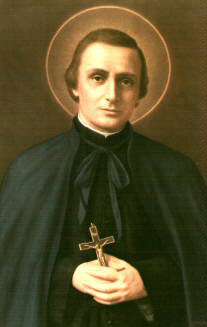 St. Peter Chanel: Saint of the Day for Sunday, April 28, 2024
 Prayer before a Crucifix: Prayer of the Day for Sunday, April 28, 2024
We ask you, humbly: don't scroll away.
Hi readers, it seems you use Catholic Online a lot; that's great! It's a little awkward to ask, but we need your help. If you have already donated, we sincerely thank you. We're not salespeople, but we depend on donations averaging $14.76 and fewer than 1% of readers give. If you donate just $5.00, the price of your coffee, Catholic Online School could keep thriving. Thank you.Help Now >

 Hi readers, it seems you use Catholic Online a lot; that's great! It's a little awkward to ask, but we need your help. If you have already donated, we sincerely thank you. We're not salespeople, but we depend on donations averaging $14.76 and fewer than 1% of readers give. If you donate just $5.00, the price of your coffee, Catholic Online School could keep thriving. Thank you. Help Now >

Copyright 2024 Catholic Online. All materials contained on this site, whether written, audible or visual are the exclusive property of Catholic Online and are protected under U.S. and International copyright laws, © Copyright 2024 Catholic Online. Any unauthorized use, without prior written consent of Catholic Online is strictly forbidden and prohibited.
Catholic Online is a Project of Your Catholic Voice Foundation, a Not-for-Profit Corporation. Your Catholic Voice Foundation has been granted a recognition of tax exemption under Section 501(c)(3) of the Internal Revenue Code. Federal Tax Identification Number: 81-0596847. Your gift is tax-deductible as allowed by law.