 Hi readers, it seems you use Catholic Online a lot; that's great! It's a little awkward to ask, but we need your help. If you have already donated, we sincerely thank you. We're not salespeople, but we depend on donations averaging $14.76 and fewer than 1% of readers give. If you donate just $5.00, the price of your coffee, Catholic Online School could keep thriving. Thank you. Help Now >
Petrobrusians
FREE Catholic Classes
Heretics of the twelfth century so named from their founder Peter of Bruys. Our information concerning him is derived from the treatise of Peter the Venerable against the Petrobrusians and from a passage in Abelard. Peter was born perhaps at Bruis in south-eastern France. The history of his early life is unknown, but it is certain that he was a priest who had been deprived of his charge. He began his propaganda in the Dioceses of Embrun, Die, and Gap probably between 1117 and 1120. Twenty years later the populace of St. Gilles near Nîmes, exasperated by his burning of crosses, cast him into the flames. The bishops of the above-mentioned dioceses suppressed the heresy within their jurisdiction, but it gained adherents at Narbonne, Toulouse, and in Gascony. Henry of Lausanne, a former Cluniac monk, adopted the Petrobrusians' teaching about 1135 and spread it in a modified form after its author's death. Peter of Bruys admitted the doctrinal authority of the Gospels in their literal interpretation; the other New Testament writings he probably considered valueless, as of doubtful apostolic origin. To the New Testament epistles he assigned only a subordinate place as not coming from Jesus Christ Himself. He rejected the Old Testament as well as the authority of the Fathers and of the Church. His contempt for the Church extended to the clergy, and physical violence was preached and exercised against priests and monks. In his system baptism is indeed a necessary condition for salvation, but it is baptism preceded by personal faith, so that its administration to infants is worthless. The Mass and the Eucharist are rejected because Jesus Christ gave his flesh and blood but once to His disciples, and repetition is impossible. All external forms of worship, ceremonies and chant, are condemned. As the Church consists not in walls, but in the community of the faithful, church buildings should be destroyed, for we may pray to God in a barn as well as in a church, and be heard, if worthy, in a stable as well as before an altar. No good works of the living can profit the dead. Crosses, as the instrument of the death of Christ, cannot deserve veneration; hence they were for the Petrobrusians objects of desecration and were destroyed in bonfires.

We ask you, humbly: don't scroll away.
Hi readers, it seems you use Catholic Online a lot; that's great! It's a little awkward to ask, but we need your help. If you have already donated, we sincerely thank you. We're not salespeople, but we depend on donations averaging $14.76 and fewer than 1% of readers give. If you donate just $5.00, the price of your coffee, Catholic Online School could keep thriving. Thank you.Help Now >

Join the Movement
When you sign up below, you don't just join an email list - you're joining an entire movement for Free world class Catholic education.


-

-
Mysteries of the Rosary
-
St. Faustina Kowalska
-
Litany of the Blessed Virgin Mary
-
Saint of the Day for Wednesday, Oct 4th, 2023
-
Popular Saints
-
St. Francis of Assisi
-
Bible
-
Female / Women Saints
-
7 Morning Prayers you need to get your day started with God
-
Litany of the Blessed Virgin Mary


Sacrifices of Faith: The Pro-Life Legacies of St. Gianna and Jessica Hanna
-
How to love God by caring for our bodies
-
Pope Francis calls for negotiations to End Russia-Ukraine War
-
Pope Francis Contemplates Return to U.S. for United Nations Assembly Address
-
Pope Francis Calls on Faithful to Embrace Faith, Hope, and Charity in New Teaching Series


Daily Catholic
- Daily Readings for Sunday, April 28, 2024
- St. Peter Chanel: Saint of the Day for Sunday, April 28, 2024
- Prayer before a Crucifix: Prayer of the Day for Sunday, April 28, 2024
- Daily Readings for Saturday, April 27, 2024
- St. Zita: Saint of the Day for Saturday, April 27, 2024
- Prayer for the Dead # 2: Prayer of the Day for Saturday, April 27, 2024
 Daily Readings for Sunday, April 28, 2024
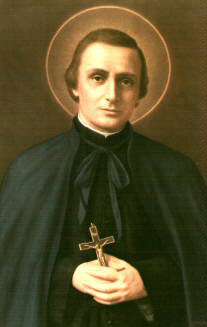 St. Peter Chanel: Saint of the Day for Sunday, April 28, 2024
 Prayer before a Crucifix: Prayer of the Day for Sunday, April 28, 2024

We ask you, humbly: don't scroll away.
Hi readers, it seems you use Catholic Online a lot; that's great! It's a little awkward to ask, but we need your help. If you have already donated, we sincerely thank you. We're not salespeople, but we depend on donations averaging $14.76 and fewer than 1% of readers give. If you donate just $5.00, the price of your coffee, Catholic Online School could keep thriving. Thank you.Help Now >

Copyright 2024 Catholic Online. All materials contained on this site, whether written, audible or visual are the exclusive property of Catholic Online and are protected under U.S. and International copyright laws, © Copyright 2024 Catholic Online. Any unauthorized use, without prior written consent of Catholic Online is strictly forbidden and prohibited.
Catholic Online is a Project of Your Catholic Voice Foundation, a Not-for-Profit Corporation. Your Catholic Voice Foundation has been granted a recognition of tax exemption under Section 501(c)(3) of the Internal Revenue Code. Federal Tax Identification Number: 81-0596847. Your gift is tax-deductible as allowed by law.