 Hi readers, it seems you use Catholic Online a lot; that's great! It's a little awkward to ask, but we need your help. If you have already donated, we sincerely thank you. We're not salespeople, but we depend on donations averaging $14.76 and fewer than 1% of readers give. If you donate just $5.00, the price of your coffee, Catholic Online School could keep thriving. Thank you. Help Now >
St. Peter of Alcántara
FREE Catholic Classes
Born at Alcántara, Spain, 1499; died 18 Oct., 1562. His father, Peter Garavita, was the governor of the place, and his mother was of the noble family of Sanabia. After a course of grammar and philosophy in his native town, he was sent, at the age of fourteen, to the University of Salamanca. Returning home, he became a Franciscan in the convent of the Stricter Observance at Manxaretes in 1515. At the age of twenty-two he was sent to found a new community of the Stricter Observance at Badajoz. He was ordained priest in 1524, and the following year made guardian of the convent of St. Mary of the Angels at Robredillo. A few years later he began preaching with much success. He preferred to preach to the poor ; and his sermons, taken largely from the Prophets and Sapiential Books, breathe the tenderest human sympathy. The reform of the "Discalced Friars " had, at the time when Peter entered the order, besides the convents in Spain, the Custody of Sta. Maria Pietatis in Portugal, subject to the General of the Observants.
Having been elected minister of St. Gabriel's province in 1538, Peter set to work at once. At the chapter of Plasencia in 1540 he drew up the Constitutions of the Stricter Observants, but his severe ideas met with such opposition that he renounced the office of provincial and retired with John of Avila into the mountains of Arabida, Portugal, where he joined Father Martin a Santa Maria in his life of eremitical solitude. Soon, however, other friars came to join him, and several little communities were established. Peter being chosen guardian and master of novices at the convent of Pallais. In 1560 these communities were erected into the Province of Arabida. Returning to Spain in 1553 he spent two more years in solitude, and then journeyed barefoot to Rome, and obtained permission of Julius III to found some poor convents in Spain under the jurisdiction of the general of the Conventuals. Convents were established at Pedrosa, Plasencia, and elsewhere; in 1556 they were made a commissariat, with Peter as superior, and in 1561, a province under the title of St. Joseph. Not discouraged by the opposition and ill-success his efforts at reform had met with in St. Gabriel's province, Peter drew up the constitutions of the new province with even greater severity. The reform spread rapidly into other provinces of Spain and Portugal.
In 1562 the province of St. Joseph was put under the jurisdiction of the general of the Observants, and two new custodies were formed: St. John Baptist's in Valencia, and St. Simon's in Galicia (see Friars Minor ). Besides the above-named associates of Peter may be mentioned St. Francis Borgia, John of Avila, and Ven. Louis of Granada. In St. Teresa, Peter perceived a soul chosen of God for a great work, and her success in the reform of Carmel was in great measure due to his counsel, encouragement, and defence. (See Carmelites.) It was a letter from St. Peter (14 April, 1562) that encouraged her to found her first monastery at Avila, 24 Aug. of that year. St. Teresa's autobiography is the source of much of our information regarding Peter's life, work, and gifts of miracles and prophecy.
Perhaps the most remarkable of Peter's graces were his gift of contemplation and the virtue of penance. Hardly less remarkable was his love of God, which was at times so ardent as to cause him, as it did St. Philip Neri , sensible pain, and frequently rapt him into ecstasy. The poverty he practised and enforced was as cheerful as it was real, and often let the want of even the necessaries of life be felt. In confirmation of his virtues and mission of reformation God worked numerous miracles through his intercession and by his very presence. He was beatified by Gregory XV in 1622, and canonized by Clement IX in 1669. Besides the Constitutions of the Stricter Observants and many letters on spiritual subjects, especially to St. Teresa, he composed a short treatise on prayer, which has been translated into all the languages of Europe. His feast is 19 Oct. (See ST. PASCAL BAYLON ; ST. PETER BAPTIST ; JAPANESE MARTYRS ;
[ Note: In 1826, St. Peter of Alcántara was named Patron of Brazil, and in 1962 (the fourth centenary of his death), of Estremadura. Because of the reform of the general Roman calendar in 1969, his feast on 19 October is observed only in local and particular liturgical calendars.]


Join the Movement
When you sign up below, you don't just join an email list - you're joining an entire movement for Free world class Catholic education.


-

-
Mysteries of the Rosary
-
St. Faustina Kowalska
-
Litany of the Blessed Virgin Mary
-
Saint of the Day for Wednesday, Oct 4th, 2023
-
Popular Saints
-
St. Francis of Assisi
-
Bible
-
Female / Women Saints
-
7 Morning Prayers you need to get your day started with God
-
Litany of the Blessed Virgin Mary


Sacrifices of Faith: The Pro-Life Legacies of St. Gianna and Jessica Hanna
-
How to love God by caring for our bodies
-
Pope Francis calls for negotiations to End Russia-Ukraine War
-
Pope Francis Contemplates Return to U.S. for United Nations Assembly Address
-
Pope Francis Calls on Faithful to Embrace Faith, Hope, and Charity in New Teaching Series


Daily Catholic
- Daily Readings for Sunday, April 28, 2024
- St. Peter Chanel: Saint of the Day for Sunday, April 28, 2024
- Prayer before a Crucifix: Prayer of the Day for Sunday, April 28, 2024
- Daily Readings for Saturday, April 27, 2024
- St. Zita: Saint of the Day for Saturday, April 27, 2024
- Prayer for the Dead # 2: Prayer of the Day for Saturday, April 27, 2024
 Daily Readings for Sunday, April 28, 2024
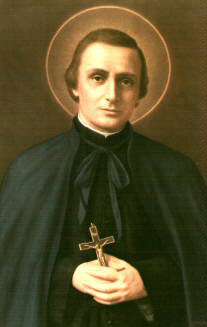 St. Peter Chanel: Saint of the Day for Sunday, April 28, 2024
 Prayer before a Crucifix: Prayer of the Day for Sunday, April 28, 2024
We ask you, humbly: don't scroll away.
Hi readers, it seems you use Catholic Online a lot; that's great! It's a little awkward to ask, but we need your help. If you have already donated, we sincerely thank you. We're not salespeople, but we depend on donations averaging $14.76 and fewer than 1% of readers give. If you donate just $5.00, the price of your coffee, Catholic Online School could keep thriving. Thank you.Help Now >


Copyright 2024 Catholic Online. All materials contained on this site, whether written, audible or visual are the exclusive property of Catholic Online and are protected under U.S. and International copyright laws, © Copyright 2024 Catholic Online. Any unauthorized use, without prior written consent of Catholic Online is strictly forbidden and prohibited.
Catholic Online is a Project of Your Catholic Voice Foundation, a Not-for-Profit Corporation. Your Catholic Voice Foundation has been granted a recognition of tax exemption under Section 501(c)(3) of the Internal Revenue Code. Federal Tax Identification Number: 81-0596847. Your gift is tax-deductible as allowed by law.