 Hi readers, it seems you use Catholic Online a lot; that's great! It's a little awkward to ask, but we need your help. If you have already donated, we sincerely thank you. We're not salespeople, but we depend on donations averaging $14.76 and fewer than 1% of readers give. If you donate just $5.00, the price of your coffee, Catholic Online School could keep thriving. Thank you. Help Now >
Angelus Bell
FREE Catholic Classes
The triple Hail Mary recited in the evening, which is the origin of our modern Angelus, was closely associated with the ringing of a bell. This bell seemingly belonged to Coinplin, which was theoretically said at sundown, though in practice it followed closely upon the afternoon office of Vespers. There can be little doubt that in all save a few exceptional cases, the tolling the Ave bell was distinct from the ringing of curfew ( ignitegium ); the former taking place at the end of Complin and perhaps coinciding with the prayers for peace, said in choir; the latter being the signal for the close of day and for the general bed-time. In many places, both in England and France, the curfew bell is still rung, and we note that not only is it rung at a relatively late hour, varying from 8 to 10, but that the actual peal lasts in most cases for a notable period of time, being prolonged for a hundred strokes or more. Where the town-bell and the bells of the principal church or monastery were distinct, the curfew was generally rung upon the town-bell. Where the church-bell served for both purposes, the Ave and the curfew were probably rung upon the same bell at different hours. There is a great lack of records containing any definite note of time regarding the ringing of the Ave bell, but there is at least one clear example in the case of Cropredy, Oxfordshire where in 1512 a bequest was made to the churchwardens on condition that they should "toll dayly the Avees bell at six of the clok in the mornyng, at xii of the clok at noone and at foure of the clok at afternoone" (North, Church Bells of Lincolnshire, 169). At the same time it seems clear that in the case of cathedral churches, etc., where the Office was said in choir, the interval between Complin and the (anticipated) Matins of the next day was not very great; at any rate. at some seasons of the year. Under these circumstances the three interrupted peals of the Ave bell probably served as a sort of introduction to the continuous tolling of the curfew which preceded Matins. This would be sufficient to account for certain clear traces of a connection in some localities between the curfew and the recital of the three evening Ayes. For instance, the poet Villon (fifteenth century) must. clearly be thinking of the curfew, when he writes:
We ask you, humbly: don't scroll away.
Hi readers, it seems you use Catholic Online a lot; that's great! It's a little awkward to ask, but we need your help. If you have already donated, we sincerely thank you. We're not salespeople, but we depend on donations averaging $14.76 and fewer than 1% of readers give. If you donate just $5.00, the price of your coffee, Catholic Online School could keep thriving. Thank you.Help Now >
Qui toujours neuf heures sonne
Le salut que l'ange pr dit.
Again, if there were no such connection, it would be difficult to explain why some of the Reformation bishops like Hooper did their best to suppress the tolling of the curfew as a superstitious practice. Still the attempt was not successful. Long before this, in 1538, a Protestant Grand Jury. in Canterbury had presented the parson of St. Peter's church for superstitious practices, complaining of the "tolling of the Ave bell after evening song done" (Stahlscbmidt, Church Bells of Kent, 358), but this could hardly have been the curfew.
INSCRIPTIONS ON ANGELUS BELLS
Many circumstances point to the conclusion that the ringing of the Angelus in the fourteenth and even in the thirteenth century must have been very general (see The Month, Jan., 1902,69-70, and Jan., 1904, 60-63). The number of bells belonging to these two centuries which still survive is relatively small, but a considerable proportion bear inscriptions which suggest that they were originally intended to serve as Ave bells. In the first place, many bear the words Ave Maria ; or, as in the case of a bell at Helfta, near Eisleben, in Germany, dated 1234, the whole sentence : Ave Maria, gratia plena, Dominus tecum . Bells with this Ave Maria inscription are also numerous in England, though in England the Angelus bells seem in a very large number of instances to have been dedicated to St. Gabriel. These Gabriel inscriptions take various forms. For example: Dulcis instar mellis campana vocor Gabrielis (I am sweet as honey, and am called Gabriel's bell ). In which very common inscription the second word is often sisto , or cisto ; the true reading is perhaps dulcissimi mellis . Or again: Ecce Gabrielis sonat hæc campana fidelis (Behold this bell of faithful Gabriel sounds); or Missi de coelis nomen habeo Gabrielis (I bear the name of Gabriel sent from heaven ), or Missus vero pie Gabriel fert læta Mariæ ( Gabriel the messenger bears joyous tidings to holy Mary). We can hardly be wrong in regarding these bells as Angelus bells, for in the Diocese of Lincoln alone we find nineteen of the surviving medieval bells bearing the name of Gabriel, while only six bear the name of Michael, a much more popular patron in other respects. In France, the Ave Maria seems to have been the ordinary label for Angelus bells ; but in Germany-we find as the most common inscription of all, even in the case of many bells of the thirteenth century, the words O Rex Gloriæ Veni Cum Pace (O King of Glory, Come with Peace); as for instance, one of the bells of Freiburg in the Breisgau, dated 1258. To explain the popularity of this inscription we have to remember that according to medieval tradition the Annunciation took place at evening. It was then that the Prince of Peace took flesh and dwelt among us. Moreover in Germany, the Netherlands and in some parts of France the Angelus bell was regularly known as the "Peace bell ", and pro pace schlagen (to toll for peace) was a phrase popularly used for ringing the Angelus.

MANNER OF RINGING
With regard to the manner of ringing the Angelus it seems sufficient to note that the triple stroke repeated three times with a pause between seems to have been adopted from the very beginning. In the fifteenth-century constitutions of Syon monastery it is directed that the lay brother "shall toll the Ave bell nine strokes at three times, keeping the space of one Pater and Ave between each three tollings". Again a fifteenth century bell at Erfert bears the words Cum ter reboo, pie Christiferam ter aveto (When I ring thrice, thrice devoutly greet the Mother of Christ ). Still earlier, the statutes of Wells Cathedral, in 1331, direct that "three strokes should be struck at three several times upon the great bell in quick succession", and this shortly before curfew. Slmilarly, at Lérida in Spain, in 1308, the bishop directs that "after Complin and as the shades of night are falling" the bell is to be pealed three times with intervals between (Villanueva, Viage, XVI, 323), while the faithful are directed on hearing the bell to fall on their knees and recite the Ave Maria .

We ask you, humbly: don't scroll away.
Hi readers, it seems you use Catholic Online a lot; that's great! It's a little awkward to ask, but we need your help. If you have already donated, we sincerely thank you. We're not salespeople, but we depend on donations averaging $14.76 and fewer than 1% of readers give. If you donate just $5.00, the price of your coffee, Catholic Online School could keep thriving. Thank you.Help Now >
Join the Movement
When you sign up below, you don't just join an email list - you're joining an entire movement for Free world class Catholic education.


-

-
Mysteries of the Rosary
-
St. Faustina Kowalska
-
Litany of the Blessed Virgin Mary
-
Saint of the Day for Wednesday, Oct 4th, 2023
-
Popular Saints
-
St. Francis of Assisi
-
Bible
-
Female / Women Saints
-
7 Morning Prayers you need to get your day started with God
-
Litany of the Blessed Virgin Mary


Sacrifices of Faith: The Pro-Life Legacies of St. Gianna and Jessica Hanna
-
How to love God by caring for our bodies
-
Pope Francis calls for negotiations to End Russia-Ukraine War
-
Pope Francis Contemplates Return to U.S. for United Nations Assembly Address
-
Pope Francis Calls on Faithful to Embrace Faith, Hope, and Charity in New Teaching Series


Daily Catholic
- Daily Readings for Sunday, April 28, 2024
- St. Peter Chanel: Saint of the Day for Sunday, April 28, 2024
- Prayer before a Crucifix: Prayer of the Day for Sunday, April 28, 2024
- Daily Readings for Saturday, April 27, 2024
- St. Zita: Saint of the Day for Saturday, April 27, 2024
- Prayer for the Dead # 2: Prayer of the Day for Saturday, April 27, 2024
 Daily Readings for Sunday, April 28, 2024
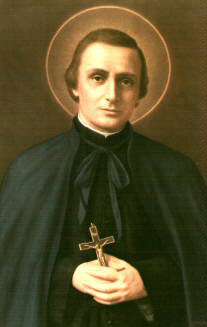 St. Peter Chanel: Saint of the Day for Sunday, April 28, 2024
 Prayer before a Crucifix: Prayer of the Day for Sunday, April 28, 2024



Copyright 2024 Catholic Online. All materials contained on this site, whether written, audible or visual are the exclusive property of Catholic Online and are protected under U.S. and International copyright laws, © Copyright 2024 Catholic Online. Any unauthorized use, without prior written consent of Catholic Online is strictly forbidden and prohibited.
Catholic Online is a Project of Your Catholic Voice Foundation, a Not-for-Profit Corporation. Your Catholic Voice Foundation has been granted a recognition of tax exemption under Section 501(c)(3) of the Internal Revenue Code. Federal Tax Identification Number: 81-0596847. Your gift is tax-deductible as allowed by law.