We ask you, humbly: don't scroll away.
Hi readers, it seems you use Catholic Online a lot; that's great! It's a little awkward to ask, but we need your help. If you have already donated, we sincerely thank you. We're not salespeople, but we depend on donations averaging $14.76 and fewer than 1% of readers give. If you donate just $5.00, the price of your coffee, Catholic Online School could keep thriving. Thank you.Help Now >
Pope St. Mark
FREE Catholic Classes
Date of birth unknown; consecrated 18 Jan., 336; d. 7 Oct., 336. After the death of Pope Sylvester, Mark was raised to the Roman episcopal chair as his successor. The "Liber Pontificalis" says that he was a Roman, and that his father's name was Priscus. Constantine the Great's letter, which summoned a conference of bishops for the investigation of the Donatist dispute, is directed to Pope Miltiades and one Mark ( Eusebius, "Hist. Eccl.", X, v). This Mark was evidently a member of the Roman clergy, either priest or first deacon, and is perhaps identical with the pope. The date of Mark's election (18 Jan., 336) is given in the Liberian Catalogue of popes (Duchesne, "Liber Pontificalis", I, 9), and is historically certain; so is the day of his death (7 Oct.), which is specified in the same way in the "Depositio episcoporum" of Philocalus's "Chronography", the first edition of which appeared also in 336. Concerning an interposition of the pope in the Arian troubles, which were then so actively affecting the Church in the East, nothing has been handed down. An alleged letter of his to St. Athanasius is a later forgery. Two constitutions are attributed to Mark by the author of the "Liber Pontificalis" (ed. Duchesne, I, 20). According to the one, he invested the Bishop of Ostia with the pallium, and ordained that this bishop was to consecrate the Bishop of Rome. It is certain that, towards the end of the fourth century, the Bishop of Ostia did bestow the episcopal consecration upon the newly-elected pope ; Augustine expressly bears witness to this (Breviarium Collationis, III, 16). It is indeed possible that Mark had confirmed this privilege by a constitution, which does not preclude the fact that the Bishop of Ostia before this time usually consecrated the new pope. As for the bestowal of the pallium, the account cannot be established from sources of the fourth century, since the oldest memorials which show this badge, belong to the fifth and sixth centuries, and the oldest written mention of a pope bestowing the pallium dates from the sixth century (cf. Grisar, "Das römische Pallium und die altesten liturgischen Schärpen", in "Festschrift des deutschen Campo Santo in Rom", Freiburg im Br., 1897, 83-114).

The "Liber Pontificalis" remarks further of Marcus: "Et constitutum de omni ecclesia ordinavit"; but we do not know which constitution this refers to. The building of two basilicas is attributed to this pope by the author of the "Liber Pontificalis". One of these was built within the city in the region "juxta Pallacinis"; it is the present church of San Marco, which however received its present external shape by later alterations. It is mentioned in the fifth century as a Roman title church, so that its foundation may without difficulty be attributed to St. Mark. The other was outside the city; it was a cemetery church, which the pope got built over the Catacomb of Balbina, between the Via Appia and the Via Ardeatina (cf. de Rossi, "Roma sotterranea", III, 8-13; "Bullettino di arch. crist.", 1867, 1 sqq.; Wilpert, "Topographische Studien uber die christlichen Monumente der Appia und der Ardeatina", in "Rom. Quartalschrift", 1901, 32-49). The pope obtained from Emperor Constantine gifts of land and liturgical furniture for both basilicas. Mark was buried in the Catacomb of Balbina, where he had built the cemetery church. His grave is expressly mentioned there by the itineraries of the seventh century (de Rossi, "Roma sotterranea", I, 180-1). The feast of the deceased pope was given on 7 Oct. in the old Roman calendar of feasts, which was inserted in the "Martyrologium Hieronymianum"; it is still kept on the same date. In an ancient manuscript a laudatory poem is preserved (unfortunately in a mutilated text), which Pope Damasus had composed on a Saint Marcus (de Rossi, "Inscriptiones christ. urbis Romae.", II, 108; Ihm, "Damasi epigrammata", Leipzig, 1895, 17, no. 11). De Rossi refers this to Pope Mark, but Duchesne (loc. cit., 204), is unable to accept this view. Since the contents of the poem are of an entirely general nature, without any particularly characteristic feature from the life of Pope Mark, the question is not of great importance.


Join the Movement
When you sign up below, you don't just join an email list - you're joining an entire movement for Free world class Catholic education.


-

-
Mysteries of the Rosary
-
St. Faustina Kowalska
-
Litany of the Blessed Virgin Mary
-
Saint of the Day for Wednesday, Oct 4th, 2023
-
Popular Saints
-
St. Francis of Assisi
-
Bible
-
Female / Women Saints
-
7 Morning Prayers you need to get your day started with God
-
Litany of the Blessed Virgin Mary

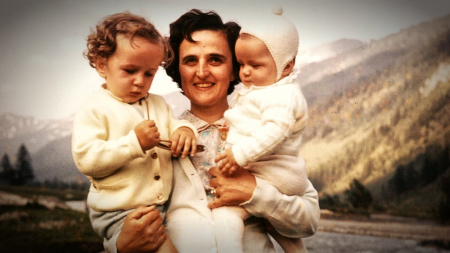
Sacrifices of Faith: The Pro-Life Legacies of St. Gianna and Jessica Hanna
-
How to love God by caring for our bodies
-
Pope Francis calls for negotiations to End Russia-Ukraine War
-
Pope Francis Contemplates Return to U.S. for United Nations Assembly Address
-
Pope Francis Calls on Faithful to Embrace Faith, Hope, and Charity in New Teaching Series


Daily Catholic
- Daily Readings for Monday, April 29, 2024
- St. Catherine of Siena: Saint of the Day for Monday, April 29, 2024
- Prayer for the Dead # 3: Prayer of the Day for Monday, April 29, 2024
- Daily Readings for Sunday, April 28, 2024
- St. Peter Chanel: Saint of the Day for Sunday, April 28, 2024
- Prayer before a Crucifix: Prayer of the Day for Sunday, April 28, 2024
 Daily Readings for Monday, April 29, 2024
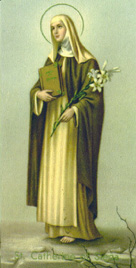 St. Catherine of Siena: Saint of the Day for Monday, April 29, 2024
 Prayer for the Dead # 3: Prayer of the Day for Monday, April 29, 2024

We ask you, humbly: don't scroll away.
Hi readers, it seems you use Catholic Online a lot; that's great! It's a little awkward to ask, but we need your help. If you have already donated, we sincerely thank you. We're not salespeople, but we depend on donations averaging $14.76 and fewer than 1% of readers give. If you donate just $5.00, the price of your coffee, Catholic Online School could keep thriving. Thank you.Help Now >

Copyright 2024 Catholic Online. All materials contained on this site, whether written, audible or visual are the exclusive property of Catholic Online and are protected under U.S. and International copyright laws, © Copyright 2024 Catholic Online. Any unauthorized use, without prior written consent of Catholic Online is strictly forbidden and prohibited.
Catholic Online is a Project of Your Catholic Voice Foundation, a Not-for-Profit Corporation. Your Catholic Voice Foundation has been granted a recognition of tax exemption under Section 501(c)(3) of the Internal Revenue Code. Federal Tax Identification Number: 81-0596847. Your gift is tax-deductible as allowed by law.