We ask you, humbly: don't scroll away.
Hi readers, it seems you use Catholic Online a lot; that's great! It's a little awkward to ask, but we need your help. If you have already donated, we sincerely thank you. We're not salespeople, but we depend on donations averaging $14.76 and fewer than 1% of readers give. If you donate just $5.00, the price of your coffee, Catholic Online School could keep thriving. Thank you.Help Now >
Lupus
FREE Catholic Classes
(SERVATUS LUPUS, LOUP)
Abbot of Ferrières, French Benedictine writer, b. in the Diocese of Sens, about 805; d. about 862. He assumed the surname of Servatus in commemoration of his miraculous escape from danger either in a serious illness or on the battlefield. He began his education at Ferrières under Aldric and completed it at Fulda under Rabanus Maurus. During his residence at Fulda (c. 830-36) he became an intimate friend and disciple of the learned Einhard. Even before he returned to his native land he had become favourably known at court and was especially esteemed by the Empress Judith, the second wife of Louis the Pious. To her and her son Charles the Bald, whose political interests he always defended, he owed his nomination as Abbot of Ferrières (22 November, 840). Subsequently he took a prominent part in contemporary political and ecclesiastical events, even assuming active command on the battlefield several times. During the war between Charles the Bald and Pepin of Aquitaine he was captured and held prisoner for a short time (844). The same year he was sent to Burgundy to carry out the monastic reforms decreed by the Synod of Germigny (843), and attended the Council of Verneuil on the Oise, the Acts of which have been written by him. He was also present at several other councils, notably that of Soissons in 853, and played an important part in the contemporary controversy regarding predestination. He believed in a twofold predestination, not indeed in the sense that God predestined some men to damnation, but that he foreknew the sins of men and foreordained consequent punishment. The closing years of the life of Lupus were saddened by the threatened devastation of his monastery by the invading Normans. He occupies a prominent place in medieval literary history, being one of the most cultured and refined men of the ninth century. His letters, of which we possess 132, are distinguished for literary elegance and valuable historical information. As a hagiographer he has left us a "Life of St. Maximin", Bishop of Trier (d. 349) and a "Life of St. Wigbert ", Abbot of Fritzlar in Hesse (d. 747). In the controversy on predestination he wrote his "De tribus quaestionibus", a work which treated of the threefold question of free will, predestination, and the universality of redemption. To illustrate the teaching of the Church on these topics he brought together pertinent passages from the Fathers in his "Collectaneum de tribus quaestionibus."
We ask you, humbly: don't scroll away.
Hi readers, it seems you use Catholic Online a lot; that's great! It's a little awkward to ask, but we need your help. If you have already donated, we sincerely thank you. We're not salespeople, but we depend on donations averaging $14.76 and fewer than 1% of readers give. If you donate just $5.00, the price of your coffee, Catholic Online School could keep thriving. Thank you.Help Now >


Join the Movement
When you sign up below, you don't just join an email list - you're joining an entire movement for Free world class Catholic education.


-

-
Mysteries of the Rosary
-
St. Faustina Kowalska
-
Litany of the Blessed Virgin Mary
-
Saint of the Day for Wednesday, Oct 4th, 2023
-
Popular Saints
-
St. Francis of Assisi
-
Bible
-
Female / Women Saints
-
7 Morning Prayers you need to get your day started with God
-
Litany of the Blessed Virgin Mary


Sacrifices of Faith: The Pro-Life Legacies of St. Gianna and Jessica Hanna
-
How to love God by caring for our bodies
-
Pope Francis calls for negotiations to End Russia-Ukraine War
-
Pope Francis Contemplates Return to U.S. for United Nations Assembly Address
-
Pope Francis Calls on Faithful to Embrace Faith, Hope, and Charity in New Teaching Series


Daily Catholic
- Daily Readings for Sunday, April 28, 2024
- St. Peter Chanel: Saint of the Day for Sunday, April 28, 2024
- Prayer before a Crucifix: Prayer of the Day for Sunday, April 28, 2024
- Daily Readings for Saturday, April 27, 2024
- St. Zita: Saint of the Day for Saturday, April 27, 2024
- Prayer for the Dead # 2: Prayer of the Day for Saturday, April 27, 2024
 Daily Readings for Sunday, April 28, 2024
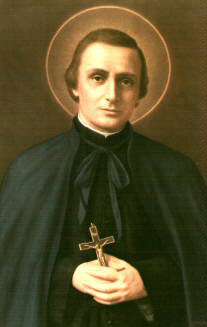 St. Peter Chanel: Saint of the Day for Sunday, April 28, 2024
 Prayer before a Crucifix: Prayer of the Day for Sunday, April 28, 2024



Copyright 2024 Catholic Online. All materials contained on this site, whether written, audible or visual are the exclusive property of Catholic Online and are protected under U.S. and International copyright laws, © Copyright 2024 Catholic Online. Any unauthorized use, without prior written consent of Catholic Online is strictly forbidden and prohibited.
Catholic Online is a Project of Your Catholic Voice Foundation, a Not-for-Profit Corporation. Your Catholic Voice Foundation has been granted a recognition of tax exemption under Section 501(c)(3) of the Internal Revenue Code. Federal Tax Identification Number: 81-0596847. Your gift is tax-deductible as allowed by law.
