We ask you, humbly: don't scroll away.
Hi readers, it seems you use Catholic Online a lot; that's great! It's a little awkward to ask, but we need your help. If you have already donated, we sincerely thank you. We're not salespeople, but we depend on donations averaging $14.76 and fewer than 1% of readers give. If you donate just $5.00, the price of your coffee, Catholic Online School could keep thriving. Thank you.Help Now >
Lérida
FREE Catholic Classes
(ILERDENSIS)
Diocese ; suffragan of Tarragona. La Canal says it was erected in 600, but others maintain it goes back to the third century, and there is mention of a St. Lycerius, or Glycerius, as Bishop of Lérida in A.D. 269. The signatures of other bishops of Lérida are attached to various councils up to the year 716, when the Moors took possession of the town, and the see was removed to Roda; in 1101 it was transferred to Barbastro. An unbroken list of bishops of Lérida goes back to the year 887. Lérida, the Roman Ilerda, or Herda, the second city in Catalonia, is built on the right bank of the River Segra, about 100 miles from Barcelona. During the Punic wars it sided with the Carthaginians; near it Hanno was defeated by Scipio in 216 B.C., and Julius Cæsar defeated Pompey's forces in 49 B. c. The Moors took possession of it in 716, and in 1149 Bérenger of Catalonia drove them out, and it became the residence of the kin a French of Aragon. During the Peninsular War the French held it (1810), and in 1823 Spain once more obtained possession of it. Owing to its natural position its strategic value has always been very great, and it is now strongly fortified. The town is oriental in appearance, and its streets are narrow and crooked. The population in 1900 was 23,683. The old Byzantine-Gothic Cathedral, of which the ruins are to be seen on the citadel, dates from 1203. During the Middle Ages the University of Lérida was famous; in 1717 it was suppressed, and united with Cervara.

In 514 or 524 a council attended by eight bishops passed decrees forbidding the taking up of arms or the shedding of blood by clerics. A council in 546 regulated ecclesiastical discipline . Another in 1173 was presided over by Cardinal Giacinto Bobone, who afterwards became Celestine III. A council in 1246 absolved James I of Aragon from the sacrilege of cutting out the tongue of the Bishop of Gerona. The cathedral chapter prior to the concordat consisted of 6 dignities, 24 canons, 22 benefices, but after the concordat the number was reduced to 16 canons and 12 beneficed clerics. The seminary, founded in 1722, accommodates 500 students. The Catholic population of the diocese is 185,000 souls scattered over 395 parishes and ministered to by 598 priests. Besides 395 churches for public worship, there are in the diocese five religious communities of men, six of women, and several hospitals in charge of nuns. Former bishops of Lérida include Cardinal de Rom, Cardinal Cerdan, and Inquisitor General Martinez de Villatoriel. The present bishop, Mgr J.A. Ruano y Martín, was born at Gijude del Barro, in the Diocese of Salamanca, 3 Nov., 1848, appointed titular bishop of Claudiopolis, and Administrator of Barbastro, 3 Nov., 1898 and transferred to Lérida, 14 Dec., 1905, when he succeeded Mgr José Meseguer y Costa.

 Hi readers, it seems you use Catholic Online a lot; that's great! It's a little awkward to ask, but we need your help. If you have already donated, we sincerely thank you. We're not salespeople, but we depend on donations averaging $14.76 and fewer than 1% of readers give. If you donate just $5.00, the price of your coffee, Catholic Online School could keep thriving. Thank you. Help Now >
Join the Movement
When you sign up below, you don't just join an email list - you're joining an entire movement for Free world class Catholic education.


-

-
Mysteries of the Rosary
-
St. Faustina Kowalska
-
Litany of the Blessed Virgin Mary
-
Saint of the Day for Wednesday, Oct 4th, 2023
-
Popular Saints
-
St. Francis of Assisi
-
Bible
-
Female / Women Saints
-
7 Morning Prayers you need to get your day started with God
-
Litany of the Blessed Virgin Mary


Sacrifices of Faith: The Pro-Life Legacies of St. Gianna and Jessica Hanna
-
How to love God by caring for our bodies
-
Pope Francis calls for negotiations to End Russia-Ukraine War
-
Pope Francis Contemplates Return to U.S. for United Nations Assembly Address
-
Pope Francis Calls on Faithful to Embrace Faith, Hope, and Charity in New Teaching Series


Daily Catholic
- Daily Readings for Sunday, April 28, 2024
- St. Peter Chanel: Saint of the Day for Sunday, April 28, 2024
- Prayer before a Crucifix: Prayer of the Day for Sunday, April 28, 2024
- Daily Readings for Saturday, April 27, 2024
- St. Zita: Saint of the Day for Saturday, April 27, 2024
- Prayer for the Dead # 2: Prayer of the Day for Saturday, April 27, 2024
 Daily Readings for Sunday, April 28, 2024
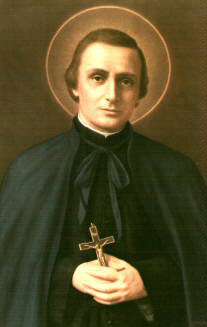 St. Peter Chanel: Saint of the Day for Sunday, April 28, 2024
 Prayer before a Crucifix: Prayer of the Day for Sunday, April 28, 2024
We ask you, humbly: don't scroll away.
Hi readers, it seems you use Catholic Online a lot; that's great! It's a little awkward to ask, but we need your help. If you have already donated, we sincerely thank you. We're not salespeople, but we depend on donations averaging $14.76 and fewer than 1% of readers give. If you donate just $5.00, the price of your coffee, Catholic Online School could keep thriving. Thank you.Help Now >

Copyright 2024 Catholic Online. All materials contained on this site, whether written, audible or visual are the exclusive property of Catholic Online and are protected under U.S. and International copyright laws, © Copyright 2024 Catholic Online. Any unauthorized use, without prior written consent of Catholic Online is strictly forbidden and prohibited.
Catholic Online is a Project of Your Catholic Voice Foundation, a Not-for-Profit Corporation. Your Catholic Voice Foundation has been granted a recognition of tax exemption under Section 501(c)(3) of the Internal Revenue Code. Federal Tax Identification Number: 81-0596847. Your gift is tax-deductible as allowed by law.