We ask you, humbly: don't scroll away.
Hi readers, it seems you use Catholic Online a lot; that's great! It's a little awkward to ask, but we need your help. If you have already donated, we sincerely thank you. We're not salespeople, but we depend on donations averaging $14.76 and fewer than 1% of readers give. If you donate just $5.00, the price of your coffee, Catholic Online School could keep thriving. Thank you.Help Now >
Lateran Councils
FREE Catholic Classes
A series of five important councils held at Rome from the twelfth to the sixteen century. From the reign of Constantine the Great until the removal of the papal Court to Avignon, the Lateran palace and basilica served the bishops of Rome as residence and cathedral. During this long period the popes had occasion to convoke a number of general councils , and for this purpose they made choice of cities so situated as to reduce as much as possible the inconveniences which the bishops called to such assemblies must necessarily experience by reason of long and costly absence from their sees. Five of these councils were held in the Lateran palace, and are known as the First (1123), Second (1139), Third (1179), Fourth (1215), and Fifth Lateran Councils.
Other, non-ecumenical councils were held at the Lateran, among the best known being those in 649 against the Monothelite heresy, in 823, 864, 900, 1102, 1105, 1110, 1111, 1112, and 1116. In 1725, Benedict XIII called to the Lateran the bishops directly dependent on Rome as their metropolitan see, i.e. archbishops without suffragans, bishops immediately subject to the Holy See, and abbots exercising quasi-episcopal jurisdiction. Seven sessions were held between 15 April and 29 May, and various regulations were promulgated concerning the duties of bishops and other pastors, concerning residence, ordinations, and the periods for the holding of synods. The chief objects were the suppression of Jansenism and the solemn confirmation of the Bull "Unigenitus", which was declared a rule of faith demanding the fullest obedience.


 Hi readers, it seems you use Catholic Online a lot; that's great! It's a little awkward to ask, but we need your help. If you have already donated, we sincerely thank you. We're not salespeople, but we depend on donations averaging $14.76 and fewer than 1% of readers give. If you donate just $5.00, the price of your coffee, Catholic Online School could keep thriving. Thank you. Help Now >
Join the Movement
When you sign up below, you don't just join an email list - you're joining an entire movement for Free world class Catholic education.


-

-
Mysteries of the Rosary
-
St. Faustina Kowalska
-
Litany of the Blessed Virgin Mary
-
Saint of the Day for Wednesday, Oct 4th, 2023
-
Popular Saints
-
St. Francis of Assisi
-
Bible
-
Female / Women Saints
-
7 Morning Prayers you need to get your day started with God
-
Litany of the Blessed Virgin Mary


Sacrifices of Faith: The Pro-Life Legacies of St. Gianna and Jessica Hanna
-
How to love God by caring for our bodies
-
Pope Francis calls for negotiations to End Russia-Ukraine War
-
Pope Francis Contemplates Return to U.S. for United Nations Assembly Address
-
Pope Francis Calls on Faithful to Embrace Faith, Hope, and Charity in New Teaching Series


Daily Catholic
- Daily Readings for Sunday, April 28, 2024
- St. Peter Chanel: Saint of the Day for Sunday, April 28, 2024
- Prayer before a Crucifix: Prayer of the Day for Sunday, April 28, 2024
- Daily Readings for Saturday, April 27, 2024
- St. Zita: Saint of the Day for Saturday, April 27, 2024
- Prayer for the Dead # 2: Prayer of the Day for Saturday, April 27, 2024
 Daily Readings for Sunday, April 28, 2024
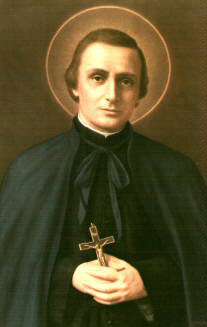 St. Peter Chanel: Saint of the Day for Sunday, April 28, 2024
 Prayer before a Crucifix: Prayer of the Day for Sunday, April 28, 2024

Copyright 2024 Catholic Online. All materials contained on this site, whether written, audible or visual are the exclusive property of Catholic Online and are protected under U.S. and International copyright laws, © Copyright 2024 Catholic Online. Any unauthorized use, without prior written consent of Catholic Online is strictly forbidden and prohibited.
Catholic Online is a Project of Your Catholic Voice Foundation, a Not-for-Profit Corporation. Your Catholic Voice Foundation has been granted a recognition of tax exemption under Section 501(c)(3) of the Internal Revenue Code. Federal Tax Identification Number: 81-0596847. Your gift is tax-deductible as allowed by law.