 Hi readers, it seems you use Catholic Online a lot; that's great! It's a little awkward to ask, but we need your help. If you have already donated, we sincerely thank you. We're not salespeople, but we depend on donations averaging $14.76 and fewer than 1% of readers give. If you donate just $5.00, the price of your coffee, Catholic Online School could keep thriving. Thank you. Help Now >
Kinloss
FREE Catholic Classes
(Gaelic ceann-loch , "head of the loch").
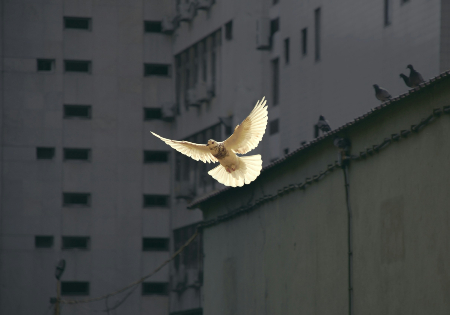
Cistercian abbey on the coast of Morayshire, Scotland, founded in 1150 or 1151 (authorities differ) by King David I, in gratitude, according to the popular legend, for having been guided into safety by a white dove when he had lost his way hunting in the adjacent forest. The monastery was colonized from Melrose and the greater part of the church and buildings were erected before 1200. Pope Alexander III confirmed the royal foundation to the second abbot, Reinerius, in 1174; and by 1229 the abbey was in a position to send out a colony to the newly-founded monastery of Culross in Perthshire. Kinloss was richly endowed by David's successors, and also by private benefactors, among its possessions being the valuable salmonfishings on the River Findhorn, granted by Robert Bruce and confirmed by James I and James IV. The abbots were mitred, with a seat in Parliament, and the house had a special prominence and importance as the only abbey in the extensive province of Moray. In the autumn of 1303 King Edward I, while on his progress through the north of Scotland, stayed at Kinloss for three weeks with a large retinue, and received the fealty of Abbot Thomas. Abbot Chrystal (1504-1535) did much for the material welfare of the house providing furniture for the church and books for the library ; but the most illustrious of the twenty-four abbots who ruled the monastery was his successor Robert Reid, who held the priory of Beauly in commendam , together with the Abbacy of Kinloss. This wise, learned, and excellent prelate was sent as the king's commissioner to Henry VIII to treat for peace, and again to France in connection with the marriage of James V. He erected a new library and other buildings at his abbey, and carefully administered the property of the house. He became Bishop of Orkney in 1541, and his nephew Walter succeeded him as abbot. Walter conformed to Protestantism, and alienated most of the lands, which were erected into a temporal lordship in 1601 in favour of Edward Bruce, created Lord Bruce of Kinloss, a title still enjoyed by his descendant the Earl of Elgin, although the lands of Kinloss were sold in 1843 to Brodie of Lethen, which family now owns them. Only a few fragments remain of the abbey buildings, including the west cloister wall, two fine Norman arches, and a two-storied building with groined roof, traditionally called the "prior's chambers". The church has entirely disappeared.
We ask you, humbly: don't scroll away.
Hi readers, it seems you use Catholic Online a lot; that's great! It's a little awkward to ask, but we need your help. If you have already donated, we sincerely thank you. We're not salespeople, but we depend on donations averaging $14.76 and fewer than 1% of readers give. If you donate just $5.00, the price of your coffee, Catholic Online School could keep thriving. Thank you.Help Now >

Join the Movement
When you sign up below, you don't just join an email list - you're joining an entire movement for Free world class Catholic education.


-

-
Mysteries of the Rosary
-
St. Faustina Kowalska
-
Litany of the Blessed Virgin Mary
-
Saint of the Day for Wednesday, Oct 4th, 2023
-
Popular Saints
-
St. Francis of Assisi
-
Bible
-
Female / Women Saints
-
7 Morning Prayers you need to get your day started with God
-
Litany of the Blessed Virgin Mary


Sacrifices of Faith: The Pro-Life Legacies of St. Gianna and Jessica Hanna
-
How to love God by caring for our bodies
-
Pope Francis calls for negotiations to End Russia-Ukraine War
-
Pope Francis Contemplates Return to U.S. for United Nations Assembly Address
-
Pope Francis Calls on Faithful to Embrace Faith, Hope, and Charity in New Teaching Series

Daily Catholic
- Daily Readings for Sunday, April 28, 2024
- St. Peter Chanel: Saint of the Day for Sunday, April 28, 2024
- Prayer before a Crucifix: Prayer of the Day for Sunday, April 28, 2024
- Daily Readings for Saturday, April 27, 2024
- St. Zita: Saint of the Day for Saturday, April 27, 2024
- Prayer for the Dead # 2: Prayer of the Day for Saturday, April 27, 2024
 Daily Readings for Sunday, April 28, 2024
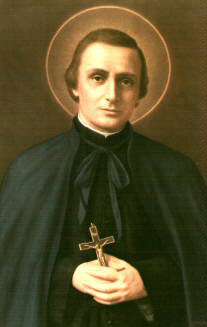 St. Peter Chanel: Saint of the Day for Sunday, April 28, 2024
 Prayer before a Crucifix: Prayer of the Day for Sunday, April 28, 2024
Hi readers, it seems you use Catholic Online a lot; that's great! It's a little awkward to ask, but we need your help. If you have already donated, we sincerely thank you. We're not salespeople, but we depend on donations averaging $14.76 and fewer than 1% of readers give. If you donate just $5.00, the price of your coffee, Catholic Online School could keep thriving. Thank you. Help Now >
Prayer before a Crucifix: Prayer of the Day for Sunday, April 28, 2024
Hi readers, it seems you use Catholic Online a lot; that's great! It's a little awkward to ask, but we need your help. If you have already donated, we sincerely thank you. We're not salespeople, but we depend on donations averaging $14.76 and fewer than 1% of readers give. If you donate just $5.00, the price of your coffee, Catholic Online School could keep thriving. Thank you. Help Now >


Copyright 2024 Catholic Online. All materials contained on this site, whether written, audible or visual are the exclusive property of Catholic Online and are protected under U.S. and International copyright laws, © Copyright 2024 Catholic Online. Any unauthorized use, without prior written consent of Catholic Online is strictly forbidden and prohibited.
Catholic Online is a Project of Your Catholic Voice Foundation, a Not-for-Profit Corporation. Your Catholic Voice Foundation has been granted a recognition of tax exemption under Section 501(c)(3) of the Internal Revenue Code. Federal Tax Identification Number: 81-0596847. Your gift is tax-deductible as allowed by law.