We ask you, humbly: don't scroll away.
Hi readers, it seems you use Catholic Online a lot; that's great! It's a little awkward to ask, but we need your help. If you have already donated, we sincerely thank you. We're not salespeople, but we depend on donations averaging $14.76 and fewer than 1% of readers give. If you donate just $5.00, the price of your coffee, Catholic Online School could keep thriving. Thank you.Help Now >
Kenosis
FREE Catholic Classes
A term derived from the discussion as to the real meaning of Phil. 2:6 sqq.: "Who being in the form of God, thought it not robbery to be equal with God : But emptied [ ekenosen ] himself, taking the form of a servant, being made in the likeness of men, and in habit found as man."
Protestant opinions
The early Reformers, not satisfied with the teaching of Catholic theology on this point, professed to a deeper meaning in St. Paul's words, but Luther and a Melanchton failed in their speculations. John Brenz (d. 10 September, 1570), of Tübingen, maintained that as the Word assumed Christ's human nature, so His human nature not only possessed the Divinity, but also had the power to make use of the Divinity, though it freely abstained from such a use. Chemnitz differed from this view. He denied that Jesus Christ possessed the Divinity in such a way as to have a right to its use. The kenosis, or the exinanition, of His Divine attributes was, therefore, a free act of Christ, according to Brenz; it was the connatural consequence of the Incarnation, according to Chemnitz.
Among modern Protestants the following opinons have been the most prevalent:
- Thomasius, Delitzcsh, and Kahnis regard the Incarnation as a self-emptying of the Divine manner of existence, as a self-limitation of the Word's omniscience, omnipresence, etc.
- Gess, Reuss, and Godet contend that the Incarnation implies a real depotentation of the Word; the Word became, rather than assumed, the human soul of Christ.
- Ebrard holds that the Divine properties in Christ appeared under the Kantian time-form appropriate to man ; his kenosis consists in an exchange of the eternal for a time-form of existence.
- Martensen and perhaps Hutton distingusih a double life of the Word: In the Man-Christ they see a kenosis and a real depotentiation of the Word; in the world the purely Divine Word carries the work of mediator and revealer. According to Godet, and probably also Gore, the Word in His kenosis strips Himself even of His immutable holiness, His infinite love, and His personal consciousness, so as to enter into a human development similar to ours.
Catholic teaching
According to Catholic theology, the abasement of the Word consists in the assumption of humanity and the simultaneous occultation of the Divinity. Christ's abasement is seen first in His subjecting Himself to the laws of human birth and growth and to the lowliness of fallen human nature. His likeness, in His abasement, to the fallen nature does not compromise the actual loss of justice and sanctity, but only the pains and penalties attached to the loss. These fall partly on the body, partly on the soul, and consist in liability to suffering from internal and external causes.

As to the body, Christ's dignity excludes some bodily pains and states. God's all-preserving power inhabiting the body of Jesus did not allow any corruption; it also prevented disease or the beginning of corruption. Christ's holiness was not compatible with decomposition after death, which is the image of the destroying power of sin. In fact, Christ had the right to be free from all bodily pain, and His human will had the power to remove or suspend the action of the causes of pain. But He freely subjected Himself to most of the pains resulting from bodily exertion and adverse external influences, e.g. fatigue, hunger, wounds, etc. As these pains had their sufficient reason in the nature of Christ's body, they were natural to Him.
Christ retained in Him also the weaknesses of the soul, the passions of His rational and sensitive appetites, but with the following restrictions: (a) Inordinate and sinful motions are incompatible with Christ's holiness. Only morally blameless passions and affections, e.g. fear, sadness, the share of the soul in the sufferings of the body, were compatible with His Divinity and His spiritual perfection. (b) The origin, intensity, and duration of even these emotions were subject to Christ's free choice. Besides, He could prevent their disturbing the actions of His soul and His peace of mind.
To complete His abasement, Christ was subject to His Mother and St. Joseph, to the laws of the State and the positive laws of God ; He shared the hardships and privations of the poor and the lowly. ( See COMMUNICATO IDIOMATUM.)
We ask you, humbly: don't scroll away.
Hi readers, it seems you use Catholic Online a lot; that's great! It's a little awkward to ask, but we need your help. If you have already donated, we sincerely thank you. We're not salespeople, but we depend on donations averaging $14.76 and fewer than 1% of readers give. If you donate just $5.00, the price of your coffee, Catholic Online School could keep thriving. Thank you.Help Now >

Join the Movement
When you sign up below, you don't just join an email list - you're joining an entire movement for Free world class Catholic education.


-

-
Mysteries of the Rosary
-
St. Faustina Kowalska
-
Litany of the Blessed Virgin Mary
-
Saint of the Day for Wednesday, Oct 4th, 2023
-
Popular Saints
-
St. Francis of Assisi
-
Bible
-
Female / Women Saints
-
7 Morning Prayers you need to get your day started with God
-
Litany of the Blessed Virgin Mary


Sacrifices of Faith: The Pro-Life Legacies of St. Gianna and Jessica Hanna
-
How to love God by caring for our bodies
-
Pope Francis calls for negotiations to End Russia-Ukraine War
-
Pope Francis Contemplates Return to U.S. for United Nations Assembly Address
-
Pope Francis Calls on Faithful to Embrace Faith, Hope, and Charity in New Teaching Series


Daily Catholic
- Daily Readings for Sunday, April 28, 2024
- St. Peter Chanel: Saint of the Day for Sunday, April 28, 2024
- Prayer before a Crucifix: Prayer of the Day for Sunday, April 28, 2024
- Daily Readings for Saturday, April 27, 2024
- St. Zita: Saint of the Day for Saturday, April 27, 2024
- Prayer for the Dead # 2: Prayer of the Day for Saturday, April 27, 2024
 Daily Readings for Sunday, April 28, 2024
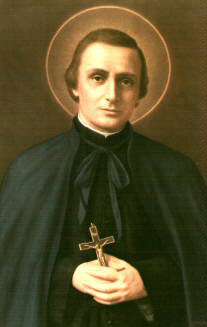 St. Peter Chanel: Saint of the Day for Sunday, April 28, 2024
 Prayer before a Crucifix: Prayer of the Day for Sunday, April 28, 2024


Copyright 2024 Catholic Online. All materials contained on this site, whether written, audible or visual are the exclusive property of Catholic Online and are protected under U.S. and International copyright laws, © Copyright 2024 Catholic Online. Any unauthorized use, without prior written consent of Catholic Online is strictly forbidden and prohibited.
Catholic Online is a Project of Your Catholic Voice Foundation, a Not-for-Profit Corporation. Your Catholic Voice Foundation has been granted a recognition of tax exemption under Section 501(c)(3) of the Internal Revenue Code. Federal Tax Identification Number: 81-0596847. Your gift is tax-deductible as allowed by law.