Your Catholic Family Belongs Here.
Membership Is FREE.
What if your next step in growing your family’s faith cost nothing? Join the World Catholic Education Alliance (WCEA) for FREE and explore 10,000+ Catholic lessons and 4,300+ downloadable resources for your home, classroom, or school.
Built on the work of Catholic Online School—with 2.2 million student enrollments across 193 countries—our mission is simple: free, world-class Catholic education for anyone, anywhere.
Your family belongs here. Become a member today.
John of St. Thomas
FREE Catholic Classes
(Family name John Poinsot), theologian, born at Lisbon, 9 June, 1589; died at Fraga, Spain, 17 June, 1644. Of noble parentage, he was sent early to the University of Coimbra, displayed talents of the first order, completed his humanities and philosophy, and obtained the degree of Master of Arts. He then entered the University of Louvain. Here, too, he showed remarkable ability, and won the title of Bachelor of Theology at an early age. He joined the Dominicans at Madrid in 1612 or 1613, taking the name of John of St. Thomas, by which he is known to history. As professor of philosophy and theology in a monastery at Alcalá, he soon took rank amongthe most learned men of the time, and was placed successively (1630 and 1640) in charge of the two principal chairs of theology in the university of that city. His renown drew the largest number of scholars that had ever attended its theological faculties. No man enjoyed a greater reputation in Spain, or was more frequently consulted on points of doctrine and ecclesiastical matters. His theological and philosophical writings, which have gone through many editions, are among the best expositions of St. Thomas's doctrine, of which he is acknowledged to be one of the foremost interpreters. Though he took an active part in the scholastic discussions of his times, his courtesy was such that he is said never to have hurt an opponent's feelings. So faithful was he to the traditions of his order and the principles of the Angelic Doctor that in his last illness he could declare that, in all the thirty years he had devoted to teaching and writing, he had not taughtor written anything contrary to St. Thomas. His humility and his devotion to education caused him to refuse many dignities offered him by the Church and his order. In 1643 Philip IV offered him the office of royal confessor, a position which only religious obedience could induce him to accept. His writings comprise: "Cursus philosophicus Thomisticus" (9 vols.); "Cursus Theologicus" (9 vols.)--a commentary on the "Summa Theologica" of St. Thomas; "Tractatus de Approbatione, Auctoritate, et Puritate Doctrinae D. Thomae Aquinatis"; a "Compendium of Christian Doctrine" (in Spanish); and a "Treatise on a Happy Death" (in Spanish), written at the command of Philip IV.
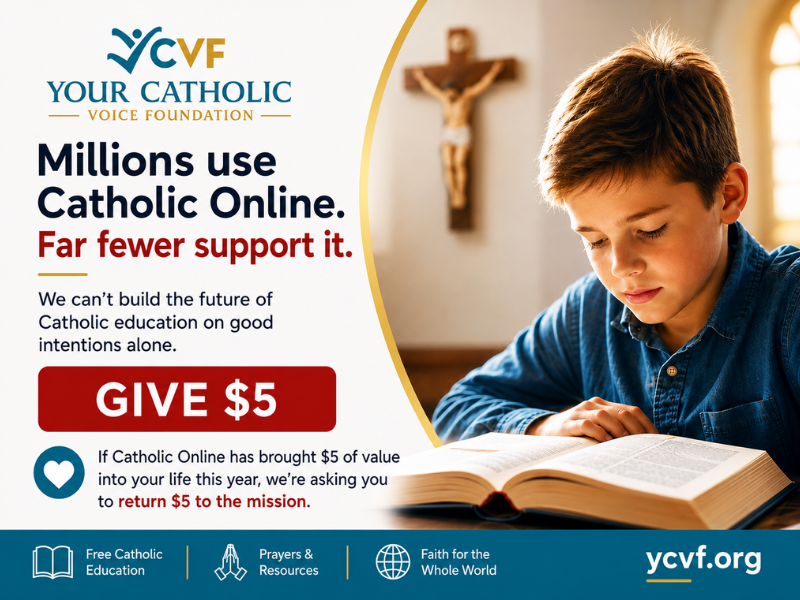
Come Grow With Us
Sign up and walk the Catholic journey with millions around the world.
Receive inspiring emails on saints, daily readings, and free faith-building resources—no cost, ever.
World Catholic Education Alliance
Your Child Needs Help Tonight—Could the Answer Be Right Here?
Watch the Video.

- 7 Morning Prayers
- Mysteries of the Rosary
- Litany of the Bl. Virgin Mary
- Popular Saints
- Popular Prayers
- Female Saints
- Saint Feast Days by Month
- Stations of the Cross
- St. Francis of Assisi
- St. Michael the Archangel
- The Apostles' Creed
- Unfailing Prayer to St. Anthony
- Pray the Rosary






Copyright 2026 Catholic Online. All materials contained on this site, whether written, audible or visual are the exclusive property of Catholic Online and are protected under U.S. and International copyright laws, © Copyright 2026 Catholic Online. Any unauthorized use, without prior written consent of Catholic Online is strictly forbidden and prohibited.
Catholic Online is a Project of Your Catholic Voice Foundation, a Not-for-Profit Corporation. Your Catholic Voice Foundation has been granted a recognition of tax exemption under Section 501(c)(3) of the Internal Revenue Code. Federal Tax Identification Number: 81-0596847. Your gift is tax-deductible as allowed by law.