We ask you, humbly: don't scroll away.
Hi readers, it seems you use Catholic Online a lot; that's great! It's a little awkward to ask, but we need your help. If you have already donated, we sincerely thank you. We're not salespeople, but we depend on donations averaging $14.76 and fewer than 1% of readers give. If you donate just $5.00, the price of your coffee, Catholic Online School could keep thriving. Thank you.Help Now >
Stripping of an Altar
FREE Catholic Classes
On Holy Thursday the celebrant, having removed the ciborium from the high altar, goes to the sacristy. He there lays aside the white vestments and puts on a violet stole, and, accompanied by the deacon, also vested in violet stole, and the subdeacon, returns to the high altar. Whilst the antiphon "Diviserunt sibi" and the psalm "Deus, Deus meus" are being recited, the celebrant and his assistants ascend to the predella and strip the altar of the altar-cloths, vases of flowers, antipendium, and other ornaments, so that nothing remains but the cross and the candlesticks with the candles extinguished. In the same manner all the other altars in the church are denuded. If there be many altars in the church, another priest, vested in surplice and violet stole, may strip them whilst the celebrant is stripping the high altar. The Christian altar represents Christ, and the stripping of the altar reminds us how He was stripped of his garments when He fell into the hands of the Jews and was exposed naked to their insults. It is for this reason that the psalm "Deus, Deus meus" is recited, wherein the Messias speaks of the Roman soldiers dividing His garments among them. This ceremony signifies the suspension of the Holy Sacrifice. It was formerly the custom in some churches on this day to wash the altars with a bunch of hyssop dipped in wine and water, to render them in some manner worthy of the Lamb without stain who is immolated on them, and to recall to the minds of the faithful with how great purity they should assist at the Holy Sacrifice and receive Holy Communion . St. Isidore of Seville (De Eccles. Off, I, xxviii) and St. Eligius of Noyon (Homil. VIII, De Coena Domini) say that this ceremony was intended as an homage offered to Our Lord , in return for the humility wherewith He deigned to wash the feet of His disciples.

 Hi readers, it seems you use Catholic Online a lot; that's great! It's a little awkward to ask, but we need your help. If you have already donated, we sincerely thank you. We're not salespeople, but we depend on donations averaging $14.76 and fewer than 1% of readers give. If you donate just $5.00, the price of your coffee, Catholic Online School could keep thriving. Thank you. Help Now >

Join the Movement
When you sign up below, you don't just join an email list - you're joining an entire movement for Free world class Catholic education.


-

-
Mysteries of the Rosary
-
St. Faustina Kowalska
-
Litany of the Blessed Virgin Mary
-
Saint of the Day for Wednesday, Oct 4th, 2023
-
Popular Saints
-
St. Francis of Assisi
-
Bible
-
Female / Women Saints
-
7 Morning Prayers you need to get your day started with God
-
Litany of the Blessed Virgin Mary


Sacrifices of Faith: The Pro-Life Legacies of St. Gianna and Jessica Hanna
-
How to love God by caring for our bodies
-
Pope Francis calls for negotiations to End Russia-Ukraine War
-
Pope Francis Contemplates Return to U.S. for United Nations Assembly Address
-
Pope Francis Calls on Faithful to Embrace Faith, Hope, and Charity in New Teaching Series


Daily Catholic
- Daily Readings for Sunday, April 28, 2024
- St. Peter Chanel: Saint of the Day for Sunday, April 28, 2024
- Prayer before a Crucifix: Prayer of the Day for Sunday, April 28, 2024
- Daily Readings for Saturday, April 27, 2024
- St. Zita: Saint of the Day for Saturday, April 27, 2024
- Prayer for the Dead # 2: Prayer of the Day for Saturday, April 27, 2024
 Daily Readings for Sunday, April 28, 2024
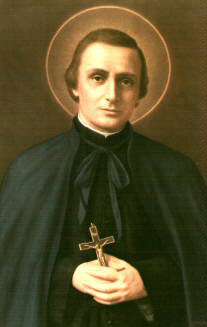 St. Peter Chanel: Saint of the Day for Sunday, April 28, 2024
 Prayer before a Crucifix: Prayer of the Day for Sunday, April 28, 2024


Copyright 2024 Catholic Online. All materials contained on this site, whether written, audible or visual are the exclusive property of Catholic Online and are protected under U.S. and International copyright laws, © Copyright 2024 Catholic Online. Any unauthorized use, without prior written consent of Catholic Online is strictly forbidden and prohibited.
Catholic Online is a Project of Your Catholic Voice Foundation, a Not-for-Profit Corporation. Your Catholic Voice Foundation has been granted a recognition of tax exemption under Section 501(c)(3) of the Internal Revenue Code. Federal Tax Identification Number: 81-0596847. Your gift is tax-deductible as allowed by law.