We ask you, humbly: don't scroll away.
Hi readers, it seems you use Catholic Online a lot; that's great! It's a little awkward to ask, but we need your help. If you have already donated, we sincerely thank you. We're not salespeople, but we depend on donations averaging $14.76 and fewer than 1% of readers give. If you donate just $5.00, the price of your coffee, Catholic Online School could keep thriving. Thank you.Help Now >
Heraclea
FREE Catholic Classes
A titular see of Thracia Prima. Heraclea is the name given about four centuries before the Christian era to the town of Perinthus, a very ancient Samian colony, built like an amphitheatre on the hillside of a peninsula in the Propontis (Sea of Marmora). It became famous because of its resistance to Philip of Macedonia. Its port and its happy situation at the junction of several great sea-routes, made it a town of commercial importance. Many of its coins have come down to us, and give us information concerning the festivals held there. Justinian restored its aqueducts and a palace. It now forms part of the vilayet of Adrianople, has 2000 inhabitants, Turkish and Greek, and is known to the Turks as Eregli. The ruins of the ancient town of Heraclea are on a cape close to the modern one. Heraclea became a see at an early date : according to a Greek tradition it dates from apostolic times. It would seem that in the beginning the Bishop of Byzantium was under its jurisdiction. Later it appears to have had 5 suffragan sees, and this number gradually increased, to 15 and 17. A little before the Ottoman conquest the number stood at 6; then it fell to 5 once more; in our days it has but two (Myriophyton and Metræ.
 Hi readers, it seems you use Catholic Online a lot; that's great! It's a little awkward to ask, but we need your help. If you have already donated, we sincerely thank you. We're not salespeople, but we depend on donations averaging $14.76 and fewer than 1% of readers give. If you donate just $5.00, the price of your coffee, Catholic Online School could keep thriving. Thank you. Help Now >
The Metropolitan of Heraclea has retained the title of Exarch of Thrace and Macedonia. He resides at Rodosto and not at Eregli. It is his privilege to hand the newly appointed Patriarch of Constantinople his crozier. Lequien (Oriens Christianus, I, 1101 sqq.) gives a list of 48 titulars, which might easily be increased. Among the names are: St. Philip, martyr (feast 22 October); Pæderos, present at the Council of Nicæa in 325; Theodorus, an Arian, author of a commentary on the Scriptures, who played a rather important part between 335 and 351; Hypatius, a Semi-Arian, deposed in 365; Dorotheus, an Arian, 366; Sabinus, a Macedonian; John, the friend and correspondent of Photius ; Nicetas, eleventh century, a writer of commentaries and other works; Pinacas, who accepted the union with Rome proclaimed at Lyons in 1274; Philotheus, a Palamite, Patriarch of Constantinople in 1354; Antonius, who signed the Union at Florence ; Neophytus, Joannicius, Methodius, and Callinicus, Patriarchs of Constantinople in 1636, 1646, 1668, and 1726. At one time Heraclea treasured the relics of St. Glyceria, a virgin martyred at Trani (feast 13 May). In the thirteenth century Heraclea had Latin bishops in residence ( Lequien, "Or. Christ.", III, 965; Eubel, "Hierarchia catholica medii ævi", I, 283). Three other towns bearing the same name were episcopal sees ; two in Caria, suffragans of Stauropolis, and the Heraclea of Pontus in Honorias, suffragan of Claudiopolis.
We ask you, humbly: don't scroll away.
Hi readers, it seems you use Catholic Online a lot; that's great! It's a little awkward to ask, but we need your help. If you have already donated, we sincerely thank you. We're not salespeople, but we depend on donations averaging $14.76 and fewer than 1% of readers give. If you donate just $5.00, the price of your coffee, Catholic Online School could keep thriving. Thank you.Help Now >
Join the Movement
When you sign up below, you don't just join an email list - you're joining an entire movement for Free world class Catholic education.


-

-
Mysteries of the Rosary
-
St. Faustina Kowalska
-
Litany of the Blessed Virgin Mary
-
Saint of the Day for Wednesday, Oct 4th, 2023
-
Popular Saints
-
St. Francis of Assisi
-
Bible
-
Female / Women Saints
-
7 Morning Prayers you need to get your day started with God
-
Litany of the Blessed Virgin Mary


Sacrifices of Faith: The Pro-Life Legacies of St. Gianna and Jessica Hanna
-
How to love God by caring for our bodies
-
Pope Francis calls for negotiations to End Russia-Ukraine War
-
Pope Francis Contemplates Return to U.S. for United Nations Assembly Address
-
Pope Francis Calls on Faithful to Embrace Faith, Hope, and Charity in New Teaching Series


Daily Catholic
- Daily Readings for Saturday, April 27, 2024
- St. Zita: Saint of the Day for Saturday, April 27, 2024
- Prayer for the Dead # 2: Prayer of the Day for Saturday, April 27, 2024
- Daily Readings for Friday, April 26, 2024
- St. Cletus: Saint of the Day for Friday, April 26, 2024
- Prayer before the Closing of the Day: Prayer of the Day for Friday, April 26, 2024
 Daily Readings for Saturday, April 27, 2024
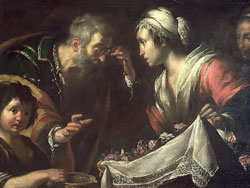 St. Zita: Saint of the Day for Saturday, April 27, 2024
 Prayer for the Dead # 2: Prayer of the Day for Saturday, April 27, 2024


Copyright 2024 Catholic Online. All materials contained on this site, whether written, audible or visual are the exclusive property of Catholic Online and are protected under U.S. and International copyright laws, © Copyright 2024 Catholic Online. Any unauthorized use, without prior written consent of Catholic Online is strictly forbidden and prohibited.
Catholic Online is a Project of Your Catholic Voice Foundation, a Not-for-Profit Corporation. Your Catholic Voice Foundation has been granted a recognition of tax exemption under Section 501(c)(3) of the Internal Revenue Code. Federal Tax Identification Number: 81-0596847. Your gift is tax-deductible as allowed by law.