We ask you, humbly: don't scroll away.
Hi readers, it seems you use Catholic Online a lot; that's great! It's a little awkward to ask, but we need your help. If you have already donated, we sincerely thank you. We're not salespeople, but we depend on donations averaging $14.76 and fewer than 1% of readers give. If you donate just $5.00, the price of your coffee, Catholic Online School could keep thriving. Thank you.Help Now >
St. Helen of Sköfde
FREE Catholic Classes
Martyr in the first half of the twelfth century. Her feast is celebrated 31 July. Her life (Acta SS., July, VII, 340) is ascribed to St. Brynolph, Bishop of Skara, in Sweden (d. 1317). She was of noble family and is generally believed to have been the daughter of the Jarl Guthorm. When her husband died she remained a widow and spent her life in works of charity and piety ; the gates of her home were ever open to the needy and the church of Sköfde was almost entirely built at her expense. Her daughter's husband was a very cruel man, and was in consequence killed by his own servants. His relatives, wishing to avenge his death, examined the servants. These admitted the crime, but falsely asserted that they acted on the instigation of Helen. She had then gone on a pilgrimage to the Holy Land, but on her return she was killed in 1160 (?) at Gothene by her husband's relatives. Her body was brought to Sköfde for burial, and many wonderful cures were wrought at her intercession. The report of these miracles was sent to Rome by Stephen, the Archbishop of Upsala, and he, by order of Pope Alexander III, in 1164 inscribed her name in the list of canonized saints ( Benedict XIV, "De canonizatione sanctorum", I, 85). Great was the veneration shown her relics even after the Reformation had spread in Sweden. Near her church was a holy well, known to this day as St. Lene Kild. At various times the Lutheran authorities inveighed against this remnant of what they called popish and anti-Christian superstition. Especially zealous in this regard was Archbishop Abraham, who had all the springs, mineral or pure water, filled up with stones and rubbish (Baring-Gould, "Lives of the Saints", July, II, 698). St. Helen's tomb and well (St. Elin's) were also honoured at Tiisvilde in the parish of Tibirke in the island of Zealand. Pilgrimages were made every summer, cripples amd sick came in numbers; they would remain all night at the grave, take away with them little bags of earth from under the tombstone, and frequently would leave their crutches or make votive offerings in token of gratitude. Such was the report sent in 1658 from Copenhagen to the Bollandists by the Jesuit Lindanus. A similar statement is made by Werlaiff, in 1858, in his "Hist. Antegnelser". The legend says that St. Helen's body floated to Tiisvilde in a stone coffin, and that a spring broke forth where the coffin touched land. The Bollandists (loc. cit.) give as a possible reason for her veneration at Tiisvilde that perhaps St. Helen had visited the place, or some of her relics had been brought there.
We ask you, humbly: don't scroll away.
Hi readers, it seems you use Catholic Online a lot; that's great! It's a little awkward to ask, but we need your help. If you have already donated, we sincerely thank you. We're not salespeople, but we depend on donations averaging $14.76 and fewer than 1% of readers give. If you donate just $5.00, the price of your coffee, Catholic Online School could keep thriving. Thank you.Help Now >
We ask you, humbly: don't scroll away.
Hi readers, it seems you use Catholic Online a lot; that's great! It's a little awkward to ask, but we need your help. If you have already donated, we sincerely thank you. We're not salespeople, but we depend on donations averaging $14.76 and fewer than 1% of readers give. If you donate just $5.00, the price of your coffee, Catholic Online School could keep thriving. Thank you.Help Now >

Join the Movement
When you sign up below, you don't just join an email list - you're joining an entire movement for Free world class Catholic education.


-

-
Mysteries of the Rosary
-
St. Faustina Kowalska
-
Litany of the Blessed Virgin Mary
-
Saint of the Day for Wednesday, Oct 4th, 2023
-
Popular Saints
-
St. Francis of Assisi
-
Bible
-
Female / Women Saints
-
7 Morning Prayers you need to get your day started with God
-
Litany of the Blessed Virgin Mary

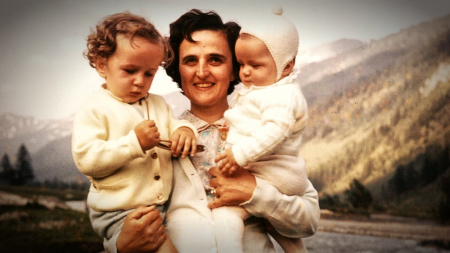
Sacrifices of Faith: The Pro-Life Legacies of St. Gianna and Jessica Hanna
-
How to love God by caring for our bodies
-
Pope Francis calls for negotiations to End Russia-Ukraine War
-
Pope Francis Contemplates Return to U.S. for United Nations Assembly Address
-
Pope Francis Calls on Faithful to Embrace Faith, Hope, and Charity in New Teaching Series

Daily Catholic
- Daily Readings for Sunday, April 28, 2024
- St. Peter Chanel: Saint of the Day for Sunday, April 28, 2024
- Prayer before a Crucifix: Prayer of the Day for Sunday, April 28, 2024
- Daily Readings for Saturday, April 27, 2024
- St. Zita: Saint of the Day for Saturday, April 27, 2024
- Prayer for the Dead # 2: Prayer of the Day for Saturday, April 27, 2024
 Daily Readings for Sunday, April 28, 2024
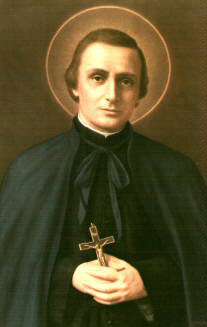 St. Peter Chanel: Saint of the Day for Sunday, April 28, 2024
 Prayer before a Crucifix: Prayer of the Day for Sunday, April 28, 2024

Copyright 2024 Catholic Online. All materials contained on this site, whether written, audible or visual are the exclusive property of Catholic Online and are protected under U.S. and International copyright laws, © Copyright 2024 Catholic Online. Any unauthorized use, without prior written consent of Catholic Online is strictly forbidden and prohibited.
Catholic Online is a Project of Your Catholic Voice Foundation, a Not-for-Profit Corporation. Your Catholic Voice Foundation has been granted a recognition of tax exemption under Section 501(c)(3) of the Internal Revenue Code. Federal Tax Identification Number: 81-0596847. Your gift is tax-deductible as allowed by law.