Heilsbronn
FREE Catholic Classes
(FONS SALUTIS).
Formerly a Cistercian monastery in the Diocese of Eichstätt in Middle Franconia. It was founded in 1133 by St. Otto, Bishop of Bamberg, and received its first monks with their Abbot Rapatho from the Cistercian monastery of Ebrach in Upper Franconia. It was richly endowed by the dukes of Abenberg and their heirs, the burgraves of Nuremberg. The abbey church contains the sepulchral monuments of most of the burgraves of Nuremberg and the electors of Brandenburg. Heilsbronn was a flourishing monastery until the time of the Reformation. In 1530 Abbot John Schopper founded a monastic school at Heilsbronn, which later became a Protestant school for princes. Under Abbot Schopper (1529-1540) the doctrines of Luther found favour in the monastery. His successor, Sebastian Wagner, openly supported Protestantism. He married and resigned in 1543. In 1549 the Catholic religion was restored at Heilsbronn, but only ostensibly. The last abbot who made any pretense to Catholicity was Melchior Wunderer (1562-1578). The five succeeding abbots were Protestants, and in 1631 Heilsbronn ceased to be an abbey. Its valuable library is at present at Erlangen.


Join the Movement
When you sign up below, you don't just join an email list - you're joining an entire movement for Free world class Catholic education.


-

-
Mysteries of the Rosary
-
St. Faustina Kowalska
-
Litany of the Blessed Virgin Mary
-
Saint of the Day for Wednesday, Oct 4th, 2023
-
Popular Saints
-
St. Francis of Assisi
-
Bible
-
Female / Women Saints
-
7 Morning Prayers you need to get your day started with God
-
Litany of the Blessed Virgin Mary


Sacrifices of Faith: The Pro-Life Legacies of St. Gianna and Jessica Hanna
-
How to love God by caring for our bodies
-
Pope Francis calls for negotiations to End Russia-Ukraine War
-
Pope Francis Contemplates Return to U.S. for United Nations Assembly Address
-
Pope Francis Calls on Faithful to Embrace Faith, Hope, and Charity in New Teaching Series


Daily Catholic
- Daily Readings for Sunday, April 28, 2024
- St. Peter Chanel: Saint of the Day for Sunday, April 28, 2024
- Prayer before a Crucifix: Prayer of the Day for Sunday, April 28, 2024
- Daily Readings for Saturday, April 27, 2024
- St. Zita: Saint of the Day for Saturday, April 27, 2024
- Prayer for the Dead # 2: Prayer of the Day for Saturday, April 27, 2024
 Daily Readings for Sunday, April 28, 2024
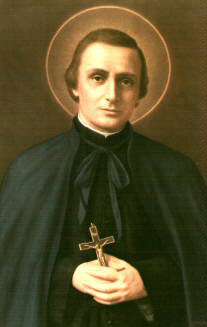 St. Peter Chanel: Saint of the Day for Sunday, April 28, 2024
 Prayer before a Crucifix: Prayer of the Day for Sunday, April 28, 2024



Copyright 2024 Catholic Online. All materials contained on this site, whether written, audible or visual are the exclusive property of Catholic Online and are protected under U.S. and International copyright laws, © Copyright 2024 Catholic Online. Any unauthorized use, without prior written consent of Catholic Online is strictly forbidden and prohibited.
Catholic Online is a Project of Your Catholic Voice Foundation, a Not-for-Profit Corporation. Your Catholic Voice Foundation has been granted a recognition of tax exemption under Section 501(c)(3) of the Internal Revenue Code. Federal Tax Identification Number: 81-0596847. Your gift is tax-deductible as allowed by law.
