We ask you, humbly: don't scroll away.
Hi readers, it seems you use Catholic Online a lot; that's great! It's a little awkward to ask, but we need your help. If you have already donated, we sincerely thank you. We're not salespeople, but we depend on donations averaging $14.76 and fewer than 1% of readers give. If you donate just $5.00, the price of your coffee, Catholic Online School could keep thriving. Thank you.Help Now >
Gregory of Rimini
FREE Catholic Classes
An Augustinian theologian ; born at Rimini, Italy, in the second half of the thirteenth century; died at Vienna, 1358. After completing his studies, he became professor and subsequently rector of the Augustinian seminary in his native city. But it was not long before he was called to Paris to take a professorship at the Sorbonne, where he achieved great distinction as a teacher. He was one of the chief leaders of the Nominalists in the controversy over the nature of " universals ", and his disciples conferred most respectful titles on him, such as Doctor acutus , Lucerna splendens , and especially Doctor authenticus . Many people even called him "beatus" not only out of esteem for his remarkable erudition, but for his heroic and virtuous qualities. As a theologian he belonged naturally to the older Augustinian school founded by the Augustinian Ægidius of Colonna, commonly known as the Schola Aegidiana . In some respects, however, his views diverged from those of the founder of the school. For, while the latter's views on the disposition of sinners towards grace by no means coincide with the opinions of St. Augustine, and are far more nearly akin to Semipelagianism, Gregory on the other hand was a most pertinacious champion of the teachings of this saint, and had no hesitation in opposing the general teaching of the Scholastics with respect to the need for grace in fallen man and the punishment of original sin, even though the Ægidian school followed in general St. Thomas. These views of Gregory found many zealous supporters again in the seventeenth century, Cardinal Noris in particular defending them vigorously. Gregory's opponents delighted to call him the "Infantium Tortor" (Tormentor of children), because he held, in opposition to the other Scholastics, the severe and extreme views concerning the fate of children who died unbaptized. In 1357 he succeeded the equally famous Thomas of Strasburg as General of the Augustinian Hermits, but died the next year at Vienna. Of his writings, the "Commentaries" on the "Books of the Sentences" have appeared in print (Lectura in primum et secundum librum Sententiarum, Paris, 1482, 1487; Milan, 1494; Valentia, 1500; Venice, 1518); also a treatise on the prohibition of usury (De usuris, Rimini, 1522, 1622). Commentaries on the Epistles of St. James and St. Paul are also attributed to him.



Join the Movement
When you sign up below, you don't just join an email list - you're joining an entire movement for Free world class Catholic education.


-

-
Mysteries of the Rosary
-
St. Faustina Kowalska
-
Litany of the Blessed Virgin Mary
-
Saint of the Day for Wednesday, Oct 4th, 2023
-
Popular Saints
-
St. Francis of Assisi
-
Bible
-
Female / Women Saints
-
7 Morning Prayers you need to get your day started with God
-
Litany of the Blessed Virgin Mary

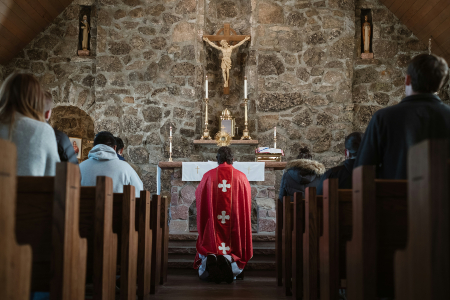
U.S. Catholic Parishes Experience Resurgence of Traditional Practices
-
Pope Francis Urges Faith and Prayers for Peace
-
Florida Welcomes Volunteer Chaplains to Public Schools
-
10 Fascinating Details About St. Joseph the Worker: Celebrating His Feast Day - May 1
-
St. Joseph the Worker: Model for Men, Young and Old

Daily Catholic
- Daily Readings for Thursday, May 02, 2024
- St. Athanasius: Saint of the Day for Thursday, May 02, 2024
- The Our Father: Prayer of the Day for Thursday, May 02, 2024
- Daily Readings for Wednesday, May 01, 2024
- St. Marculf: Saint of the Day for Wednesday, May 01, 2024
- To Saint Peregrine: Prayer of the Day for Wednesday, May 01, 2024
 Daily Readings for Thursday, May 02, 2024
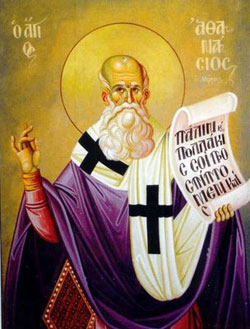 St. Athanasius: Saint of the Day for Thursday, May 02, 2024
 The Our Father: Prayer of the Day for Thursday, May 02, 2024
We ask you, humbly: don't scroll away.
Hi readers, it seems you use Catholic Online a lot; that's great! It's a little awkward to ask, but we need your help. If you have already donated, we sincerely thank you. We're not salespeople, but we depend on donations averaging $14.76 and fewer than 1% of readers give. If you donate just $5.00, the price of your coffee, Catholic Online School could keep thriving. Thank you.Help Now >


Copyright 2024 Catholic Online. All materials contained on this site, whether written, audible or visual are the exclusive property of Catholic Online and are protected under U.S. and International copyright laws, © Copyright 2024 Catholic Online. Any unauthorized use, without prior written consent of Catholic Online is strictly forbidden and prohibited.
Catholic Online is a Project of Your Catholic Voice Foundation, a Not-for-Profit Corporation. Your Catholic Voice Foundation has been granted a recognition of tax exemption under Section 501(c)(3) of the Internal Revenue Code. Federal Tax Identification Number: 81-0596847. Your gift is tax-deductible as allowed by law.