 Hi readers, it seems you use Catholic Online a lot; that's great! It's a little awkward to ask, but we need your help. If you have already donated, we sincerely thank you. We're not salespeople, but we depend on donations averaging $14.76 and fewer than 1% of readers give. If you donate just $5.00, the price of your coffee, Catholic Online School could keep thriving. Thank you. Help Now >
Blessed Giovanni Dominici
FREE Catholic Classes
(BANCHINI or BACCHINI was his family name).
Cardinal, statesman and writer, born at Florence, 1356; died at Buda, 10 July, 1420. He entered the Dominican Order at Santa Maria Novella in 1372 after having been cured, through the intercession of St. Catherine of Siena, of an impediment of speech for which he had been refused admission to the order two years before. On his return from Paris, where he completed his theological studies, he laboured as professor and preacher for twelve years at Venice. With the sanction of the master general, Blessed Raymond of Capua, he established convents of strict observance of his order at Venice (1391) and Fiesole (1406), and founded the convent of Corpus Christi at Venice for the Dominican Nuns of the Strict Observance. He was sent as envoy of Venice to the conclave of 1406 in which Gregory XII was elected; the following year the pope, whose confessor and counsellor he was, appointed him Archbishop of Ragusa, created him cardinal in 1408 and sent him as ambassador to Hungary, to secure the adhesion of Sigismund to the pope. At the Council of Constance Dominici read the voluntary resignation which Gregory XII had adopted, on his advice, as the surest means of ending the schism. Martin V appointed him legate to Bohemia on 19 July, 1418, but he accomplished little with the followers of Hus, owing to the supineness of King Wenceslaus. He was declared blessed by Gregory XVI in 1832 and his feast is observed 10 June.
We ask you, humbly: don't scroll away.
Hi readers, it seems you use Catholic Online a lot; that's great! It's a little awkward to ask, but we need your help. If you have already donated, we sincerely thank you. We're not salespeople, but we depend on donations averaging $14.76 and fewer than 1% of readers give. If you donate just $5.00, the price of your coffee, Catholic Online School could keep thriving. Thank you.Help Now >
Dominici was not only a prolife writer on spiritual subjects but also a graceful poet, as his many vernacular hymns, or Laudi , show. His "Regola del governo di cura familiare", written between 1400 and 1405, is a valuable pedagogical work (edited by Salvi, Florence, 1860) which treats, in four books, of the faculties of the soul, the powers and senses of the body, the uses of earthly goods, and the education of children. This last book has been translated into German by Rosler ( Herder's Bibliothek der katholischen Pädagogik, VII, Freiburg, 1894). His "Lucula Noctis" (R. Coulon, O.P., Latin text of the fifteenth century with an introduction, Paris, 1908) in reply to a letter of Nicola di Piero Salutati, is the most important treatise of that day on the study of the pagan authors. Dominici does not flatly condemn classical studies, but strenuously opposes the paganizing humanism of the day.


Join the Movement
When you sign up below, you don't just join an email list - you're joining an entire movement for Free world class Catholic education.


-

-
Mysteries of the Rosary
-
St. Faustina Kowalska
-
Litany of the Blessed Virgin Mary
-
Saint of the Day for Wednesday, Oct 4th, 2023
-
Popular Saints
-
St. Francis of Assisi
-
Bible
-
Female / Women Saints
-
7 Morning Prayers you need to get your day started with God
-
Litany of the Blessed Virgin Mary

U.S. Catholic Parishes Experience Resurgence of Traditional Practices
-
Pope Francis Urges Faith and Prayers for Peace
-
Florida Welcomes Volunteer Chaplains to Public Schools
-
10 Fascinating Details About St. Joseph the Worker: Celebrating His Feast Day - May 1
-
St. Joseph the Worker: Model for Men, Young and Old

Daily Catholic
- Daily Readings for Thursday, May 02, 2024
- St. Athanasius: Saint of the Day for Thursday, May 02, 2024
- The Our Father: Prayer of the Day for Thursday, May 02, 2024
- Daily Readings for Wednesday, May 01, 2024
- St. Marculf: Saint of the Day for Wednesday, May 01, 2024
- To Saint Peregrine: Prayer of the Day for Wednesday, May 01, 2024
 Daily Readings for Thursday, May 02, 2024
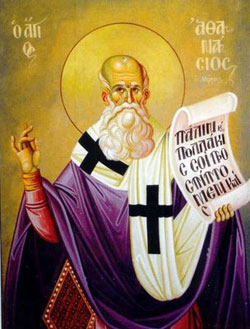 St. Athanasius: Saint of the Day for Thursday, May 02, 2024
 The Our Father: Prayer of the Day for Thursday, May 02, 2024
 Hi readers, it seems you use Catholic Online a lot; that's great! It's a little awkward to ask, but we need your help. If you have already donated, we sincerely thank you. We're not salespeople, but we depend on donations averaging $14.76 and fewer than 1% of readers give. If you donate just $5.00, the price of your coffee, Catholic Online School could keep thriving. Thank you. Help Now >

Copyright 2024 Catholic Online. All materials contained on this site, whether written, audible or visual are the exclusive property of Catholic Online and are protected under U.S. and International copyright laws, © Copyright 2024 Catholic Online. Any unauthorized use, without prior written consent of Catholic Online is strictly forbidden and prohibited.
Catholic Online is a Project of Your Catholic Voice Foundation, a Not-for-Profit Corporation. Your Catholic Voice Foundation has been granted a recognition of tax exemption under Section 501(c)(3) of the Internal Revenue Code. Federal Tax Identification Number: 81-0596847. Your gift is tax-deductible as allowed by law.