Germia
FREE Catholic Classes
A titular see of Galatia Secunda, a suffragan of Pessinus ; mentioned by Hierocles in the sixth century (Synec., 698, 4). About 650 it was already an autocephalous archdiocese directly dependent on Constantinople (Ecthesis pseudo-Epiphanii, ed. Gelzer, n. 51). Its condition was the same in the ninth century (Georgii Cyprii Descriptio, ed. Gelzer, n. 51), under Emperor Leo the Wise (901-07) (ibid., n. 61); under Constantine Porphyrogenitus (ed. Gelzer, n. 59); and under Alexius I Comnenus after 1084 (ed. Parthey, n. 87). In the time of Michael Palaelogus, about 1260, Germia must have been an autocephalous metropolitan see, such as it was still under Andronicus II, about 1300, and under Andronicus III, about 1330 (ed. Gelzer, n. 80, 89). But the see was soon to disappear. Lequien (Oriens christ., I, 495) knows of four titular Bishops of Germia. From the time of Justinian I (527-565) the city was entitled Myriangeloi, on account of a church dedicated to St. Michael and the Holy Angels. Justinian went there to take the baths in 556 ( Theophanes, Chronographia, A.M. 6056). To-day Germia is called Germa. It is a small village in the vilayet and caza of Angora, twenty-one miles south-east of Sivri-Hissar and twelve miles east of the ruins of Pessinus. The ancient baths and the ruins of the inn built by Justinian are still to be seen. Germia must not be confused with Germa, a suffragan see of Cyzicus in the province of the Hellespont, and later an autocephalous archdiocese.
We ask you, humbly: don't scroll away.
Hi readers, it seems you use Catholic Online a lot; that's great! It's a little awkward to ask, but we need your help. If you have already donated, we sincerely thank you. We're not salespeople, but we depend on donations averaging $14.76 and fewer than 1% of readers give. If you donate just $5.00, the price of your coffee, Catholic Online School could keep thriving. Thank you.Help Now >

Join the Movement
When you sign up below, you don't just join an email list - you're joining an entire movement for Free world class Catholic education.


-

-
Mysteries of the Rosary
-
St. Faustina Kowalska
-
Litany of the Blessed Virgin Mary
-
Saint of the Day for Wednesday, Oct 4th, 2023
-
Popular Saints
-
St. Francis of Assisi
-
Bible
-
Female / Women Saints
-
7 Morning Prayers you need to get your day started with God
-
Litany of the Blessed Virgin Mary

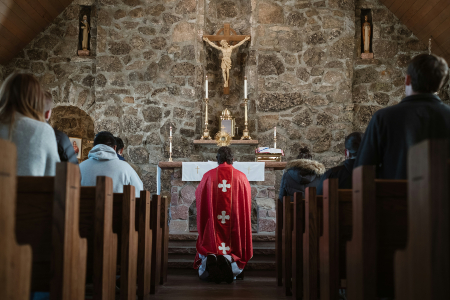
U.S. Catholic Parishes Experience Resurgence of Traditional Practices
-
Pope Francis Urges Faith and Prayers for Peace
-
Florida Welcomes Volunteer Chaplains to Public Schools
-
10 Fascinating Details About St. Joseph the Worker: Celebrating His Feast Day - May 1
-
St. Joseph the Worker: Model for Men, Young and Old

Daily Catholic
- Daily Readings for Thursday, May 02, 2024
- St. Athanasius: Saint of the Day for Thursday, May 02, 2024
- The Our Father: Prayer of the Day for Thursday, May 02, 2024
- Daily Readings for Wednesday, May 01, 2024
- St. Marculf: Saint of the Day for Wednesday, May 01, 2024
- To Saint Peregrine: Prayer of the Day for Wednesday, May 01, 2024
 Daily Readings for Thursday, May 02, 2024
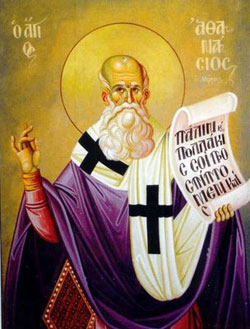 St. Athanasius: Saint of the Day for Thursday, May 02, 2024
 The Our Father: Prayer of the Day for Thursday, May 02, 2024
 Hi readers, it seems you use Catholic Online a lot; that's great! It's a little awkward to ask, but we need your help. If you have already donated, we sincerely thank you. We're not salespeople, but we depend on donations averaging $14.76 and fewer than 1% of readers give. If you donate just $5.00, the price of your coffee, Catholic Online School could keep thriving. Thank you. Help Now >

Copyright 2024 Catholic Online. All materials contained on this site, whether written, audible or visual are the exclusive property of Catholic Online and are protected under U.S. and International copyright laws, © Copyright 2024 Catholic Online. Any unauthorized use, without prior written consent of Catholic Online is strictly forbidden and prohibited.
Catholic Online is a Project of Your Catholic Voice Foundation, a Not-for-Profit Corporation. Your Catholic Voice Foundation has been granted a recognition of tax exemption under Section 501(c)(3) of the Internal Revenue Code. Federal Tax Identification Number: 81-0596847. Your gift is tax-deductible as allowed by law.