Kasper Franck
FREE Catholic Classes
A theologian and controversialist; b. at Ortrand, Saxony, 2 Nov., 1543; d. at Ingolstadt, 12 March, 1584. His parents were Lutherans and his early religious instruction filled him with enthusiasm for the new doctrine. His earnest desire for the conversion of his country led him to choose the ministry as his field of labour, and such was his zeal and success as a preacher that Count Ladislaus of Haag, who had but recently introduced the reformed faith into his province, invited him to his court. The premature death, however, of Ladislaus prevented Franck from carrying out the proposed plans of reform. Duke Albert, the successor of Ladislaus, resolved to restore the Catholic religion, and to that end called to his assistance the famous convert and preacher, Martin Eisengrein. His intercourse with Eisengrein soon led Franck to see the errors of the new creed. In 1506, he matriculated at the University of Ingolstadt , devoted himself to the study of the Fathers and the early Christian Church, and on 25 Jan., 1568, made a formal profession of the Catholic Faith. Albert, recognizing him as a man of great usefulness in reclaiming to the Faith many strayed souls, obtained from Pius V a dispensation to have him ordained a priest. Before beginning his missionary labours, he published a work setting forth the reasons and justification of his return to the ancient faith ; "Klare vnd Grundtliche vrsachen Warumb M. Caspar Franck Von der Sect, zu der allgemainen Christlichen vnd Römischen Kirchen getreten" (Ingolstadt, 1568); the same in Latin, "Dilucida exposito justissimarum causarum", etc. His apostolic labours in Haag and Kraiburg were crowned with success. In 1572, he was again in the University of Ingolstadt , pursuing his theological studies and the following year he was appointed its rector, which office he again held later for several consecutive terms. On the occasion of the General Jubilee in 1575, he set out for Rome, won at Siena the doctorate in theology and shortly afterwards Gregory XIII conferred on him the title of Prothonotary Apostolic and Comes Lateranensis. His vast erudition, zeal, and power of penetration place him on the long list of learned men who directed the destiny of the University of Ingolstadt during the sixteenth century. His polemical writings manifest earnest and painstaking labour and an intimate familiarity with patristic literature. Among his more important works may be mentioned: "Brevis et Pia Institutio de puro verbo Dei et clara S. Evangelii luce" (Ingolstadt, 1571); "Tractatus de ordinaria, legitima et apostolica vocatione sacerdotem et concionatorum", etc. (Inglolstat, 1571); "Casperis Franci de externo, visibili et hiearchico, Ecclesiae Catholicae sacerdotio", (Cologne, 1575); "Catalogus haereticorum" (Inglolstadt, 1576); "Explicatio totius historiae Passionis et Mortis Domini", etc. (Inglolstat, 1572); "Fundamentum Catholicae Fidei contra Schmidelin" (Inglolstadt, 1578).
 Hi readers, it seems you use Catholic Online a lot; that's great! It's a little awkward to ask, but we need your help. If you have already donated, we sincerely thank you. We're not salespeople, but we depend on donations averaging $14.76 and fewer than 1% of readers give. If you donate just $5.00, the price of your coffee, Catholic Online School could keep thriving. Thank you. Help Now >

Join the Movement
When you sign up below, you don't just join an email list - you're joining an entire movement for Free world class Catholic education.


-

-
Mysteries of the Rosary
-
St. Faustina Kowalska
-
Litany of the Blessed Virgin Mary
-
Saint of the Day for Wednesday, Oct 4th, 2023
-
Popular Saints
-
St. Francis of Assisi
-
Bible
-
Female / Women Saints
-
7 Morning Prayers you need to get your day started with God
-
Litany of the Blessed Virgin Mary


Sacrifices of Faith: The Pro-Life Legacies of St. Gianna and Jessica Hanna
-
How to love God by caring for our bodies
-
Pope Francis calls for negotiations to End Russia-Ukraine War
-
Pope Francis Contemplates Return to U.S. for United Nations Assembly Address
-
Pope Francis Calls on Faithful to Embrace Faith, Hope, and Charity in New Teaching Series


Daily Catholic
- Daily Readings for Sunday, April 28, 2024
- St. Peter Chanel: Saint of the Day for Sunday, April 28, 2024
- Prayer before a Crucifix: Prayer of the Day for Sunday, April 28, 2024
- Daily Readings for Saturday, April 27, 2024
- St. Zita: Saint of the Day for Saturday, April 27, 2024
- Prayer for the Dead # 2: Prayer of the Day for Saturday, April 27, 2024
 Daily Readings for Sunday, April 28, 2024
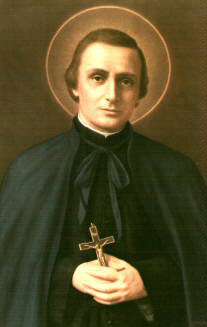 St. Peter Chanel: Saint of the Day for Sunday, April 28, 2024
 Prayer before a Crucifix: Prayer of the Day for Sunday, April 28, 2024
We ask you, humbly: don't scroll away.
Hi readers, it seems you use Catholic Online a lot; that's great! It's a little awkward to ask, but we need your help. If you have already donated, we sincerely thank you. We're not salespeople, but we depend on donations averaging $14.76 and fewer than 1% of readers give. If you donate just $5.00, the price of your coffee, Catholic Online School could keep thriving. Thank you.Help Now >

Copyright 2024 Catholic Online. All materials contained on this site, whether written, audible or visual are the exclusive property of Catholic Online and are protected under U.S. and International copyright laws, © Copyright 2024 Catholic Online. Any unauthorized use, without prior written consent of Catholic Online is strictly forbidden and prohibited.
Catholic Online is a Project of Your Catholic Voice Foundation, a Not-for-Profit Corporation. Your Catholic Voice Foundation has been granted a recognition of tax exemption under Section 501(c)(3) of the Internal Revenue Code. Federal Tax Identification Number: 81-0596847. Your gift is tax-deductible as allowed by law.