We ask you, humbly: don't scroll away.
Hi readers, it seems you use Catholic Online a lot; that's great! It's a little awkward to ask, but we need your help. If you have already donated, we sincerely thank you. We're not salespeople, but we depend on donations averaging $14.76 and fewer than 1% of readers give. If you donate just $5.00, the price of your coffee, Catholic Online School could keep thriving. Thank you.Help Now >
Faculties of the Soul
FREE Catholic Classes
I. MEANING
Whatever doctrine one may hold concerning the nature of the human soul and its relations to the organism, the four following points are beyond the possibility of doubt.
These facts are the psychological basis for admitting faculties (from facere, to do), capacities ( capax, from capere, to hold), or powers (from posse, to be able; the Scholastics generally use the corresponding Latin term potentiæ ).
We ask you, humbly: don't scroll away.
Hi readers, it seems you use Catholic Online a lot; that's great! It's a little awkward to ask, but we need your help. If you have already donated, we sincerely thank you. We're not salespeople, but we depend on donations averaging $14.76 and fewer than 1% of readers give. If you donate just $5.00, the price of your coffee, Catholic Online School could keep thriving. Thank you.Help Now >
Any attempt, however, to define with greater precision the meaning of faculties, is sure to call forth vigorous protest. In fact, few psychological questions of similar importance have been the object of so many animated discussions, and, it may be added, of so many misunderstandings. One extreme view looks upon faculties as real, though secondary agents, exercising an active influence on one another, and as being scientific explanations of psychological facts. Why does man see and reason ? Because he has the faculties of vision and reasoning. The will acts, is free; there is an interaction of the intellect, the will, the senses, the feelings, etc. Sometimes, however, such expressions are used with the understanding that they are metaphors, and with the explicit or implicit warning that they must not be taken literally.
At the other extreme are found psychologists -- and they are numerous today -- who refuse to concede any kind of reality whatsoever to faculties. Processes alone are real; faculties are simply general terms used to label certain groups of processes. Like all abstractions they should never be looked upon as having any reality outside of the mind, which uses them as logical substitutes to facilitate the classification of mental facts.
That the faculty theory has no essential connection with Catholic dogma is sufficiently evidenced by the fact that it has found, and still finds, opponents as well as advocates among Catholic theologians and philosophers.
Judging, therefore, the question on its own merits, it may be said that the doctrine of St. Thomas avoids both extremes mentioned above, and is at least free from the absurdities with which modern psychologists so frequently charge the faculty theory. His expressions, taken apart from their context, and translated without a sufficient acquaintance with Scholastic terminology, might easily be given a wrong interpretation. For as the knowledge of the nature of the soul and its faculties, according to St. Thomas, is partly negative, and, in its positive aspect, analogical, it is necessary to use expressions taken from things which are known more directly. But we are given some principles which must always be kept in mind ; for instance, "the faculties act only by the energy of the soul "; they have no energy of their own, for "they are not the agents". Coming to more special applications, "it is not the intellect that understands, but the soul through the intellect " (Quæst. Disp., De Veritate, x, 9, ad 3). Again, the question is not asked whether the will is free, but whether man is free (Summa, I:83 ; I-II:13 ; De Veritate, xxiv; De Malo, vi). This shows that when a real distinction is admitted between the soul and its faculties, or between the faculties themselves, the meaning is not that of a distinction between substances or agents. In Scholastic terminology, distinction does not always mean separation nor even the possibility of separation. And the distinction between a substance and its qualities, attributes or modes, was called a real distinction.

If the soul can originate or experience states which, as everybody admits, may be widely different, it is because there are in the mind various modes of energy or faculties. Since minds differ not only by the actual contents of consciousness, but also, and chiefly, by the power which they have of experiencing different processes, it is clear that if this constitutes a real difference, it must itself be something real. So unavoidable is this conclusion, that some of the strongest opponents of faculties are at the same time the strongest defenders of the theory of psychical dispositions, which they postulate in order to explain the facts of memory, mental habit, and in general, the utilization, conscious or unconscious, of past experience. And yet, what is a psychical disposition but an acquired power or faculty? Stuart Mill's "background of possibilities" or Taine's "permanent possibility" are certainly less clear and more objectionable than faculties, for the faculty is not a mere possibility, but a real power of an agent, a potentia ( see ACTUS ET POTENTIA ).
Psychical dispositions are no more explanations of facts than are faculties, if by explanation is meant the assigning of an antecedent better known than, or known independently of, the facts to be explained. In both cases, the whole knowledge of the faculty, or the disposition, is derived from the processes themselves, for neither can fall under direct observation. The possibility of an experience or action, if known, is always known by direct inference or by analogy from past experiences or actions. Yet without being a scientific explanation, and without substituting itself for scientific explanations, the faculty, like the disposition, trace, subconscious activity, etc., is a legitimate postulate.
II. CLASSIFICATION
Plato admits three parts, forms, or powers of the soul, perhaps even three distinct souls : the intellect (noûs), the nobler affections (thumós), and the appetites or passions (epithumetikón).
For Aristotle, the soul is one, but endowed with five groups of faculties (dunámeis): the "vegetative" faculty (threptikón), concerned with the maintenance and development of organic life; the appetite (oretikón), or the tendency to any good; the faculty of sense perception (aisthetikón); the "locomotive" faculty (kinetikón), which presides over the various bodily movements; and reason (dianoetikón). The Scholastics generally follow Aristotle's classification. For them body and soul are united in one complete substance. The soul is the forma substantialis, the vital principle, the source of all activities. Hence their science of the soul deals with functions which nowadays belong to the provinces of biology and physiology. In more recent times, however, especially under the influence of Descartes, the mind has been separated, and even estranged, from the organism. Psychology deals only with the inner world, that is, the world of consciousness and its conditions. The nature of the mind and its relations to the organism are questions that belong to philosophy or metaphysics. As a consequence, also, modern psychology fails to distinguish between the spiritual faculties of the soul, i.e. those which the soul exercises itself without the intrinsic co-operation of the organism, and the faculties of the compositum, i.e. the soul and organism united in one complete principle of action, or of one special animated organ. This distinction was also an essential point in the Aristotelean and Scholastic psychology.

Finally, the Scholastics reduced affective life to the general faculty of appetites, whereas today, especially since Kant, a tripartite division is more commonly accepted, namely into cognitive, affective, and conative faculties. Some, however, still hold a bipartite division. Others, finally, reject both as unsatisfactory, and follow the order of development, or base their classification both on objective conditions and subjective characteristics. Without entering into the discussion, it may be said that, however useful and justifiable the tripartite classification may prove in psychology, the Scholastic reduction of feelings to "appetite" seems to be deeper and more philosophical. For feelings and emotions, pleasurable or painful, result from an agreement or conflict between certain experiences and the mind's tendency.


Join the Movement
When you sign up below, you don't just join an email list - you're joining an entire movement for Free world class Catholic education.


-

-
Mysteries of the Rosary
-
St. Faustina Kowalska
-
Litany of the Blessed Virgin Mary
-
Saint of the Day for Wednesday, Oct 4th, 2023
-
Popular Saints
-
St. Francis of Assisi
-
Bible
-
Female / Women Saints
-
7 Morning Prayers you need to get your day started with God
-
Litany of the Blessed Virgin Mary


Sacrifices of Faith: The Pro-Life Legacies of St. Gianna and Jessica Hanna
-
How to love God by caring for our bodies
-
Pope Francis calls for negotiations to End Russia-Ukraine War
-
Pope Francis Contemplates Return to U.S. for United Nations Assembly Address
-
Pope Francis Calls on Faithful to Embrace Faith, Hope, and Charity in New Teaching Series

Daily Catholic
- Daily Readings for Sunday, April 28, 2024
- St. Peter Chanel: Saint of the Day for Sunday, April 28, 2024
- Prayer before a Crucifix: Prayer of the Day for Sunday, April 28, 2024
- Daily Readings for Saturday, April 27, 2024
- St. Zita: Saint of the Day for Saturday, April 27, 2024
- Prayer for the Dead # 2: Prayer of the Day for Saturday, April 27, 2024
 Daily Readings for Sunday, April 28, 2024
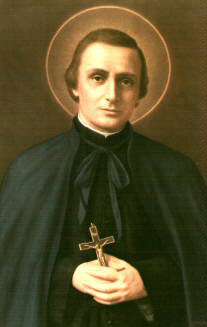 St. Peter Chanel: Saint of the Day for Sunday, April 28, 2024
 Prayer before a Crucifix: Prayer of the Day for Sunday, April 28, 2024
We ask you, humbly: don't scroll away.
Hi readers, it seems you use Catholic Online a lot; that's great! It's a little awkward to ask, but we need your help. If you have already donated, we sincerely thank you. We're not salespeople, but we depend on donations averaging $14.76 and fewer than 1% of readers give. If you donate just $5.00, the price of your coffee, Catholic Online School could keep thriving. Thank you.Help Now >


Copyright 2024 Catholic Online. All materials contained on this site, whether written, audible or visual are the exclusive property of Catholic Online and are protected under U.S. and International copyright laws, © Copyright 2024 Catholic Online. Any unauthorized use, without prior written consent of Catholic Online is strictly forbidden and prohibited.
Catholic Online is a Project of Your Catholic Voice Foundation, a Not-for-Profit Corporation. Your Catholic Voice Foundation has been granted a recognition of tax exemption under Section 501(c)(3) of the Internal Revenue Code. Federal Tax Identification Number: 81-0596847. Your gift is tax-deductible as allowed by law.