We ask you, humbly: don't scroll away.
Hi readers, it seems you use Catholic Online a lot; that's great! It's a little awkward to ask, but we need your help. If you have already donated, we sincerely thank you. We're not salespeople, but we depend on donations averaging $14.76 and fewer than 1% of readers give. If you donate just $5.00, the price of your coffee, Catholic Online School could keep thriving. Thank you.Help Now >
Ancient Diocese of Exeter
FREE Catholic Classes
(EXONIA, ISCA DAMNONIORUM, CAER WISE, EXANCEASTER; EXONIENSIS).
English see, chosen by Leofric, Bishop of Crediton, as his cathedral city in 1050. Originally Devonshire formed part of the Diocese of Wessex. About 703 Devonshire and Cornwall became the separate Bishopric of Sherborne and in 900 this was divided into two, the Devonshire bishop having his cathedral at Crediton. The two dioceses were again united when Leofric became first Bishop of Exeter. The present cathedral was begun by Bishop William de Warelhurst in 1112; the abbey church of St. Mary and St. Peter, founded by Athelstan in 932 and rebuilt in 1019, serving till then as the cathedral church. The transept towers built by Warelhurst still remain, being the only part of the Norman cathedral existing. This Norman building was completed by Bishop Marshall at the close of the twelfth century. The cathedral as it now stands is in the decorated style, being begun by Bishop Quivil (1280-1291), continued by Bytton and Stapeldon, and completed by the great Bishop Grandisson during his long pontificate of forty-two years, who left it much as it now stands. In many respects it resembles the French cathedrals rather than those of England. The special features of the cathedral are the transeptal towers and the choir. The latter contains much early stained-glass and a magnificent episcopal throne, and is separated from the nave by a choir-screen of singular beauty (1324). The absence of a central tower and a general lack of elevation prevent the building from ranking among the greatest English cathedrals, though the stately west front is alone sufficient to render it remarkable.
The bishops of Exeter always enjoyed considerable independence and the see was one of the largest and richest in England. "The Bishop of Exeter," writes Professor Freeman, "like the Archbishop of York was the spiritual head of a separate people." The remoteness of the see from London prevented it from being bestowed on statesmen or courtiers, so that the roll of bishops is more distinguished for scholars and administrators than for men who played a large part in national affairs. This was fortunate for the diocese and gave it a long line of excellent bishops, one of whom, Edmund Lacy, died with a reputation for sanctity and the working of miracles (1455). The result of this was seen in the fidelity with which Devonshire and Cornwall adhered to the Catholic Faith at the time of the Reformation. The following are the bishops with the dates of their accession :
- Leofric, 1046
- Osbern, 1072
- William Warelwast, 1107
- Robert Chichester, 1138
- Robert Warelwast, 1155
- Bartholomew Iscanus, 1161
- John the Chaunter, 1186
- Vacancy 1191
- Henry Marshall, 1194
- Vacancy 1206
- Simon de Apulia, 1214
- William Bruere, 1224
- Richard Blondy, 1245
- Walter Bronescombe, 1257
- Peter Quivil, 1280
- Thomas de Bytton, 1292
- Walter de Stapeldon, 1308
- James Berkeley, 1326
- John Grandisson, 1327
- Thomas Brantyngham, 1370
- Edmund Stafford, 1395
- John Ketterick, 1419
- Edmund Lacy, 1420
- George Neville, 1458
- John Bothe, 1465
- Peter Courtenay, 1478
- Richard Fox, 1487
- Oliver King, 1492
- Richard Redman, 1496
- John Arundell, 1502
- Hugh Oldham, 1504
- John Vesey, 1519
- Vacancy 1551
- James Turberville, 1555-1559
The diocese, originally very wealthy, was plundered during the reign of Henry VIII , when Bishop Vesey was forced to surrender fourteen out of twenty-two manors, and the value of the bishopric was reduced to a third. Vesey, though a Catholic at heart, held the see until 1551, when he was made to resign, and the Reformer, Miles Coverdale, was intruded into the see, where he made himself most unpopular. On the accession of Mary, in 1553, Vesey was restored. He died in 1554 and was succeeded by James Turberville, beloved br Catholics and Protestants alike. He was deprived of the see by Elizabeth in 1559 and died in prison, probably in or about 1570, the last Catholic Bishop of Exeter. The diocese contained four archdeaconries, Cornwall, Barnstaple, Exeter, and Totton, and six hundred and four parishes. There were Benedictine, Augustinian, Franciscan, Dominican, and Norbertine houses, and four Cistercian abbeys. The cathedral was dedicated to St. Peter, and the arms of the see were: Gules, a sword in pale blade and hilt proper, two keys in saltire or.
We ask you, humbly: don't scroll away.
Hi readers, it seems you use Catholic Online a lot; that's great! It's a little awkward to ask, but we need your help. If you have already donated, we sincerely thank you. We're not salespeople, but we depend on donations averaging $14.76 and fewer than 1% of readers give. If you donate just $5.00, the price of your coffee, Catholic Online School could keep thriving. Thank you.Help Now >

Join the Movement
When you sign up below, you don't just join an email list - you're joining an entire movement for Free world class Catholic education.


-

-
Mysteries of the Rosary
-
St. Faustina Kowalska
-
Litany of the Blessed Virgin Mary
-
Saint of the Day for Wednesday, Oct 4th, 2023
-
Popular Saints
-
St. Francis of Assisi
-
Bible
-
Female / Women Saints
-
7 Morning Prayers you need to get your day started with God
-
Litany of the Blessed Virgin Mary


Sacrifices of Faith: The Pro-Life Legacies of St. Gianna and Jessica Hanna
-
How to love God by caring for our bodies
-
Pope Francis calls for negotiations to End Russia-Ukraine War
-
Pope Francis Contemplates Return to U.S. for United Nations Assembly Address
-
Pope Francis Calls on Faithful to Embrace Faith, Hope, and Charity in New Teaching Series


Daily Catholic
- Daily Readings for Saturday, April 27, 2024
- St. Zita: Saint of the Day for Saturday, April 27, 2024
- Prayer for the Dead # 2: Prayer of the Day for Saturday, April 27, 2024
- Daily Readings for Friday, April 26, 2024
- St. Cletus: Saint of the Day for Friday, April 26, 2024
- Prayer before the Closing of the Day: Prayer of the Day for Friday, April 26, 2024
 Daily Readings for Saturday, April 27, 2024
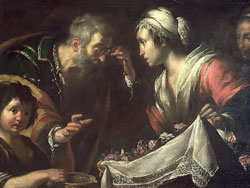 St. Zita: Saint of the Day for Saturday, April 27, 2024
 Prayer for the Dead # 2: Prayer of the Day for Saturday, April 27, 2024


Copyright 2024 Catholic Online. All materials contained on this site, whether written, audible or visual are the exclusive property of Catholic Online and are protected under U.S. and International copyright laws, © Copyright 2024 Catholic Online. Any unauthorized use, without prior written consent of Catholic Online is strictly forbidden and prohibited.
Catholic Online is a Project of Your Catholic Voice Foundation, a Not-for-Profit Corporation. Your Catholic Voice Foundation has been granted a recognition of tax exemption under Section 501(c)(3) of the Internal Revenue Code. Federal Tax Identification Number: 81-0596847. Your gift is tax-deductible as allowed by law.