We ask you, humbly: don't scroll away.
Hi readers, it seems you use Catholic Online a lot; that's great! It's a little awkward to ask, but we need your help. If you have already donated, we sincerely thank you. We're not salespeople, but we depend on donations averaging $14.76 and fewer than 1% of readers give. If you donate just $5.00, the price of your coffee, Catholic Online School could keep thriving. Thank you.Help Now >
Pope St. Alexander I
FREE Catholic Classes
St. Irenaeus of Lyons, writing in the latter quarter of the second century, reckons him as the fifth pope in succession from the Apostles, though he says nothing of his martyrdom.
His pontificate is variously dated by critics, e.g. 106-115 (Duchesne) or 109-116 (Lightfoot). In Christian antiquity he was credited with a pontificate of about ten years ( Eusebius, Hist. Eccl. IV, i,) and there is no reason to doubt that he was on the "catalogue of bishops " drawn up at Rome by Hegesippus ( Eusebius, IV, xxii, 3) before the death of Pope Eleutherius (c. 189). According to a tradition extant in the Roman Church at the end of the fifth century, and recorded in the Liber Pontificalis he suffered a martyr's death by decapitation on the Via Nomentana in Rome, 3 May.
The same tradition declares him to have been a Roman by birth and to have ruled the Church in the reign of Trajan (98-117). It likewise attributes to him, but scarcely with accuracy, the insertion in the canon of the Qui Pridie , or words commemorative of the institution of the Eucharist, such being certainly primitive and original in the Mass. He is also said to have introduced the use of blessing water mixed with salt for the purification of Christian homes from evil influences (constituit aquam sparsionis cum sale benedici in habitaculis hominum). Duchesne (Lib. Pont., I, 127) calls attention to the persistence of this early Roman custom by way of a blessing in the Gelasian Sacramentary that recalls very forcibly the actual Asperges prayer at the beginning of Mass.
In 1855, a semi-subterranean cemetery of the holy martyrs Sts. Alexander, Eventulus, and Theodulus was discovered near Rome, at the spot where the above mentioned tradition declares the Pope to have been martyred. According to some archaeologists, this Alexander is identical with the Pope, and this ancient and important tomb marks the actual site of the Pope's martyrdom. Duchesne, however (op. cit., I, xci-ii) denies the identity of the martyr and the pope, while admitting that the confusion of both personages is of ancient date, probably anterior to the beginning of the sixth century when the Liber Pontificalis was first compiled [Dufourcq, Gesta Martyrum Romains (Paris, 1900), 210-211].
The difficulties raised in recent times by Richard Lipsius (Chronologie der römischen Bischofe, Kiel, 1869) and Adolph Harnack (Die Zeit des Ignatius u. die Chronologie der antiochenischen Bischofe, 1878) concerning the earliest successors of St. Peter are ably discussed and answered by F.S. (Cardinal Francesco Segna) in his "De successione priorum Romanorum Pontificum" (Rome 1897); with moderation and learning by Bishop Lightfoot, in his "Apostolic Fathers: St. Clement" (London, 1890) I, 201-345- especially by Duchesne in the introduction to his edition of the "Liber Pontificalis" (Paris, 1886) I, i-xlviii and lxviii-lxxiii. The letters ascribed to Alexander I by Pseudo-Isidore may be seen in P.G., V, 1057 sq., and in Hinschius, "Decretales Pseudo-Isidorianae" (Leipzig, 1863) 94-105. His remains are said to have been transferred to Freising in Bavaria in 834 (Dummler, Poetae Latini Aevi Carolini, Berlin, 1884, II, 120). His so-called "Acts" are not genuine, and were compiled at a much later date ( Tillemont, Mem. II, 590 sqq; Dufourcq, op. cit., 210-211).


Join the Movement
When you sign up below, you don't just join an email list - you're joining an entire movement for Free world class Catholic education.


-

-
Mysteries of the Rosary
-
St. Faustina Kowalska
-
Litany of the Blessed Virgin Mary
-
Saint of the Day for Wednesday, Oct 4th, 2023
-
Popular Saints
-
St. Francis of Assisi
-
Bible
-
Female / Women Saints
-
7 Morning Prayers you need to get your day started with God
-
Litany of the Blessed Virgin Mary


Sacrifices of Faith: The Pro-Life Legacies of St. Gianna and Jessica Hanna
-
How to love God by caring for our bodies
-
Pope Francis calls for negotiations to End Russia-Ukraine War
-
Pope Francis Contemplates Return to U.S. for United Nations Assembly Address
-
Pope Francis Calls on Faithful to Embrace Faith, Hope, and Charity in New Teaching Series


Daily Catholic
- Daily Readings for Sunday, April 28, 2024
- St. Peter Chanel: Saint of the Day for Sunday, April 28, 2024
- Prayer before a Crucifix: Prayer of the Day for Sunday, April 28, 2024
- Daily Readings for Saturday, April 27, 2024
- St. Zita: Saint of the Day for Saturday, April 27, 2024
- Prayer for the Dead # 2: Prayer of the Day for Saturday, April 27, 2024
 Daily Readings for Sunday, April 28, 2024
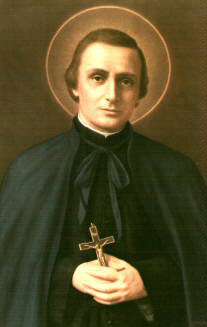 St. Peter Chanel: Saint of the Day for Sunday, April 28, 2024
 Prayer before a Crucifix: Prayer of the Day for Sunday, April 28, 2024
We ask you, humbly: don't scroll away.
Hi readers, it seems you use Catholic Online a lot; that's great! It's a little awkward to ask, but we need your help. If you have already donated, we sincerely thank you. We're not salespeople, but we depend on donations averaging $14.76 and fewer than 1% of readers give. If you donate just $5.00, the price of your coffee, Catholic Online School could keep thriving. Thank you.Help Now >



Copyright 2024 Catholic Online. All materials contained on this site, whether written, audible or visual are the exclusive property of Catholic Online and are protected under U.S. and International copyright laws, © Copyright 2024 Catholic Online. Any unauthorized use, without prior written consent of Catholic Online is strictly forbidden and prohibited.
Catholic Online is a Project of Your Catholic Voice Foundation, a Not-for-Profit Corporation. Your Catholic Voice Foundation has been granted a recognition of tax exemption under Section 501(c)(3) of the Internal Revenue Code. Federal Tax Identification Number: 81-0596847. Your gift is tax-deductible as allowed by law.
