We ask you, humbly: don't scroll away.
Hi readers, it seems you use Catholic Online a lot; that's great! It's a little awkward to ask, but we need your help. If you have already donated, we sincerely thank you. We're not salespeople, but we depend on donations averaging $14.76 and fewer than 1% of readers give. If you donate just $5.00, the price of your coffee, Catholic Online School could keep thriving. Thank you.Help Now >
Delatores
FREE Catholic Classes
( Latin for DENOUNCERS)
A term used by the Synod of Elvira (c. 306) to stigmatize those Christians who appeared as accusers of their brethren. This synod decided (can. lxxiii, Hefele, Conciliengeschichte, 2d ed., I, 188) that if any Christian was proscribed or put to death through the denunciation ( delatio ) of another Christian, such a delator was to suffer perpetual excommunication. No distinction is made between true and false accusation, but the synod probably meant only the accusation of Christianity before the heathen judge, or at most a false accusation. Any false accusation against a bishop, priest, or deacon was visited with a similar punishment by the same synod (can. lxxv, op. cit., 189). The punishment for false witness in general was proportioned by can. lxxiv to the gravity of the accusation. The Council of Arles of 314 issued a similar decree (can. xiv, op. cit., p. 213), when it decided that Christians who accused falsely their brethren were to be forever excluded from communion with the faithful. During the persecutions of the early Christians it sometimes happened that apostates denounced their fellow-Christians. The younger Pliny relates in a letter to Trajan ( Apostolic Fathers ed. Lightfoot, 2d ed., I. i, 50 sqq.), that an anonymous bill of indictment was presented to him on which were many names of Christians ; we do not know, however, that the author of this libellus was a Christian. According to can. xiii of the Council of Arles (op. cit., 211 sqq.), during the persecution of Diocletian Christians were denounced by their own brethren to the heathen judges. If it appeared from the public acts that an ecclesiastic had done this, he was punished by the synod with perpetual deposition ; however, his ordinations were considered valid. In general, false accusation is visited with severe punishments in later synods, e.g. Second Council of Arles (443 or 453, can. xxiv), the Council of Agde (506, can. viii) and others. These decrees appear in the later medieval collections of canons. New punitive decrees against calumny were issued by Gregory IX in his Decretals (de calumniatoribus, V, 3 in Corp. Jur. Can). KRÜLL in KRAUS, Real-Encyk. (Freiburg im Br., 1882), I, 361; HINSCHIUS, Kirchenrecht, IV (Berlin, 1888), 699, 770; IV (Berlin, 1893), 20 sqq.
We ask you, humbly: don't scroll away.
Hi readers, it seems you use Catholic Online a lot; that's great! It's a little awkward to ask, but we need your help. If you have already donated, we sincerely thank you. We're not salespeople, but we depend on donations averaging $14.76 and fewer than 1% of readers give. If you donate just $5.00, the price of your coffee, Catholic Online School could keep thriving. Thank you.Help Now >
 Hi readers, it seems you use Catholic Online a lot; that's great! It's a little awkward to ask, but we need your help. If you have already donated, we sincerely thank you. We're not salespeople, but we depend on donations averaging $14.76 and fewer than 1% of readers give. If you donate just $5.00, the price of your coffee, Catholic Online School could keep thriving. Thank you. Help Now >

Join the Movement
When you sign up below, you don't just join an email list - you're joining an entire movement for Free world class Catholic education.


-

-
Mysteries of the Rosary
-
St. Faustina Kowalska
-
Litany of the Blessed Virgin Mary
-
Saint of the Day for Wednesday, Oct 4th, 2023
-
Popular Saints
-
St. Francis of Assisi
-
Bible
-
Female / Women Saints
-
7 Morning Prayers you need to get your day started with God
-
Litany of the Blessed Virgin Mary


Sacrifices of Faith: The Pro-Life Legacies of St. Gianna and Jessica Hanna
-
How to love God by caring for our bodies
-
Pope Francis calls for negotiations to End Russia-Ukraine War
-
Pope Francis Contemplates Return to U.S. for United Nations Assembly Address
-
Pope Francis Calls on Faithful to Embrace Faith, Hope, and Charity in New Teaching Series


Daily Catholic
- Daily Readings for Sunday, April 28, 2024
- St. Peter Chanel: Saint of the Day for Sunday, April 28, 2024
- Prayer before a Crucifix: Prayer of the Day for Sunday, April 28, 2024
- Daily Readings for Saturday, April 27, 2024
- St. Zita: Saint of the Day for Saturday, April 27, 2024
- Prayer for the Dead # 2: Prayer of the Day for Saturday, April 27, 2024
 Daily Readings for Sunday, April 28, 2024
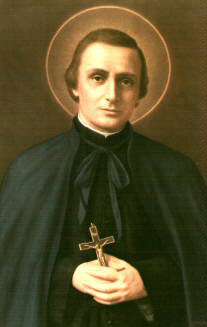 St. Peter Chanel: Saint of the Day for Sunday, April 28, 2024
 Prayer before a Crucifix: Prayer of the Day for Sunday, April 28, 2024



Copyright 2024 Catholic Online. All materials contained on this site, whether written, audible or visual are the exclusive property of Catholic Online and are protected under U.S. and International copyright laws, © Copyright 2024 Catholic Online. Any unauthorized use, without prior written consent of Catholic Online is strictly forbidden and prohibited.
Catholic Online is a Project of Your Catholic Voice Foundation, a Not-for-Profit Corporation. Your Catholic Voice Foundation has been granted a recognition of tax exemption under Section 501(c)(3) of the Internal Revenue Code. Federal Tax Identification Number: 81-0596847. Your gift is tax-deductible as allowed by law.