Cyclades
FREE Catholic Classes
A group of islands in the Ægean Sea. The ancients called by this name only Delos and eleven neighbouring islands, Andros, Tenos, Myknos, Siphnos, Seriphos, Naxos, Syros, Paros, Kythmos, Keos, and Gyaros. According to mythology they were nymphs metamorphosed into rocks for having refused to sacrifice to Poseidon. They are in fact remains of an ancient continent that disappeared in the tertiary epoch. Successively Cretan, Dorian, and Ionian colonies, they were made subject to Athens by Miltiades. Under Byzantine rule the Dodekanesoi (twelve islands) were included in the fifth European theme. Plundered by the Saracens in the seventh and eighth centuries, they became, after the Fourth Crusade, a duchy belonging to the Venetian families of Sanudo and Crispo. The turks conquered them in the sixteenth century. The Cyclades are now a nomos , or department, of Greece, but under this name are comprised also Melos, Kimolos, Sikinos, Amorgos (birthplace of Simonides), Thera or Santorin, Ios, Anaphe, and other islands between them. The population is about 130,000. Silk, wine, cotton, fruit, sponges, marble (Paros), and emery (Naxos), are the chief products. There is also a coasting trade; Hermoupolis in Syros is an important port.
There were in the Cyclades many Greek sees suffragan to Rhodes. Under the Frankish rule, Latin sees were also established at Naxos, Andros, Keos, Syros, Tenos, Mykonos, Ios, Melos, and Thera, as suffragans of Rhodes and Athens, later only of Naxos. The Archdiocese of Naxos includes also Paros and Antiparos. It has 500 Catholics some 10 churches or chapels, and 10 priests. Among the latter are Capuchins, and Oblates of St. Francis de Sales ; Ursuline nuns conduct the schools. Naxos and Paros were Greek bishoprics early united under the name of Paronaxia. It was a metropolitan see in 1088, and its episcopal list is in Lequien (I, 937). Several of its metropolitans united with Rome from the fourteenth to the eighteenth century. The list of the Latin archbishops is in Lequien (III, 1001), Gams (448), and Eubel (I, 375, II, 221). The See of Naxos is now confided to the Archbishop of Athens as administrator Apostolic. Andros was likewise a Greek see; its episcopal list is in Lequien (I, s.v.). The Latin list is found there also (III, 859), in Gams 449), and more complete in Eubel (I, 89, II, 99). From 1702 the see was administered by a vicar-Apostolic dependent directly on Propaganda ; and in 1824 it was confided to the Bishop of Tenos.
We ask you, humbly: don't scroll away.
Hi readers, it seems you use Catholic Online a lot; that's great! It's a little awkward to ask, but we need your help. If you have already donated, we sincerely thank you. We're not salespeople, but we depend on donations averaging $14.76 and fewer than 1% of readers give. If you donate just $5.00, the price of your coffee, Catholic Online School could keep thriving. Thank you.Help Now >
Melos (Milo) is famous for the statue of Venus found there; it has thermal springs and solfataras, and there are ruins of the ancient city. The Greek episcopal list is in Lequien (I, 945). The Latin list is also in Lequien (III, 1055), and Gams (449); see also EUBEL (I, 355, II, 211). In 1700 the see was united with Naxos and in 1830 with Thera. The list of the Latin bishops of Keos (Cea, Zea) is in Lequien (III, 867), Gams (449), Eubel (I, 194, II, 143). Ios (Nio, Nea), according to tradition the site of Homer's death, had a series of Latin bishops (see Lequien, III, 1135, and Gams, 448). As to Mykonos (Micone) we know only that the see was united with Tenos as early as 1400. (See SYROS, TENOS, and THERA.)
 Hi readers, it seems you use Catholic Online a lot; that's great! It's a little awkward to ask, but we need your help. If you have already donated, we sincerely thank you. We're not salespeople, but we depend on donations averaging $14.76 and fewer than 1% of readers give. If you donate just $5.00, the price of your coffee, Catholic Online School could keep thriving. Thank you. Help Now >

Join the Movement
When you sign up below, you don't just join an email list - you're joining an entire movement for Free world class Catholic education.


-

-
Mysteries of the Rosary
-
St. Faustina Kowalska
-
Litany of the Blessed Virgin Mary
-
Saint of the Day for Wednesday, Oct 4th, 2023
-
Popular Saints
-
St. Francis of Assisi
-
Bible
-
Female / Women Saints
-
7 Morning Prayers you need to get your day started with God
-
Litany of the Blessed Virgin Mary


Sacrifices of Faith: The Pro-Life Legacies of St. Gianna and Jessica Hanna
-
How to love God by caring for our bodies
-
Pope Francis calls for negotiations to End Russia-Ukraine War
-
Pope Francis Contemplates Return to U.S. for United Nations Assembly Address
-
Pope Francis Calls on Faithful to Embrace Faith, Hope, and Charity in New Teaching Series


Daily Catholic
- Daily Readings for Sunday, April 28, 2024
- St. Peter Chanel: Saint of the Day for Sunday, April 28, 2024
- Prayer before a Crucifix: Prayer of the Day for Sunday, April 28, 2024
- Daily Readings for Saturday, April 27, 2024
- St. Zita: Saint of the Day for Saturday, April 27, 2024
- Prayer for the Dead # 2: Prayer of the Day for Saturday, April 27, 2024
 Daily Readings for Sunday, April 28, 2024
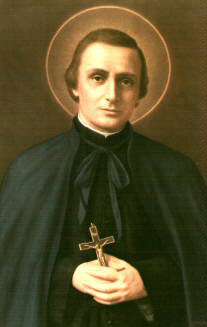 St. Peter Chanel: Saint of the Day for Sunday, April 28, 2024
 Prayer before a Crucifix: Prayer of the Day for Sunday, April 28, 2024


Copyright 2024 Catholic Online. All materials contained on this site, whether written, audible or visual are the exclusive property of Catholic Online and are protected under U.S. and International copyright laws, © Copyright 2024 Catholic Online. Any unauthorized use, without prior written consent of Catholic Online is strictly forbidden and prohibited.
Catholic Online is a Project of Your Catholic Voice Foundation, a Not-for-Profit Corporation. Your Catholic Voice Foundation has been granted a recognition of tax exemption under Section 501(c)(3) of the Internal Revenue Code. Federal Tax Identification Number: 81-0596847. Your gift is tax-deductible as allowed by law.