We ask you, humbly: don't scroll away.
Hi readers, it seems you use Catholic Online a lot; that's great! It's a little awkward to ask, but we need your help. If you have already donated, we sincerely thank you. We're not salespeople, but we depend on donations averaging $14.76 and fewer than 1% of readers give. If you donate just $5.00, the price of your coffee, Catholic Online School could keep thriving. Thank you.Help Now >
Custos
FREE Catholic Classes
(1) An under-sacristan. (See S ACRISTAN .) (2) A superior or an official in the Franciscan order.
The word has various acceptations in ancient as well as in modern Franciscan legislation. Nor do the three great existing branches of the order — the Friars Minor, Conventuals, and Capuchins — attach the same meaning to the term at the present day. Saint Francis sometimes applies the word to any superior in the order — guardians, provincials, and even to the general (see Rule, IV and VIII, and Testament). Sometimes he restricts it to officials presiding over a certain number of convents in the larger provinces of the order with restricted powers and subject to their respective provincials. It is in this latter sense that he refers (Rule, VIII) to the custodes as having power, conjointly with the provincials, to elect and to depose the minister general.
The convents over which a custos (in this latter sense) presided were collectively called a custodia . The number of custodiae in a province varied according to its extent. Already at an early period it was deemed expedient that only one of the several custodes of a province should proceed to the general chapter with his respective provincial for the election of the minister general, although the rule accorded the right of vote to each custos. This custom was sanctioned by Gregory IX in 1230 ("Quo elongati", Bull. Rom., III, 450, Turin edition) and by other popes, evidently with the view to prevent unnecessary expense. The custos thus chosen was called Custos custodum , or, among the Observantines until the time of Leo X ("Ite et vos", Bull. Rom., V, 694), discretus discretorum . This ancient legislation, which has long since ceased in the Order of Friars Minor , still obtains in the Order of Friars MinorConventuals, as may be seen from their constitutions confirmed by Urban VIII (see below). The present-day legislation on the point among the Capuchins and Friars Minor may be briefly summed up as follows: In the Capuchin Order there are two kinds of custodes — custodes general and custodes provincial. Two custodes general are elected every three years at the provincial chapters. The first of these has a right to vote at the election of the minister general should a general chapter be held during his term of office. Besides, he has the obligation of presenting to the general chapter an official report on the state of his province. The provincial custodes, on the contrary, have no voice in the general chapters, and their rights and duties are much restricted and unimportant. In the constitutions of the Order of Friars Minor there is also mention of two kinds of custodes — one called custos provinciae , the other custos regiminis . The former is elected at the provincial chapter and holds office for three years. Besides having a voice in all capitular acts of his province he takes part in the general chapter, should his provincial be impeded. The custos regiminis is a prelate who rules over a custody, or small province. He possesses ordinary jurisdiction and has all the rights and privileges of a provincial. The number of convents in a custodia regiminis ranges from four to eight.



Join the Movement
When you sign up below, you don't just join an email list - you're joining an entire movement for Free world class Catholic education.


-

-
Mysteries of the Rosary
-
St. Faustina Kowalska
-
Litany of the Blessed Virgin Mary
-
Saint of the Day for Wednesday, Oct 4th, 2023
-
Popular Saints
-
St. Francis of Assisi
-
Bible
-
Female / Women Saints
-
7 Morning Prayers you need to get your day started with God
-
Litany of the Blessed Virgin Mary


Sacrifices of Faith: The Pro-Life Legacies of St. Gianna and Jessica Hanna
-
How to love God by caring for our bodies
-
Pope Francis calls for negotiations to End Russia-Ukraine War
-
Pope Francis Contemplates Return to U.S. for United Nations Assembly Address
-
Pope Francis Calls on Faithful to Embrace Faith, Hope, and Charity in New Teaching Series


Daily Catholic
- Daily Readings for Sunday, April 28, 2024
- St. Peter Chanel: Saint of the Day for Sunday, April 28, 2024
- Prayer before a Crucifix: Prayer of the Day for Sunday, April 28, 2024
- Daily Readings for Saturday, April 27, 2024
- St. Zita: Saint of the Day for Saturday, April 27, 2024
- Prayer for the Dead # 2: Prayer of the Day for Saturday, April 27, 2024
 Daily Readings for Sunday, April 28, 2024
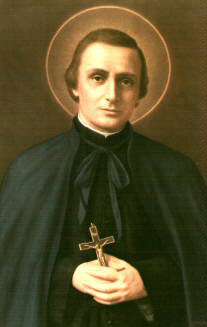 St. Peter Chanel: Saint of the Day for Sunday, April 28, 2024
 Prayer before a Crucifix: Prayer of the Day for Sunday, April 28, 2024
 Hi readers, it seems you use Catholic Online a lot; that's great! It's a little awkward to ask, but we need your help. If you have already donated, we sincerely thank you. We're not salespeople, but we depend on donations averaging $14.76 and fewer than 1% of readers give. If you donate just $5.00, the price of your coffee, Catholic Online School could keep thriving. Thank you. Help Now >
We ask you, humbly: don't scroll away.
Hi readers, it seems you use Catholic Online a lot; that's great! It's a little awkward to ask, but we need your help. If you have already donated, we sincerely thank you. We're not salespeople, but we depend on donations averaging $14.76 and fewer than 1% of readers give. If you donate just $5.00, the price of your coffee, Catholic Online School could keep thriving. Thank you.Help Now >

Copyright 2024 Catholic Online. All materials contained on this site, whether written, audible or visual are the exclusive property of Catholic Online and are protected under U.S. and International copyright laws, © Copyright 2024 Catholic Online. Any unauthorized use, without prior written consent of Catholic Online is strictly forbidden and prohibited.
Catholic Online is a Project of Your Catholic Voice Foundation, a Not-for-Profit Corporation. Your Catholic Voice Foundation has been granted a recognition of tax exemption under Section 501(c)(3) of the Internal Revenue Code. Federal Tax Identification Number: 81-0596847. Your gift is tax-deductible as allowed by law.