We ask you, humbly: don't scroll away.
Hi readers, it seems you use Catholic Online a lot; that's great! It's a little awkward to ask, but we need your help. If you have already donated, we sincerely thank you. We're not salespeople, but we depend on donations averaging $14.76 and fewer than 1% of readers give. If you donate just $5.00, the price of your coffee, Catholic Online School could keep thriving. Thank you.Help Now >
Cronan
FREE Catholic Classes
Name of several Irish saints.
St. Cronan Mochua
Founder of the See of Balla, subsequently merged into that of Tuam, Ireland, flourished in the period 596-637, d. 30 March, 637, but his Acts are more or less of a legendary character. However, it would appear that he was educated at Bangor, under St. Comgall, and founded a monastery at Gael, among the Feara Rois of Louth and Monaghan, whence he migrated to Fore and Tehilly. Passing through Hy Many, he journeyed to Connacht, in 616, and founded the church and Abbey of Balla, of which he was first abbot-bishop. Numerous miracles are recorded of St. Cronan Mochua, and are minutely described in his Irish life. His feast is celebrated on 30 March, though, through a misconception, his Acts are given by the Bollandists under date of 1 January.
St. Cronan, Abbot
Abbot-Bishop and Patron of Roscrea, a see afterwards incorporated in that of Killaloe, Ireland ; b. in the territory of Ely O'Carroll; d. 28 April 640. After spending his youth in Connacht, he returned to his native district about the year 610 and founded Abbey Roscrea, where he established a famous school. Previously he settled at a place known as Sean Ros or Loch Cre, a wooded morass far from the haunts of men; in fact, it was utterly wild, so much so, that St. Cronan abandoned it and moved to the wood of Cre, that is Ros cre, County Tipperary. Like those of so many other Irish saints the Acts of St. Cronan abound in miracles. The most surprising, perhaps, is the legend as to the transcribing of the Four Gospels by one of his monks, named Dimma. It appears that Dimma could only undertake one day's task, from sunrise to sunset. St. Cronan, however, bade him write, and then Dimma set to work, never ceasing till he had finished the Four Gospels , the sun continuing to shine for the space of forty days and forty nights - the scribe himself being unconscious that the work occupied more than one day. Whatever may be thought of this legend, it is certain that a magnificent Evangelistarium, known as the "Book of Dimma", was for centuries preserved in St. Cronan's Abbey at Roscrea, and is now in the library of Trinity College, Dublin. The scribe, Dimma MacNathi, signs his name at the conclusion of each of the Gospels, and he has been identified with Dimma, subsequently Bishop of Connor, who is mentioned with St. Cronan in the letter of Pope John IV in 640, in regard to Pelagianism in Ireland, but this identification cannot be sustained. The case containing the "Book of Dimma" was richly gilt by order of O'Carroll, Lord of Ely, in the twelfth century. Notwithstanding the conflicting statements arising from the number of contemporary Irish saints bearing the name Cronan, it is more than probable that St. Cronan of Roscrea, as les Petits Bollandistes say, lived as late as the year 640, and his death occurred on 28 April of that year. His feast is celebrated on 28 April and as such is included in all the Irish calendars, as also in the Kalendar of Drummond.
Other saints named Cronan
A number of other saints of this name find a place in Irish calendars. The three most important are St. Cronan Mochua, of Clashmore (10 February); St. Cronan, Abbot of Clonmacnoise (18 July); and St. Cronan, Abbot of Moville (7 September). Another saint frequently quoted as of this name is really St. Cuaran (Cuaranus Sapiens), whose feast occurs on 9 February. There is also a St. Cronan Mochua of Sliabh Eibhlem (4 May).
 Hi readers, it seems you use Catholic Online a lot; that's great! It's a little awkward to ask, but we need your help. If you have already donated, we sincerely thank you. We're not salespeople, but we depend on donations averaging $14.76 and fewer than 1% of readers give. If you donate just $5.00, the price of your coffee, Catholic Online School could keep thriving. Thank you. Help Now >
We ask you, humbly: don't scroll away.
Hi readers, it seems you use Catholic Online a lot; that's great! It's a little awkward to ask, but we need your help. If you have already donated, we sincerely thank you. We're not salespeople, but we depend on donations averaging $14.76 and fewer than 1% of readers give. If you donate just $5.00, the price of your coffee, Catholic Online School could keep thriving. Thank you.Help Now >
Join the Movement
When you sign up below, you don't just join an email list - you're joining an entire movement for Free world class Catholic education.


-

-
Mysteries of the Rosary
-
St. Faustina Kowalska
-
Litany of the Blessed Virgin Mary
-
Saint of the Day for Wednesday, Oct 4th, 2023
-
Popular Saints
-
St. Francis of Assisi
-
Bible
-
Female / Women Saints
-
7 Morning Prayers you need to get your day started with God
-
Litany of the Blessed Virgin Mary


Sacrifices of Faith: The Pro-Life Legacies of St. Gianna and Jessica Hanna
-
How to love God by caring for our bodies
-
Pope Francis calls for negotiations to End Russia-Ukraine War
-
Pope Francis Contemplates Return to U.S. for United Nations Assembly Address
-
Pope Francis Calls on Faithful to Embrace Faith, Hope, and Charity in New Teaching Series


Daily Catholic
- Daily Readings for Sunday, April 28, 2024
- St. Peter Chanel: Saint of the Day for Sunday, April 28, 2024
- Prayer before a Crucifix: Prayer of the Day for Sunday, April 28, 2024
- Daily Readings for Saturday, April 27, 2024
- St. Zita: Saint of the Day for Saturday, April 27, 2024
- Prayer for the Dead # 2: Prayer of the Day for Saturday, April 27, 2024
 Daily Readings for Sunday, April 28, 2024
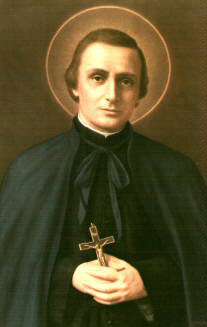 St. Peter Chanel: Saint of the Day for Sunday, April 28, 2024
 Prayer before a Crucifix: Prayer of the Day for Sunday, April 28, 2024


Copyright 2024 Catholic Online. All materials contained on this site, whether written, audible or visual are the exclusive property of Catholic Online and are protected under U.S. and International copyright laws, © Copyright 2024 Catholic Online. Any unauthorized use, without prior written consent of Catholic Online is strictly forbidden and prohibited.
Catholic Online is a Project of Your Catholic Voice Foundation, a Not-for-Profit Corporation. Your Catholic Voice Foundation has been granted a recognition of tax exemption under Section 501(c)(3) of the Internal Revenue Code. Federal Tax Identification Number: 81-0596847. Your gift is tax-deductible as allowed by law.