We ask you, humbly: don't scroll away.
Hi readers, it seems you use Catholic Online a lot; that's great! It's a little awkward to ask, but we need your help. If you have already donated, we sincerely thank you. We're not salespeople, but we depend on donations averaging $14.76 and fewer than 1% of readers give. If you donate just $5.00, the price of your coffee, Catholic Online School could keep thriving. Thank you.Help Now >
Confraternity of Christian Doctrine
FREE Catholic Classes
An association established at Rome in 1562 for the purpose of giving religions instruction. Till about the thirteenth century, the Apostles' Creed and Paternoster formed the general basis of religious instruction; all the faithful had to know them by heart, and parish priests were commanded to explain them on Sundays and festivals. Then the range of instruction was widened to include the Commandments and sacraments, the virtues and vices. The Synod of Lambeth under Archbishop Peekham, in 1281, was content to order priests to explain the truths of faith four times year, but the Provincial Council of Lavour, in 1368, commanded parish priests to give instruction on all Sundays and feast days. This council also published a catechism to serve as a textbook for the clergy in giving instructions in Christian doctrine, which was followed in all the dioceses of Languedoc and Gascony. Similar manuals were published elsewhere. The Council of Trent, seeing how multitudes had fallen from the Faith through ignorance of their religion and recognizing the truth proclaimed by Gerson more than a century before, that church reform must begin with the religious instruction of the young, issued the "Catechismus ad Parochos", and decreed that throughout the Church instructions in Christian doctrine should be given on Sundays and festivals.
We ask you, humbly: don't scroll away.
Hi readers, it seems you use Catholic Online a lot; that's great! It's a little awkward to ask, but we need your help. If you have already donated, we sincerely thank you. We're not salespeople, but we depend on donations averaging $14.76 and fewer than 1% of readers give. If you donate just $5.00, the price of your coffee, Catholic Online School could keep thriving. Thank you.Help Now >
But the work of organizing religious instruction had already begun. In 1536 the Abbate Castellino da Castello had inaugurated a system of Sunday schools in Milan. About 1560 a wealthy Milanese nobleman, Marco de Sadis-Cusani, having established himself in Rome, was joined by a number of zealous associates, priests and laymen, pledged to instruct both children and adults in Christian doctrine. Pope Pius IV in 1562 made the church of Sant' Apollinare their central institution; but they also gave instructions in schools, in the streets and lanes, and even in private houses. The association growing, it divided into two sections: the priests formed themselves into a religious congregation, "The Fathers of Christian Doctrine ", while the laymen remained in the world as "The Confraternity of Christian Doctrine ". Encouragement from the Holy See was quickly forthcoming. In 1571, Pope St. Pius V , in the Brief "Ex debito pastoralis officii", bore witness to the good already accomplished, and recommended bishops to establish it in every parish. Pope Paul V , by the Brief "Ex credito nobis", in 1607, erected it into an archconfraternity, with St. Peter's, Rome as its head centre. A rescript of the Sacred Congregation of Indulgences, in 1686, urged its establishment wherever possible. From Rome it spread rapidly over Italy, France, and Germany. It found advocates in Cardinal Bellarmine, St. Francis of Sales, and St. Charles Borromeo ; who drew up a code of rules and established it in every parish of his diocese.
The First Provincial Council of Westminster urged that its members should be used in both Sunday and day-schools, but while Sunday-schools are plentiful, the confraternity is only sparsely established in England. Lastly, in 1905 Pope Pius X strictly ordained that "in each and every parish the society commonly called the Confraternity of Christian Doctrine shall be canonically erected". If the central confraternity in a diocese is affiliated to the Archconfraternity of Santa Maria del Pianto in Rome, all others participate in all the confraternity indulgences.
Similar in scope and character to the above are the PIEUSES UNIONS DE LA DOCTRlNE CHRÉTIENNE, founded by the Dames de l' Adoration Perpetuelle at Brussels in 1851, for giving religious instruction to boys and girls. In Brussels they are found in about thirty parishes. In 1894 Leo XIII erected it into an archconfraternity for Belgium.
THE ARCHCONFRATERNITY OF VOLUNTARY CATECHISTS (Oeuvre des Catéchismes) was founded to help parish priests in giving religious instructions to children attending the primary schools in Paris and other parts of France, after these had been laicized. In 1893 Leo XIII gave it the rank of an archconfraternity with power to affiliate all similar confraternities in France. The indulgences granted to all these confraternities are very numerous.
We ask you, humbly: don't scroll away.
Hi readers, it seems you use Catholic Online a lot; that's great! It's a little awkward to ask, but we need your help. If you have already donated, we sincerely thank you. We're not salespeople, but we depend on donations averaging $14.76 and fewer than 1% of readers give. If you donate just $5.00, the price of your coffee, Catholic Online School could keep thriving. Thank you.Help Now >

Join the Movement
When you sign up below, you don't just join an email list - you're joining an entire movement for Free world class Catholic education.


-

-
Mysteries of the Rosary
-
St. Faustina Kowalska
-
Litany of the Blessed Virgin Mary
-
Saint of the Day for Wednesday, Oct 4th, 2023
-
Popular Saints
-
St. Francis of Assisi
-
Bible
-
Female / Women Saints
-
7 Morning Prayers you need to get your day started with God
-
Litany of the Blessed Virgin Mary


Sacrifices of Faith: The Pro-Life Legacies of St. Gianna and Jessica Hanna
-
How to love God by caring for our bodies
-
Pope Francis calls for negotiations to End Russia-Ukraine War
-
Pope Francis Contemplates Return to U.S. for United Nations Assembly Address
-
Pope Francis Calls on Faithful to Embrace Faith, Hope, and Charity in New Teaching Series


Daily Catholic
- Daily Readings for Sunday, April 28, 2024
- St. Peter Chanel: Saint of the Day for Sunday, April 28, 2024
- Prayer before a Crucifix: Prayer of the Day for Sunday, April 28, 2024
- Daily Readings for Saturday, April 27, 2024
- St. Zita: Saint of the Day for Saturday, April 27, 2024
- Prayer for the Dead # 2: Prayer of the Day for Saturday, April 27, 2024
 Daily Readings for Sunday, April 28, 2024
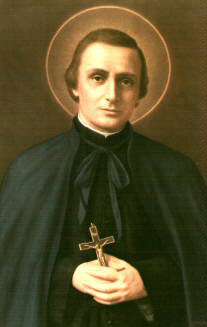 St. Peter Chanel: Saint of the Day for Sunday, April 28, 2024
 Prayer before a Crucifix: Prayer of the Day for Sunday, April 28, 2024
 Hi readers, it seems you use Catholic Online a lot; that's great! It's a little awkward to ask, but we need your help. If you have already donated, we sincerely thank you. We're not salespeople, but we depend on donations averaging $14.76 and fewer than 1% of readers give. If you donate just $5.00, the price of your coffee, Catholic Online School could keep thriving. Thank you. Help Now >

Copyright 2024 Catholic Online. All materials contained on this site, whether written, audible or visual are the exclusive property of Catholic Online and are protected under U.S. and International copyright laws, © Copyright 2024 Catholic Online. Any unauthorized use, without prior written consent of Catholic Online is strictly forbidden and prohibited.
Catholic Online is a Project of Your Catholic Voice Foundation, a Not-for-Profit Corporation. Your Catholic Voice Foundation has been granted a recognition of tax exemption under Section 501(c)(3) of the Internal Revenue Code. Federal Tax Identification Number: 81-0596847. Your gift is tax-deductible as allowed by law.