 Hi readers, it seems you use Catholic Online a lot; that's great! It's a little awkward to ask, but we need your help. If you have already donated, we sincerely thank you. We're not salespeople, but we depend on donations averaging $14.76 and fewer than 1% of readers give. If you donate just $5.00, the price of your coffee, Catholic Online School could keep thriving. Thank you. Help Now >
Adeodatus
FREE Catholic Classes
Son of St. Augustine, Bishop of Hippo , b. 372; d. 388.
St. Augustine was not converted to the Faith until he was thirty-two years of age. At seventeen he contracted an illicit relation with a young woman and Adeodatus was born of this union. Augustine, in his delight, named him "Adeodatus", i.e. the "gift of God". When Augustine went to Rome, and, later, to Milan, this young woman and the child went with him, and she and Augustine continued their guilty relations. The young Adeodatus was the pride and hope of his parents, and possessed of an extraordinary mental endowment. Bound by this natural enthralment, Augustine would not bring himself to break from it; and as the sinful union was an obstacle to his receiving the gift of faith, St. Monica , his mother, desired him to marry the mother of his child, feeling that then his mind would be enlightened by grace. Just as the name of the mother of Adeodatus has never been told, so also there has never been given the reason why she and Augustine did not marry at this juncture, though there was evidently some strong if not insurmountable one. Finally they separated. "She was stronger than I", wrote St. Augustine , "and made her sacrifice with a courage and a generosity which I was not strong enough to imitate." She returned to Carthage, whence she had come, and the grace which had led her to sacrifice the object of her affection further impelled her to bury herself in a monastery, where she might atone for the sin which had been the price so long paid for it. She left the brilliant young boy, Adeodatus, with his father. Seeing the wonderful intelligence of his son, Augustine felt a sort of awe. "The grandeur of his mind filled me with a kind of terror", he says himself (De beata vita, c. vi). Augustine received baptism at the age of thirty-two from the hands of St. Ambrose, the intimate friend of St. Monica and himself. To augment his joy, Adeodatus, Alypius, Augustine's life-long associate, and a number of his closest friends, all became Christians on the same occasion and received baptism together. Monica, Augustine, Adeodatus, who was now fifteen, and a son of Grace, if indeed "the child of my sin ", as Augustine had styled him in the bitterness of self-reproach and contrition, together with the loyal Alypius, dwelt together in a villa at Cassiciacum, near Milan. The many conversations and investigations into holy questions and truths made it a Christian Academy, of more exalted philosophy than Plato's. Adeodatus had his full share in many of these learned discussions. He appears as interlocutor in his father's treatise De beata vita ( puer ille minimus omnium -- that boy, the youngest of them all), and contributed largely to the treatise De Magistro , written two years later. He appears to have died soon after, in his sixteenth year.


Join the Movement
When you sign up below, you don't just join an email list - you're joining an entire movement for Free world class Catholic education.


-

-
Mysteries of the Rosary
-
St. Faustina Kowalska
-
Litany of the Blessed Virgin Mary
-
Saint of the Day for Wednesday, Oct 4th, 2023
-
Popular Saints
-
St. Francis of Assisi
-
Bible
-
Female / Women Saints
-
7 Morning Prayers you need to get your day started with God
-
Litany of the Blessed Virgin Mary


Sacrifices of Faith: The Pro-Life Legacies of St. Gianna and Jessica Hanna
-
How to love God by caring for our bodies
-
Pope Francis calls for negotiations to End Russia-Ukraine War
-
Pope Francis Contemplates Return to U.S. for United Nations Assembly Address
-
Pope Francis Calls on Faithful to Embrace Faith, Hope, and Charity in New Teaching Series


Daily Catholic
- Daily Readings for Sunday, April 28, 2024
- St. Peter Chanel: Saint of the Day for Sunday, April 28, 2024
- Prayer before a Crucifix: Prayer of the Day for Sunday, April 28, 2024
- Daily Readings for Saturday, April 27, 2024
- St. Zita: Saint of the Day for Saturday, April 27, 2024
- Prayer for the Dead # 2: Prayer of the Day for Saturday, April 27, 2024
 Daily Readings for Sunday, April 28, 2024
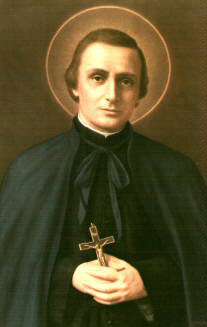 St. Peter Chanel: Saint of the Day for Sunday, April 28, 2024
 Prayer before a Crucifix: Prayer of the Day for Sunday, April 28, 2024
We ask you, humbly: don't scroll away.
Hi readers, it seems you use Catholic Online a lot; that's great! It's a little awkward to ask, but we need your help. If you have already donated, we sincerely thank you. We're not salespeople, but we depend on donations averaging $14.76 and fewer than 1% of readers give. If you donate just $5.00, the price of your coffee, Catholic Online School could keep thriving. Thank you.Help Now >

Copyright 2024 Catholic Online. All materials contained on this site, whether written, audible or visual are the exclusive property of Catholic Online and are protected under U.S. and International copyright laws, © Copyright 2024 Catholic Online. Any unauthorized use, without prior written consent of Catholic Online is strictly forbidden and prohibited.
Catholic Online is a Project of Your Catholic Voice Foundation, a Not-for-Profit Corporation. Your Catholic Voice Foundation has been granted a recognition of tax exemption under Section 501(c)(3) of the Internal Revenue Code. Federal Tax Identification Number: 81-0596847. Your gift is tax-deductible as allowed by law.