We ask you, humbly: don't scroll away.
Hi readers, it seems you use Catholic Online a lot; that's great! It's a little awkward to ask, but we need your help. If you have already donated, we sincerely thank you. We're not salespeople, but we depend on donations averaging $14.76 and fewer than 1% of readers give. If you donate just $5.00, the price of your coffee, Catholic Online School could keep thriving. Thank you.Help Now >
Cavaliere Paris Bordone
FREE Catholic Classes
An eminent painter of the Venetian school, b. at Treviso, 1500 d. at Venice, 1570. A member of a noble family, he early showed an inclination for art and, after being given a good general education, was placed in the school of Titian with whom he studied for several years. He afterwards had Giorgione for his master. While feeling strongly the influence of both great painters, Bordone finally settled down to the style of Titian, whose manner he so successfully imitated that his works have sometimes been mistaken for Titian's. In portraiture he was most successful, ceding to none but to Titian in excellence. In his early career he painted at Venice, Vicenza, and Treviso. At the last place his most important work was in the church of San Vicenzo, where he painted in the six compartments of the dome "The Annunciation", "The Nativity", "The Adoration of the Shepherds", "The Crucifixion", "The Ascension", and "The Assumption of the Virgin". Bordone was invited to visit France, some say by Francis I, and others by Francis II, by whom he was knighted. He remained, according to the latter authority, after the death of that king, for several years at the court of Charles IX, before returning to Italy. He painted the portraits of the royal family and the principal figures of their courts, working notably for the Duke of Guise and the Cardinal de Lorraine.

The most famous work of Bordone is the large painting in the Academy at Venice, representing with great brilliancy of colour and effect "The Fisherman Presenting the Ring of St. Mark to the Doge". On his return to Venice from France, Bordone stopped at Augsburg, where he did some work in the Fugger Palace, and at Milan, where he painted in the chapel of St. Jerome . Among the principal works of Bordone in European galleries are: Louvre, "Vertumna and Pomona", "Portrait of a Man ", and "Portraits (presumed) of Philip II, King of Spain, and his Preceptor"; National Gallery, London, "Daphnis and Chloe", and "Portrait of a Genoese Lady"; Berlin Museum, "Madonna and Saints", "The Chess Players", and "Man in Black"; Dresden Gallery, "Holy Family with St. Jerome and St. Elizabeth", and "Diana, Apollo and Marsyas"; Munich, Old Pinakotek, "Portrait of Man ", and "Man Counting Jewels"; Vienna Gallery, seven works including "Venus and Adonis in an Arbour", and "A Young Lady at her Toilet", St. Petersburg Hermitage, "Madonna and Saints"; Brera, Milan, "Baptism of Christ"; Venice, Academy, "Presenting the Ring ", and "The Tiburtine Sibyl"; Rome, Colonna Palace, "Holy Family"; Doria Palace, "Mars and Venus"; Padua Gallery, "Christ Taking Leave of His Mother"; Lovere, Tadini Collection, "Madonna and Two Saints"; Genoa, Brignole Palace, two portraits.

 Hi readers, it seems you use Catholic Online a lot; that's great! It's a little awkward to ask, but we need your help. If you have already donated, we sincerely thank you. We're not salespeople, but we depend on donations averaging $14.76 and fewer than 1% of readers give. If you donate just $5.00, the price of your coffee, Catholic Online School could keep thriving. Thank you. Help Now >
Join the Movement
When you sign up below, you don't just join an email list - you're joining an entire movement for Free world class Catholic education.


-

-
Mysteries of the Rosary
-
St. Faustina Kowalska
-
Litany of the Blessed Virgin Mary
-
Saint of the Day for Wednesday, Oct 4th, 2023
-
Popular Saints
-
St. Francis of Assisi
-
Bible
-
Female / Women Saints
-
7 Morning Prayers you need to get your day started with God
-
Litany of the Blessed Virgin Mary

Sacrifices of Faith: The Pro-Life Legacies of St. Gianna and Jessica Hanna
-
How to love God by caring for our bodies
-
Pope Francis calls for negotiations to End Russia-Ukraine War
-
Pope Francis Contemplates Return to U.S. for United Nations Assembly Address
-
Pope Francis Calls on Faithful to Embrace Faith, Hope, and Charity in New Teaching Series

Daily Catholic
- Daily Readings for Sunday, April 28, 2024
- St. Peter Chanel: Saint of the Day for Sunday, April 28, 2024
- Prayer before a Crucifix: Prayer of the Day for Sunday, April 28, 2024
- Daily Readings for Saturday, April 27, 2024
- St. Zita: Saint of the Day for Saturday, April 27, 2024
- Prayer for the Dead # 2: Prayer of the Day for Saturday, April 27, 2024
 Daily Readings for Sunday, April 28, 2024
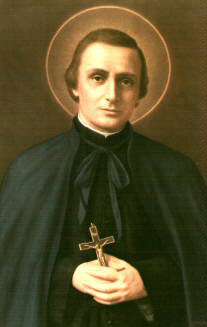 St. Peter Chanel: Saint of the Day for Sunday, April 28, 2024
 Prayer before a Crucifix: Prayer of the Day for Sunday, April 28, 2024
We ask you, humbly: don't scroll away.
Hi readers, it seems you use Catholic Online a lot; that's great! It's a little awkward to ask, but we need your help. If you have already donated, we sincerely thank you. We're not salespeople, but we depend on donations averaging $14.76 and fewer than 1% of readers give. If you donate just $5.00, the price of your coffee, Catholic Online School could keep thriving. Thank you.Help Now >


Copyright 2024 Catholic Online. All materials contained on this site, whether written, audible or visual are the exclusive property of Catholic Online and are protected under U.S. and International copyright laws, © Copyright 2024 Catholic Online. Any unauthorized use, without prior written consent of Catholic Online is strictly forbidden and prohibited.
Catholic Online is a Project of Your Catholic Voice Foundation, a Not-for-Profit Corporation. Your Catholic Voice Foundation has been granted a recognition of tax exemption under Section 501(c)(3) of the Internal Revenue Code. Federal Tax Identification Number: 81-0596847. Your gift is tax-deductible as allowed by law.